Butrint is one of those rare places where history doesn’t just feel preserved—it feels alive. Tucked away in the southern reaches of Albania, a short distance from the coastal town of Sarandë, this ancient city sits on a gentle hillside, surrounded by dense forests and the still waters of Lake Butrint. The ruins here span centuries, even millennia, with layers of civilizations stacked like pages in a book. Greek temples stand near Roman baths, Byzantine churches share the landscape with Venetian fortresses, and the remnants of Ottoman structures hint at a long period of Turkish rule. It’s not just an archaeological site; it’s an open-air museum where every stone seems to whisper its own story.
The city’s origins trace back to the 6th century BCE, when Greek colonists from Corinth and Corfu founded it as Buthrotum. Even then, its location was strategic—a natural crossroads for trade routes, shielded by the lake and the narrow Vivari Channel that connects it to the Ionian Sea. The Greeks built an acropolis, a theater, and temples dedicated to their gods, laying the foundation for what would become a thriving settlement. When the Romans took control, they expanded Butrint into a prosperous port and retreat, leaving behind the remains of thermal baths, grand villas, and an early Christian basilica. The city flourished under their rule, its wealth evident in the intricate mosaics and well-preserved structures that still stand today.
What makes Butrint so captivating is its setting. The ruins sprawl across a landscape where water and forest meet, creating a sense of seclusion that feels almost timeless. The Vivari Channel, once a bustling harbor, is now a quiet waterway where the only sounds are the rustle of leaves and the distant call of seabirds. Walking through the site feels like stepping into another era, where each turn reveals something new—a fragment of a mosaic floor, the curve of a column, or the crumbling remains of a fortress wall. The air is thick with the scent of pine and wild herbs, and the light filtering through the trees casts shifting patterns over the ancient stones.
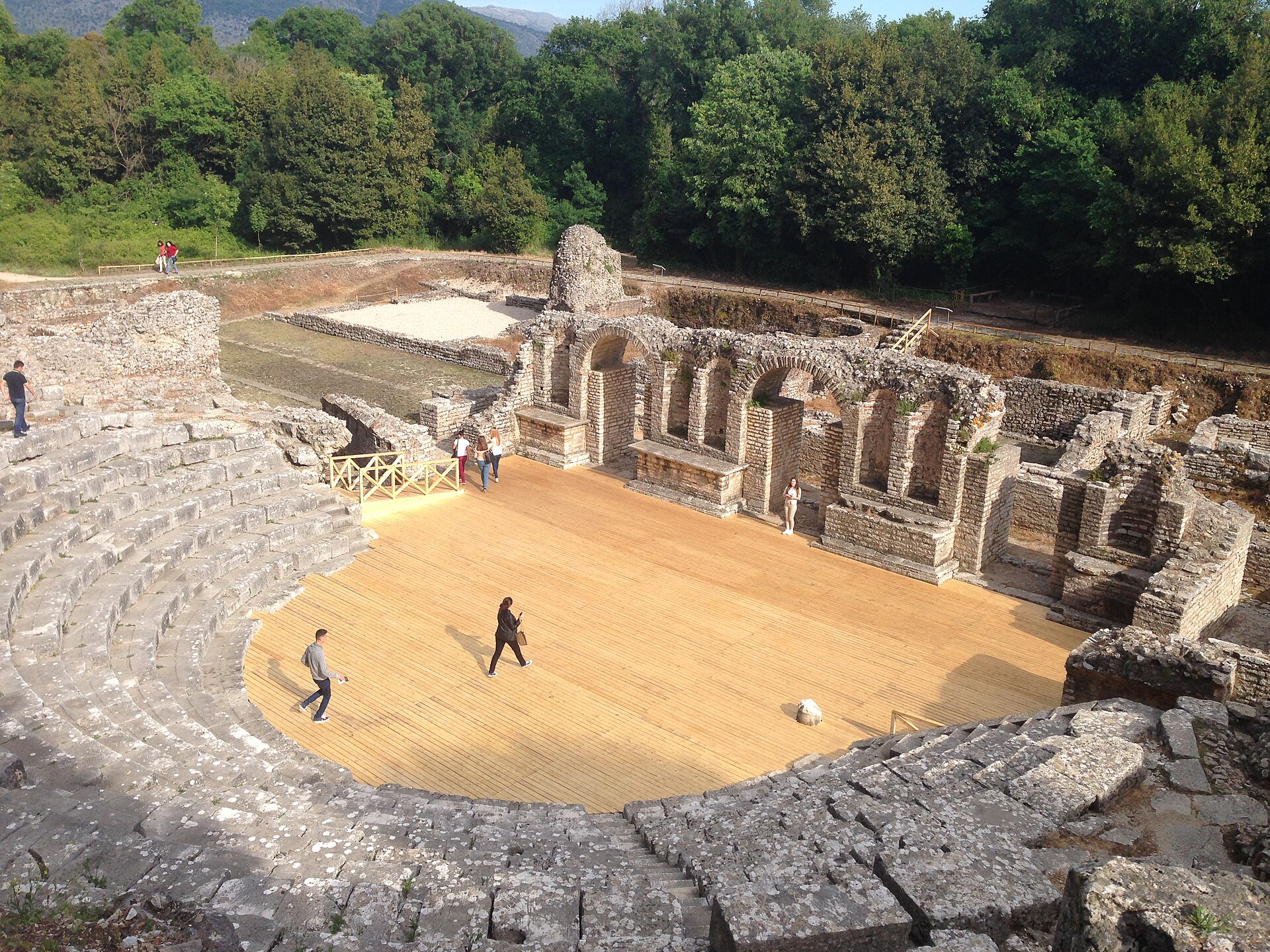
The theater is one of Butrint’s most striking features. Built in the 3rd century BCE, it could seat around 1,500 spectators and served not just for performances but for civic gatherings as well. The stone benches, the orchestra, and part of the stage are still intact, and from the upper rows, the view stretches across the lake and the rolling hills beyond. In the summer, the theater occasionally hosts concerts and festivals, and for a few hours, the ancient stones come alive again with music and voices, echoing the way they might have two thousand years ago.
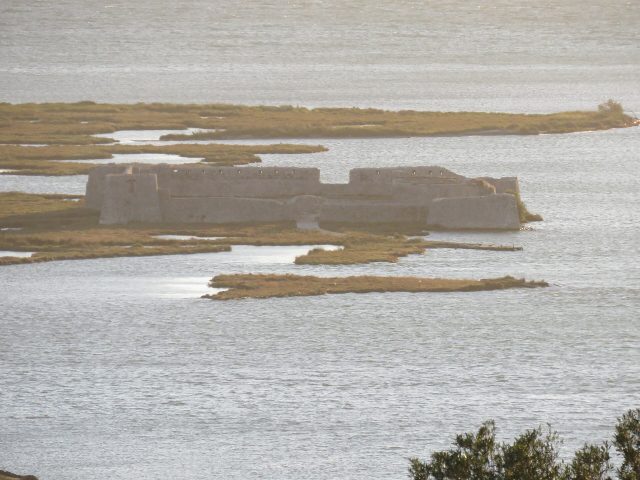
Byzantine rule left its mark on Butrint in the form of churches and fortifications. The most notable is the 5th-century basilica, its floors adorned with mosaics depicting Christian symbols. During the Middle Ages, the city became an important religious center, though its influence waned over time. The Venetians, who took control in the 14th century, built a fortress that still looms over the ruins, its walls offering a panoramic view of the surrounding landscape—the green hills, the deep blue of the lake, and the distant shimmer of the sea. From this vantage point, it’s easy to imagine the strategic importance Butrint once held.
The Ottoman period, which lasted from the 15th century until the early 20th, also left its imprint. Remnants of Turkish baths and mosques can still be found among the ruins, along with residential quarters where life once thrived. Over time, the city’s significance faded, and it was gradually abandoned. It wasn’t until the 20th century that archaeologists began uncovering its secrets, revealing Butrint as one of the most remarkable historical sites in the Mediterranean.
Today, Butrint is a national park and a UNESCO World Heritage site, a place where visitors can spend hours wandering among the ruins, following forest trails, or simply sitting by the water’s edge. Unlike crowded tourist hotspots, it retains a sense of quiet mystery. There are no jostling crowds here, just the occasional rustle of leaves and the distant cry of a bird. The atmosphere is one of stillness, as if the past is holding its breath, waiting to be rediscovered.
A visit to Butrint is more than just a history lesson—it’s a chance to see Albania in a different light. While the country is often associated with its beaches and mountains, here it reveals itself as a guardian of ancient civilizations. The ruins are a reminder of how many cultures have passed through these lands, each leaving behind fragments of their world. Butrint may no longer be the bustling port it once was, but its spirit endures in every stone, every mosaic, and every silent corner of the forest. It’s a place where the past isn’t just remembered; it’s felt.