Perched on a gentle hill a short distance from Sarandë, the Ardenica Monastery emerges from the landscape like a quiet guardian of time. The road leading to it winds through groves of olive trees and vineyards, where the earth softens into the foothills of southern Albania. There’s no grand announcement of its presence—just a gradual shift in the air, as if the modern world loosens its grip with every turn. The monastery doesn’t demand attention; it simply exists, patient and unassuming, as it has for centuries.
Founded in the 13th century, Ardenica carries the echoes of Byzantium, a time when Albania was part of an empire where faith and daily life intertwined. Unlike the fortified monasteries of the north, built to withstand sieges, Ardenica was conceived as a retreat—a place for contemplation rather than defense. Its walls, made from local stone, have weathered into a warm, golden hue, blending seamlessly with the surrounding hills. It survived the Ottoman conquest not through strength, but perhaps through obscurity, tucked away from the main trade routes that brought conflict to other parts of the region.
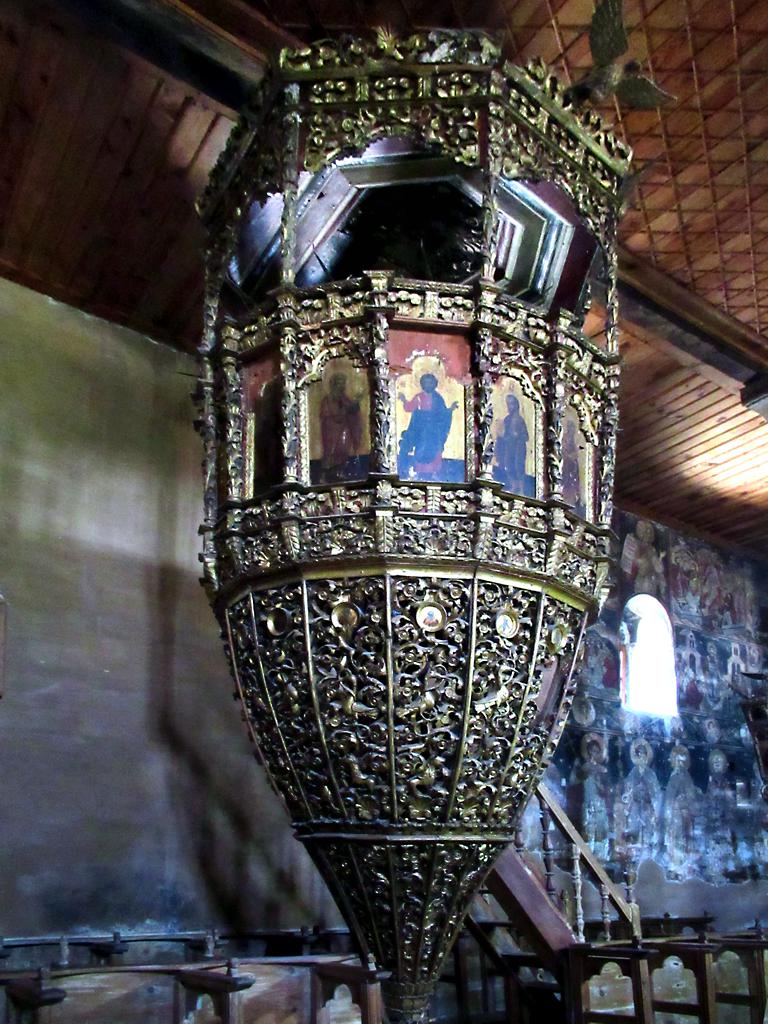
The monastery’s main church, dedicated to the Dormition of the Mother of God, is small but perfectly proportioned. Its architecture is a textbook example of late Byzantine style: a cross-in-square design with a central dome, modest in scale but rich in harmony. Inside, the walls are covered in frescoes that have retained their vibrancy despite the passage of time. The figures of saints and biblical scenes are rendered with a simplicity that feels almost naive, their expressions gentle and unassuming. Some of the paintings bear the scars of moisture and neglect, but these imperfections only deepen the sense of authenticity, as if the walls themselves are whispering stories of the past.
The monastery courtyard, enclosed by a low stone wall, was once the heart of communal life. Here, monks lived, worked, and prayed, their days shaped by the rhythms of the land. Today, only the foundations of the old buildings remain—bakeries, refectories, workshops—but even these fragments offer a glimpse into the past. At the center of the courtyard, a spring still flows, its water believed by locals to have healing properties. People from nearby villages arrive with bottles and jugs, filling them with the cool, clear liquid, a tradition that has endured for generations. The shade of the trees around the spring makes it a natural refuge from the summer heat, a place where the world outside feels distant.
Ardenica was never a major religious center, but its influence on the region was profound. In the Middle Ages, it served as more than just a place of worship—it was a sanctuary for travelers, a school for children from surrounding villages, and a scriptorium where manuscripts were copied by hand. During the Ottoman era, when Christianity faced persecution, the monastery became a refuge for those who refused to abandon their faith. Monks hid icons and sacred texts, and sometimes even people, risking their lives to preserve what they held sacred. In this way, Ardenica became a symbol of resilience, a quiet defiance against the forces that sought to erase it.
Today, the monastery remains open to visitors, though it sees nothing like the crowds that flock to more famous sites. Those who come are often drawn by curiosity about history or a desire for stillness. Inside the church, wooden benches invite quiet reflection, the only sounds the rustling of leaves and the occasional murmur of prayer. Services are infrequent, but when they do take place, the space fills with the scent of incense and the sound of chanting, briefly returning to its original purpose. Locals sometimes stop by to light a candle or leave a bouquet of wildflowers, small gestures that keep the connection to the past alive.
The land around Ardenica is still cultivated, much as it was centuries ago. Olive groves and vineyards stretch across the hills, tended by farmers who work the same soil that once belonged to the monastery. The road back to Sarandë passes through small villages where life moves at its own unhurried pace. A stop at a roadside café offers a chance to sip coffee while gazing at the mountains, imagining the countless travelers who have walked this path before—pilgrims, merchants, monks—each leaving their own mark on the land.
Ardenica is not a monument to grandeur, nor does it seek to impress. Its beauty lies in its restraint, in the way it has endured without fanfare. There are no gilded domes or towering spires here, just the quiet dignity of a place that has witnessed centuries of change yet remains unchanged in spirit. It doesn’t offer answers or spectacle, but something far more subtle: a sense of continuity, a reminder that some things transcend time. And perhaps that’s why people return, even if they can’t quite explain why. In a world that moves too fast, Ardenica offers a pause—a place where the past is not just remembered, but still alive.