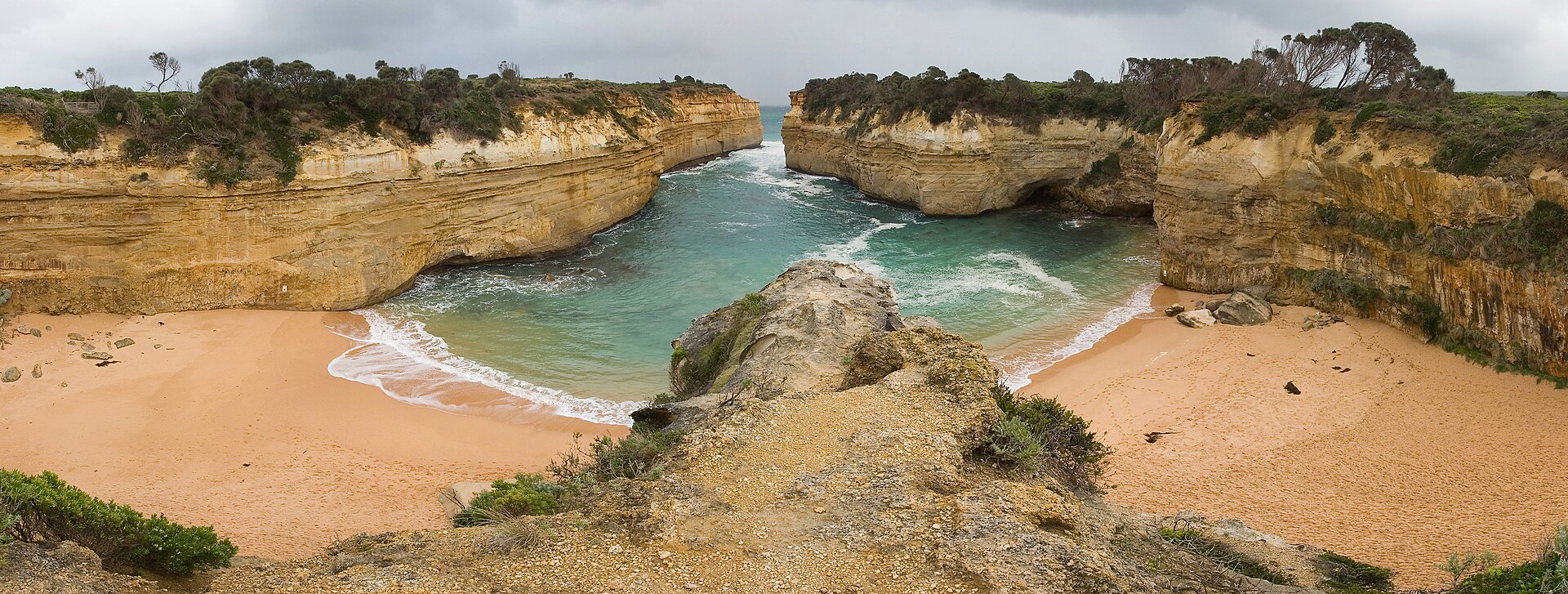
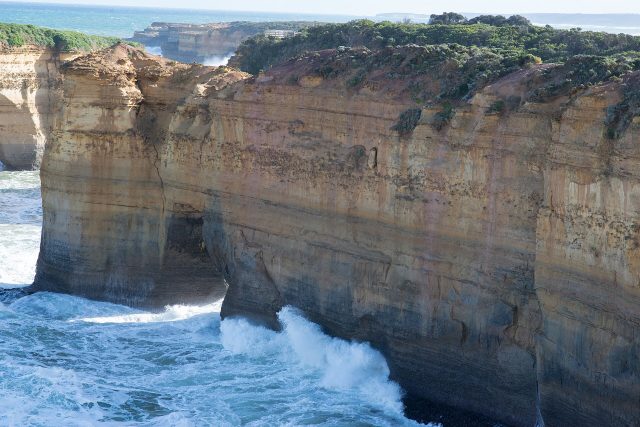
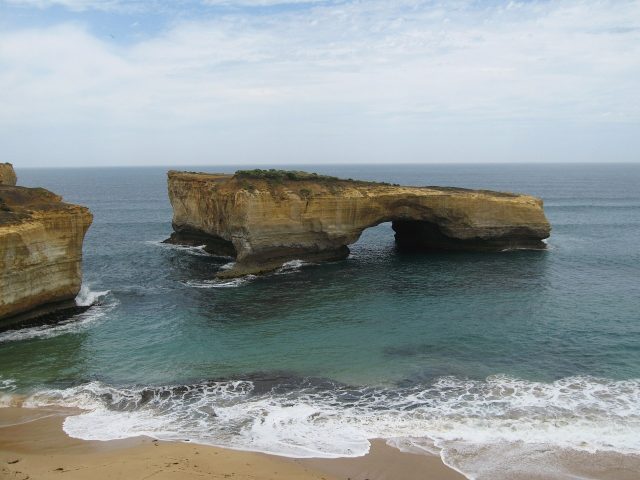
Port Campbell Beach isn’t the kind of place you visit for sunbathing or sandcastles. The coastline here is jagged, carved by the Southern Ocean into a dramatic meeting of land and water, where waves crash against rock with a rhythm that shifts with the wind and the hour. There are no long stretches of golden sand, no rows of umbrellas—just the raw, unfiltered force of the sea and the quiet persistence of the cliffs that stand against it. This is a place where nature doesn’t just exist; it performs, and you’re left watching, aware of your own smallness in the face of something far older and wilder.
The town of Port Campbell itself is a quiet outpost on Victoria’s southern coast, a place that has seen its purpose shift over time. It began in the mid-1800s as a rough-and-tumble port for whalers and fishermen, a stopover for those who made their living from the sea. Today, it’s a sleepy settlement where the streets feel suspended in time, as if waiting for the next tide to roll in. The locals here don’t just live near the ocean—they live with it, accepting its moods as part of daily life. The beach, though not the kind that draws crowds for swimming or picnics, has become the town’s defining feature simply because of what lies beyond it.
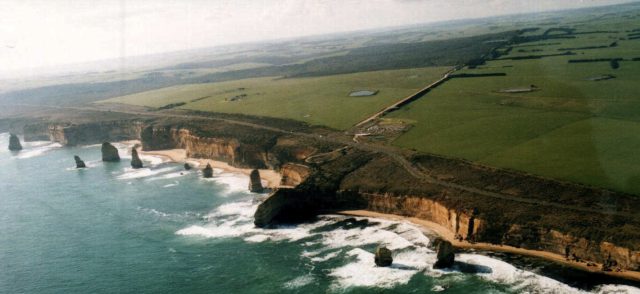
Just offshore, the Twelve Apostles rise from the water like the remnants of some ancient fortress. The name is misleading—there were never twelve of them, and erosion has whittled them down to just a handful. These limestone stacks, shaped by millions of years of wind and waves, are the real reason people come to this stretch of coast. They change constantly, some collapsing into the sea while others emerge from the cliffs, as if the ocean is slowly reshaping the landscape before your eyes. The best time to see them is at sunset, when the light turns the stone golden and the shadows stretch long across the water, making the formations look almost alive.
Port Campbell Beach is part of a much larger story—the Great Ocean Road and the Port Campbell National Park, a protected stretch of coastline where the land feels untamed. Walking trails wind along the cliffs, offering views of the ocean stretching endlessly to the horizon. Some paths lead down to the water, where the air is thick with the scent of salt and the sound of waves breaking against the rocks. The water here is never warm, even in summer, and the currents are strong, so swimming is only for the confident. But you don’t need to dive in to feel the pull of the place. Sitting on the rocks, listening to the waves, watching seabirds wheel overhead—it’s enough to make you forget the rest of the world exists.
The history of this coast is written in shipwrecks. In the 19th century, the waters off Port Campbell were treacherous, a graveyard for vessels caught in storms or dashed against hidden reefs. Some of those wrecks still lie beneath the surface, their stories half-remembered in local lore. The sea here has always been both provider and destroyer, a force that shaped the lives of those who settled along its shores. Even now, there’s a sense that the ocean is still in charge, that it could change everything in an instant if it wanted to.
The town itself is unassuming, built for function rather than beauty. The houses are low and sturdy, with weathered wooden facades and small windows designed to keep out the wind. There’s no grand architecture here, just the quiet practicality of a place where people live close to the elements. A few cafes and guesthouses offer simple comforts—hot coffee, fresh seafood, a warm bed after a day spent exploring the coast. The food is straightforward, but the oysters, mussels, and fish are as fresh as they come, pulled from the same waters that shape the landscape.
What makes Port Campbell Beach special is the way it forces you to slow down. There are no crowds here, no tourist traps, just the steady pulse of the ocean and the wind. You could spend hours walking the shore, watching the light shift across the cliffs, or simply sitting on the sand as the water changes from blue to grey to black. By evening, when the sun dips below the horizon and the sea darkens, it’s easy to feel as if you’ve reached the edge of the world, where the only things that matter are the sound of the waves and the vastness of the sky.
The coast is different in every season. In winter, storms roll in with waves that crash against the rocks like thunder, and the wind howls through the cliffs. Summer brings calmer waters, and if you’re lucky, you might spot dolphins playing in the surf or seals lounging on the rocks. But no matter the time of year, the beach remains a place where nature sets the rules. It’s not a destination for those who want to control their surroundings—it’s for those who want to witness something greater than themselves. And that, in the end, is why it stays with you long after you’ve left.