Loch Ard Gorge feels like a place where the ocean and the land have been locked in a slow, relentless dance for millennia. Tucked along Victoria’s rugged coastline within Port Campbell National Park, this small bay is framed by towering limestone cliffs, their surfaces carved into jagged spires and smooth hollows by the unyielding force of wind and waves. The meeting of sea and stone here is abrupt, almost violent—one moment you’re standing on solid ground, the next, the earth drops away into the endless blue of the Southern Ocean. The name itself carries the weight of history, tied to the wreck of the clipper ship *Loch Ard* in 1878, a disaster that left only two survivors and a story that still lingers in the salt air.
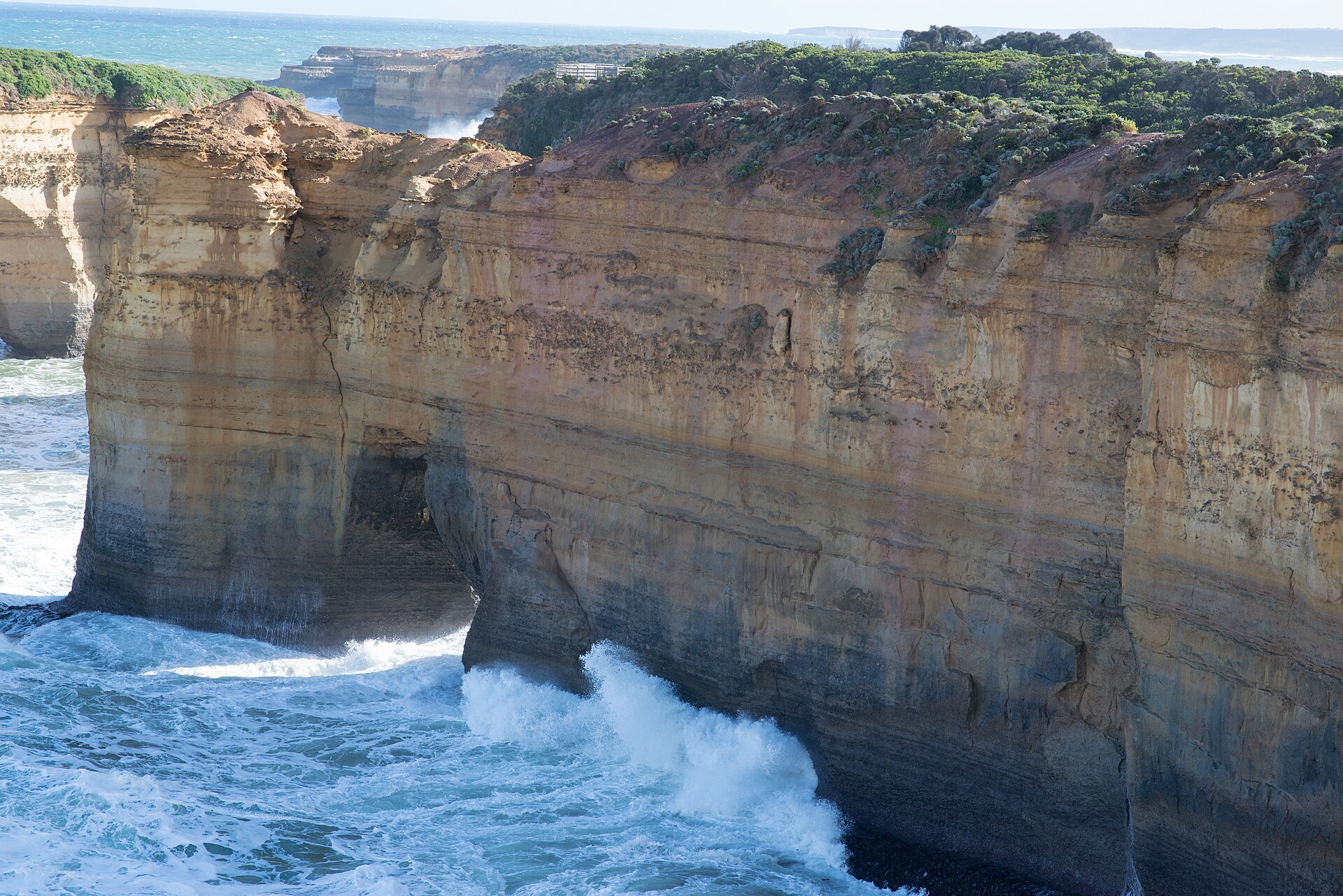
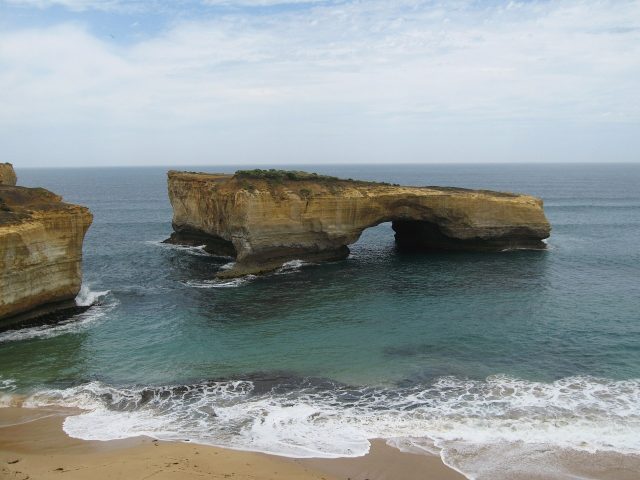
The cliffs are made of soft limestone, a rock that yields easily to the elements. Over millions of years, the Indian Ocean has sculpted them into caves, arches, and grottos, while rain and wind have etched out shapes that sometimes resemble figures or ancient ruins. The most striking feature is the natural arch that rises above the bay, its curve framing the water like a gateway to another world. On stormy days, waves crash against the rocks with a thunderous roar, sending spray high into the air, while in calm weather, the water shifts between turquoise and deep indigo, depending on the angle of the light. It’s a place where the landscape feels alive, constantly changing under the influence of time and tide.
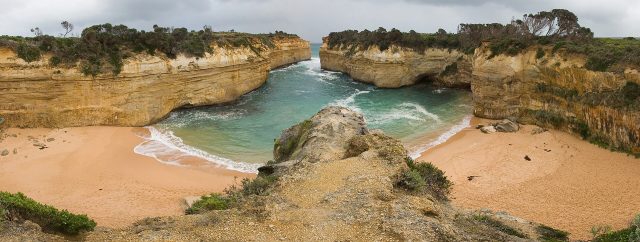
The walk down to the gorge begins at a small parking area perched on the cliff’s edge, where the first glimpse of the bay below takes your breath away. A narrow path winds through low shrubs and stunted trees, descending gradually toward the beach. The journey takes about ten minutes, but the views unfold slowly, each turn revealing more of the bay’s raw beauty. When you finally reach the sand, the contrast is striking—white shell-strewn beach against dark cliffs, with patches of hardy green vegetation clinging to the rocks. The sand itself is unusual, made up of tiny fragments of shells and coral, crunching underfoot like snow. It’s the kind of place where you instinctively slow down, as if the quiet grandeur of the surroundings demands it.
The water in Loch Ard Gorge is clear, but swimming here is discouraged. The currents are strong, and the seabed is littered with sharp rocks, hidden just beneath the surface. Instead, the bay is perfect for simply sitting on the shore, watching the way sunlight dances on the waves or listening to the cries of gulls circling overhead. On clear evenings, the sunset paints the sky in shades of pink and gold, the light reflecting off the cliffs in a way that makes the whole scene feel almost surreal. As dusk falls and the last of the day’s visitors leave, the sense of solitude deepens—just you, the ocean, and the wind, with nothing else to distract from the sheer scale of the place.
The story of the *Loch Ard* shipwreck adds a layer of quiet melancholy to the gorge. In June 1878, the clipper was nearing the end of its voyage from England to Melbourne when it struck the rocks during a storm. Of the 54 people on board, only two survived: Tom Pearce, a 15-year-old cabin boy, and Eva Carmichael, a 17-year-old passenger. Their survival was nothing short of miraculous. Both managed to swim ashore through the violent surf, then spent days sheltering in a cave before being found by local residents. Today, a small plaque on the cliff commemorates those who were lost, and the tale of the two survivors has become part of the local lore, a reminder of how fragile life can be in the face of nature’s power.
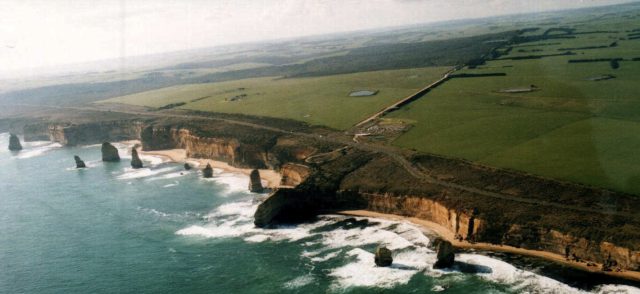
Loch Ard Gorge is part of the Twelve Apostles coastline, a stretch of the Great Ocean Road famous for its dramatic rock formations. While it may not draw the same crowds as some of its more famous neighbors, it holds its own in terms of beauty and atmosphere. There are no tour buses here, no souvenir stands—just the raw, unfiltered presence of the landscape. Photographers occasionally visit to capture the play of light on the cliffs or the way the water shifts color at different times of day, but for most of the time, the gorge belongs to the elements. It’s a place where you can stand on the beach and feel the weight of history, both geological and human, pressing in from all sides.
The vegetation here has adapted to the harsh coastal conditions. Hardy grasses and low shrubs cling to the cliffs, their roots gripping the limestone as they endure salt-laden winds and scarce rainfall. Along the path, you’ll find eucalyptus and acacia trees, their gnarled branches twisted by the constant breeze. On the beach, storm-tossed seaweed sometimes washes ashore, adding another layer of texture to the scene. Wildlife is sparse but present—cormorants and gulls nest on the cliffs, and if you’re lucky, you might spot dolphins playing in the waves or, during migration season, the distant spout of a whale breaking the surface.
Visiting Loch Ard Gorge isn’t just a stop on a coastal road trip; it’s a chance to step outside the rush of everyday life and feel the pulse of the ocean. There are no luxury resorts here, no bustling cafes—just the cliffs, the sea, and the wind, all working in concert to remind you of the world’s vastness. It’s the kind of place that stays with you long after you’ve left, not because of any grand spectacle, but because of the quiet way it makes you pause and reconsider your place in the natural order. Maybe that’s why people return to it, again and again—to stand at the edge of the continent and remember that beauty often lies in the most unexpected corners of the earth.