Pea Beach is one of those rare places on Easter Island where the ocean and the land seem to pause, as if the world has taken a breath. It’s not the kind of beach you stumble upon by accident—you have to seek it out, following a narrow path that winds down from the cliffs near Hanga Roa. The walk itself feels like part of the experience, the sound of waves growing louder as you descend. By the time you reach the shore, the rest of the island feels distant, even though the only settlement is just a short walk away.
What makes Pea different from other beaches on Rapa Nui is its quiet. There are no crowds, no vendors, no rows of sunbeds—just black sand stretching along a small cove, framed by jagged rocks. The sand here isn’t the kind that burns your feet; it’s soft, almost cool, formed from ancient volcanic eruptions that shaped the island. The water is clear but deceptively cold, and the currents can be strong, which is why most people don’t swim here. Instead, they sit on the shore, watching the waves crash against the rocks, or wade just far enough to feel the pull of the ocean.
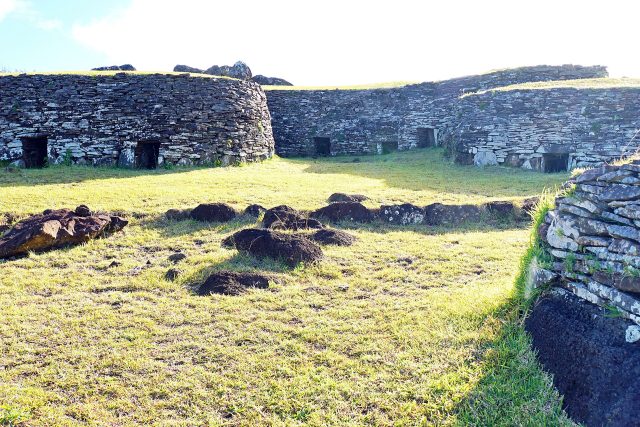
This wasn’t always just a place to visit. Long before tourists arrived, the Rapa Nui people came here for food and rituals. The ocean was their lifeline—it provided fish, shellfish, and seaweed, and it was also a sacred space. If you look closely near the base of the cliffs, you can still see the remains of old stone structures where they stored their catch or prepared meals. These ruins aren’t as famous as the moai, but they’re a quiet reminder of how people once lived here, long before the island became known to the outside world.
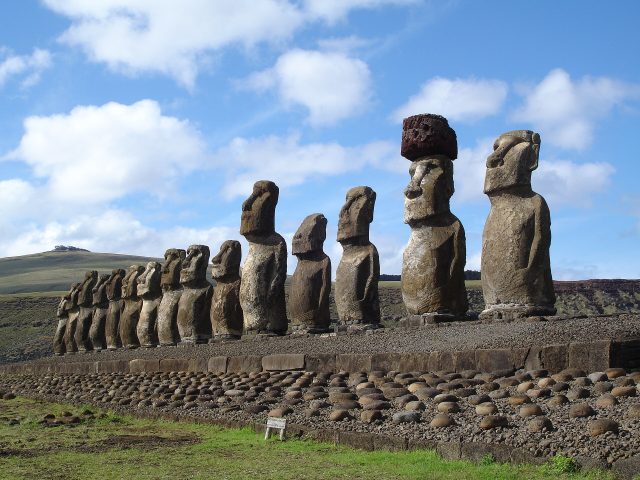
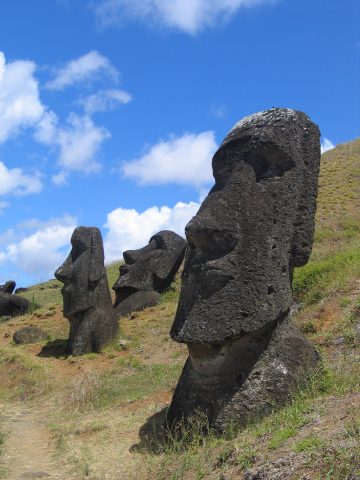
The beach itself is small, almost hidden, which is part of its charm. There’s no infrastructure—no changing rooms, no snack stands—just the natural rhythm of the place. The vegetation around it is sparse: low shrubs and dry grasses that rustle in the wind, giving way to rolling hills in the distance. From here, you can see the moai standing on their platforms, their backs turned to the sea. It’s easy to imagine them as silent guardians, watching over the shore just as they’ve done for centuries.
Pea isn’t the kind of beach where you lounge for hours with a cocktail. The entry into the water is rocky, and the waves can be unpredictable. But that’s not why people come. They come for the solitude, for the way the light plays on the water at sunset, for the sense of being somewhere untouched. It’s a place to sit with a book, to listen to the ocean, or to simply stare out at the horizon where the sky meets the sea. In moments like these, it’s not hard to understand why Easter Island feels so remote, so mysterious.
The beach changes with the time of day. In the early morning, you might find local fishermen checking their nets or drinking coffee by the water. By midday, a few visitors trickle in, mostly those who’ve heard about Pea from someone who’s been before. But as the sun begins to set, the beach empties out, leaving only those who’ve come specifically to watch the sky turn shades of orange and purple. The moai cast long shadows, and for a little while, it feels like the island belongs only to you.
What Pea lacks in dramatic scenery, it makes up for in atmosphere. There are no palm trees, no white sand, no postcard-perfect views. Instead, there’s a quiet intensity—a sense of being in a place that hasn’t changed much in hundreds of years. It’s the kind of spot that stays with you, not because it’s beautiful in the conventional sense, but because it feels real. And maybe that’s why, long after leaving Rapa Nui, people still find themselves thinking about this small, unassuming beach.