Parliament Hill in Ottawa is more than just a collection of grand buildings—it’s where Canada’s past and present intersect in stone, bronze, and the quiet hum of daily governance. Perched on a bluff overlooking the Ottawa River, the complex dominates the city’s skyline, a constant reminder of the decisions made within its walls that shape the country’s future. The choice of Ottawa as the capital in the mid-19th century was a compromise between English-speaking Montreal and French-speaking Toronto, and since then, these buildings have become an indelible part of the national identity. For visitors, it’s a chance to see democracy in action; for Canadians, it’s a gathering place for moments of national significance, where the weight of history feels tangible.
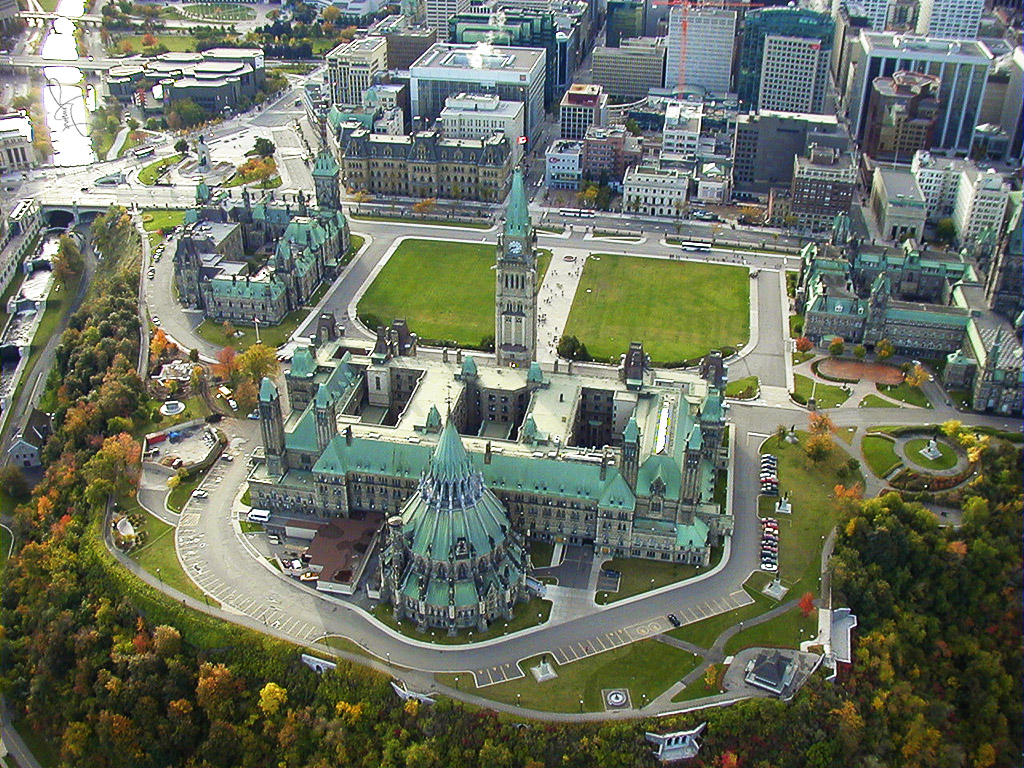
At the heart of the complex stands the Centre Block, a masterpiece of Gothic Revival architecture that commands attention with its soaring spires, pointed arches, and intricate stonework. The design evokes the grandeur of medieval castles, yet inside, it’s a working space where the House of Commons and Senate convene, debates unfold, and laws are passed. The high ceilings and wood-paneled chambers still echo with the voices of those who’ve shaped the nation’s course. The most striking feature, though, is the Parliamentary Library—a circular, domed sanctuary lined with carved oak and statues of great thinkers. Built in the late 1800s, it remains nearly untouched by time, a place where politicians and researchers retreat amid towering shelves of knowledge.
The Hill’s history is as layered as the country it represents. The first buildings rose in the 1860s, but in 1916, disaster struck when a fire ravaged the Centre Block. Only the Library survived, saved by its heavy iron doors, which staff managed to close in time. Rebuilding took years, and the result is the complex we see today—externally unchanged, though modernized within. Security systems, broadcasting equipment, and accessibility upgrades now coexist with the original architecture. Yet even now, climbing the granite steps past bronze statues of former prime ministers and war memorials, the past feels close enough to touch. Plaques bearing excerpts from pivotal speeches serve as quiet reminders of the debates that have defined Canada.
In summer, Parliament Hill becomes a stage for both locals and visitors. Guided tours offer glimpses into the chambers where laws are made, while lucky timing might allow witnessing a live debate. The evenings come alive with sound-and-light shows, where projections dance across the facades, recounting Canada’s story to stirring music. Winter transforms the Hill into a festive hub, with a Christmas market and an outdoor skating rink on the slope. These seasonal rhythms make it clear that the Hill belongs as much to the public as it does to politicians—a place where families picnic, students lounge on the lawns, and skaters glide under strings of lights.
Beyond the ceremonies and tourism, Parliament Hill is a working political hub. Journalists cluster near the steps for interviews, lobbyists discuss legislation in the halls, and activists rally on the lawns. School groups wander the grounds, snapping photos of the Peace Tower, while in warmer months, the grass fills with people soaking up the view of the river. On Canada Day, July 1st, the Hill becomes the epicenter of national celebration, packed with thousands waving flags and singing along to concerts. In these moments, the Hill transcends its role as a seat of power, becoming a shared space where politicians and citizens alike mark the country’s milestones.
The architecture itself tells a story of Canada’s evolution. The Gothic Revival style was chosen to reflect ties to Britain, a nod to the country’s colonial past. Over time, however, distinctly Canadian elements emerged—carvings of maple leaves and beavers on the facades, artwork by local artists adorning the interiors. The most poignant addition is the Peace Tower, built to honor Canadians lost in World War I. Standing nearly 100 meters tall, it offers sweeping views of the city and river. Inside, a carillon of bells rings out on national holidays, its music drifting across the Hill. The tower’s memorial chamber, with its Books of Remembrance listing the fallen, ensures that history is never far from mind.
For many Canadians, Parliament Hill is also a place of remembrance. The National War Memorial stands at its base, a solemn tribute to those who died in conflicts, while a newer monument honors peacekeepers. Every November 11th, on Remembrance Day, the Hill hosts a ceremony attended by veterans, politicians, and crowds of citizens. The two minutes of silence at 11 a.m. are a powerful reminder of the human stories behind the grand architecture. It’s a day when the Hill’s role shifts from political stage to sacred ground, where the nation pauses to reflect on sacrifice and service.
Today, Parliament Hill continues to evolve alongside Canada. While it remains the heart of government, it’s also a venue for concerts, festivals, and public gatherings. Recent years have seen efforts to make the complex more accessible, with new tours, interactive exhibits, and open spaces for visitors to explore. The Hill is no longer just a place for politicians—it’s a living museum, a park, and a public square where anyone can engage with the country’s history. Ottawa may not be Canada’s largest city, but here, on the banks of the river, the essence of what it means to be Canadian feels closer than anywhere else. Whether you’re watching the sunset from the lawn or standing in the shadow of the Peace Tower, the Hill has a way of making the nation’s story feel personal.