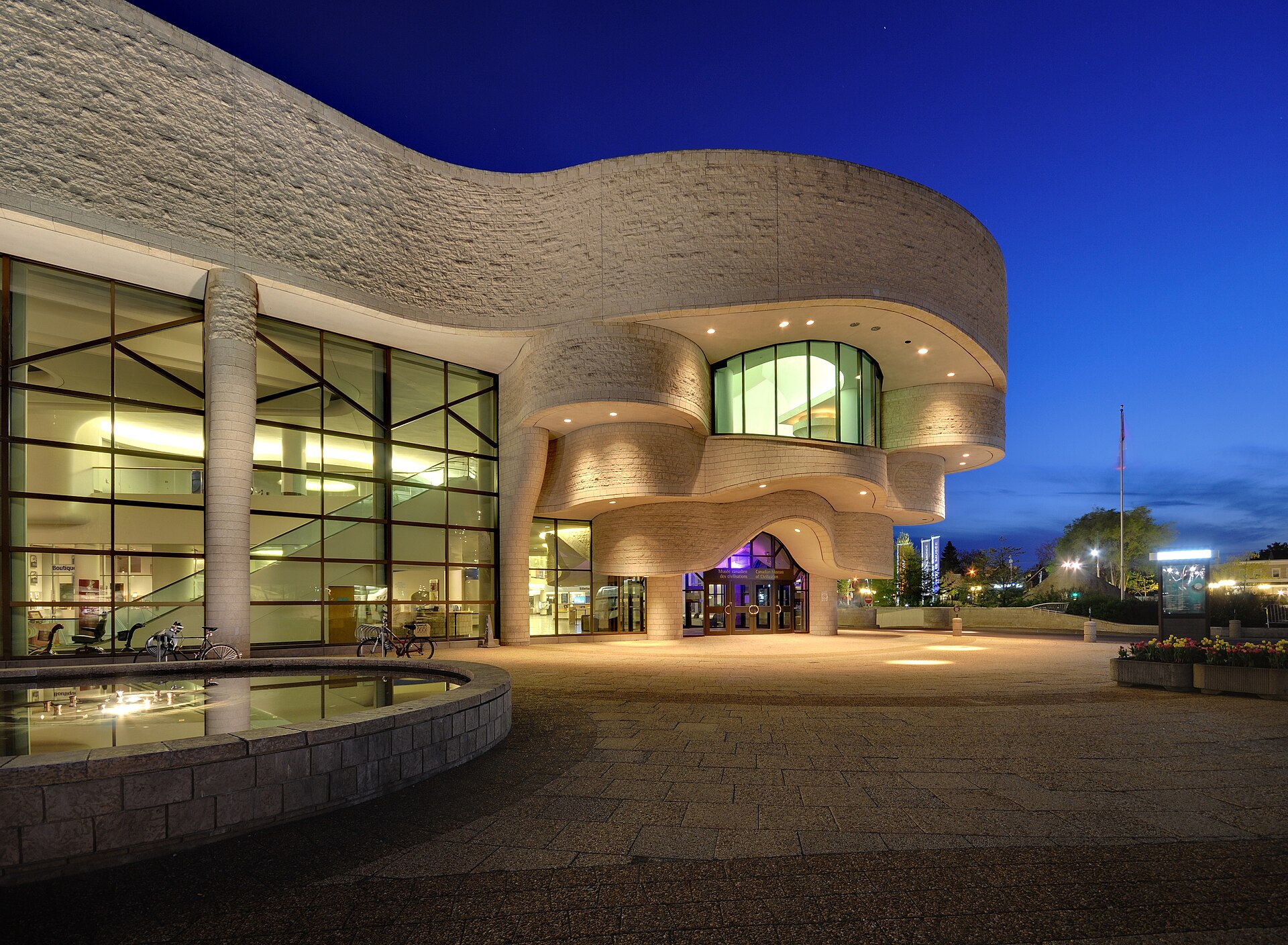
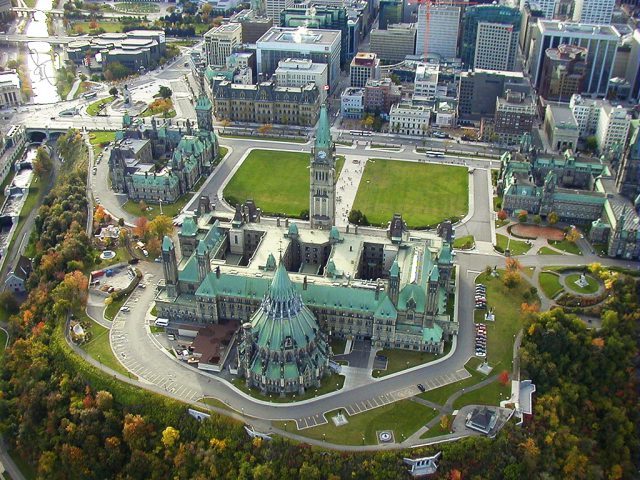
The Canadian Museum of History in Ottawa isn’t just a place to see artifacts—it’s where the country’s past feels alive in a way that goes beyond glass display cases. The building itself tells a story before you even step inside. Designed by Douglas Cardinal, an architect of Indigenous descent, its sweeping curves echo the natural landscapes of Canada, from winding river valleys to shifting sand dunes. Perched on the banks of the Ottawa River, directly across from Parliament Hill, the museum bridges two cities—Ottawa and Gatineau—and two cultures, English and French, that have shaped this region for centuries. The view from its terraces stretches across the water, a quiet reminder of how geography has always connected people here.
Inside, the Grand Hall immediately draws you in with its towering totem poles, carved by Indigenous artists from the Pacific Northwest. Each pole is more than decoration; it’s a record of family lineages, clan histories, and cultural traditions, passed down through generations. Standing among them, you’re struck by both their scale and their intimacy—the way they carry stories that predate Canada as a nation. The museum dedicates significant space to Indigenous cultures, reflecting the country’s ongoing effort to reckon with its past, including the complex and often painful relationships between settlers and the First Peoples. Beyond artifacts like tools and textiles, the exhibits include oral histories from elders, offering a glimpse into how communities adapted—or resisted—change after European contact.
The Canadian history galleries take a similarly immersive approach, avoiding dry timelines in favor of objects that speak for themselves. A compass from the doomed Franklin expedition, its needle still pointing north despite the crew’s disappearance, sits near a soldier’s last letter, scribbled on scrap paper before a World War I battle. One of the most striking displays is a recreated 19th-century street, complete with storefronts, a pharmacy, and a print shop. Peering into the windows, you can almost hear the clatter of horse-drawn carriages or the hum of a printing press—details that make the past feel tangible. It’s history without the distance, the kind that lingers in your mind long after you’ve left.
While the museum’s focus is on Canada, its collections extend far beyond national borders. Egyptian mummies, Japanese woodblock prints, and artifacts from the Silk Road all find a place here, but they’re presented through a distinctly Canadian lens. The exhibits explore how cultures have intersected over centuries, whether through trade, migration, or conflict. In the Silk Road gallery, for example, you’ll find not just Chinese silk or Persian pottery but also items uncovered in Canada that hint at ancient connections—proof that even this northern land was never truly isolated.
For younger visitors, the museum transforms history into play. The children’s area is a hands-on space where kids can try on period costumes, build forts from oversized blocks, or practice writing hieroglyphs on papyrus. It’s a place where curiosity leads the way, and where adults often find themselves just as engaged. Beyond the permanent exhibits, the museum hosts workshops, lectures, and concerts, blending education with entertainment. Traditional music performances or modern reinterpretations of folk songs turn the galleries into a living stage, where the past isn’t just observed but experienced.
The museum also grapples with contemporary issues, using temporary exhibitions to connect history to the present. Past displays have tackled topics like climate change, migration, and cultural preservation, while others have celebrated uniquely Canadian phenomena. One exhibit on hockey, for instance, went beyond equipment and trophies to explore how the sport became a cultural touchstone—uniting small towns and big cities, shaping identities, and even reflecting broader social shifts. It’s a reminder that history isn’t static; it’s something that continues to unfold, even in the most unexpected places.
The building itself is part of the experience. Its flowing architecture and expansive windows create a sense of openness, blurring the line between the museum and the world outside. In summer, the terraces buzz with picnickers; in winter, the outdoor rink draws skaters against the backdrop of the frozen river. The museum isn’t an isolated institution—it’s woven into the fabric of the city, a place where people come to learn, but also to relax, meet friends, or simply enjoy the view.
Ottawa is a city where history is never far from the surface, and the Museum of History makes it impossible to ignore. There’s no sterile academic tone here; instead, the exhibits invite you to engage, to question, and to see the connections between past and present. You could spend hours wandering the halls, or just drop in for a quick visit—either way, you’ll leave with a deeper sense of what Canada is. It’s not just about maple leaves and hockey, but about the layers of stories, struggles, and triumphs that have shaped a nation still very much in the making.