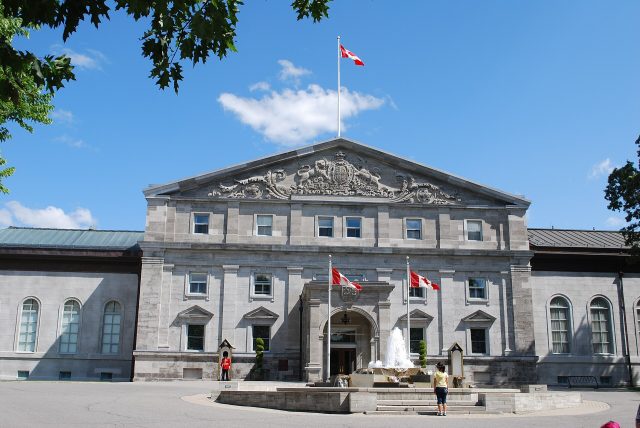
Notre-Dame Cathedral Basilica in Ottawa is one of those rare places that feels suspended in time. Standing on the banks of the Ottawa River, it has witnessed the city’s transformation from a modest settlement into the nation’s capital. More than just an active place of worship, it is a quiet monument to history, art, and the passage of generations. Whether you come for the architecture, the stillness, or simply to step away from the city’s pace, the basilica offers something that lingers long after you leave.
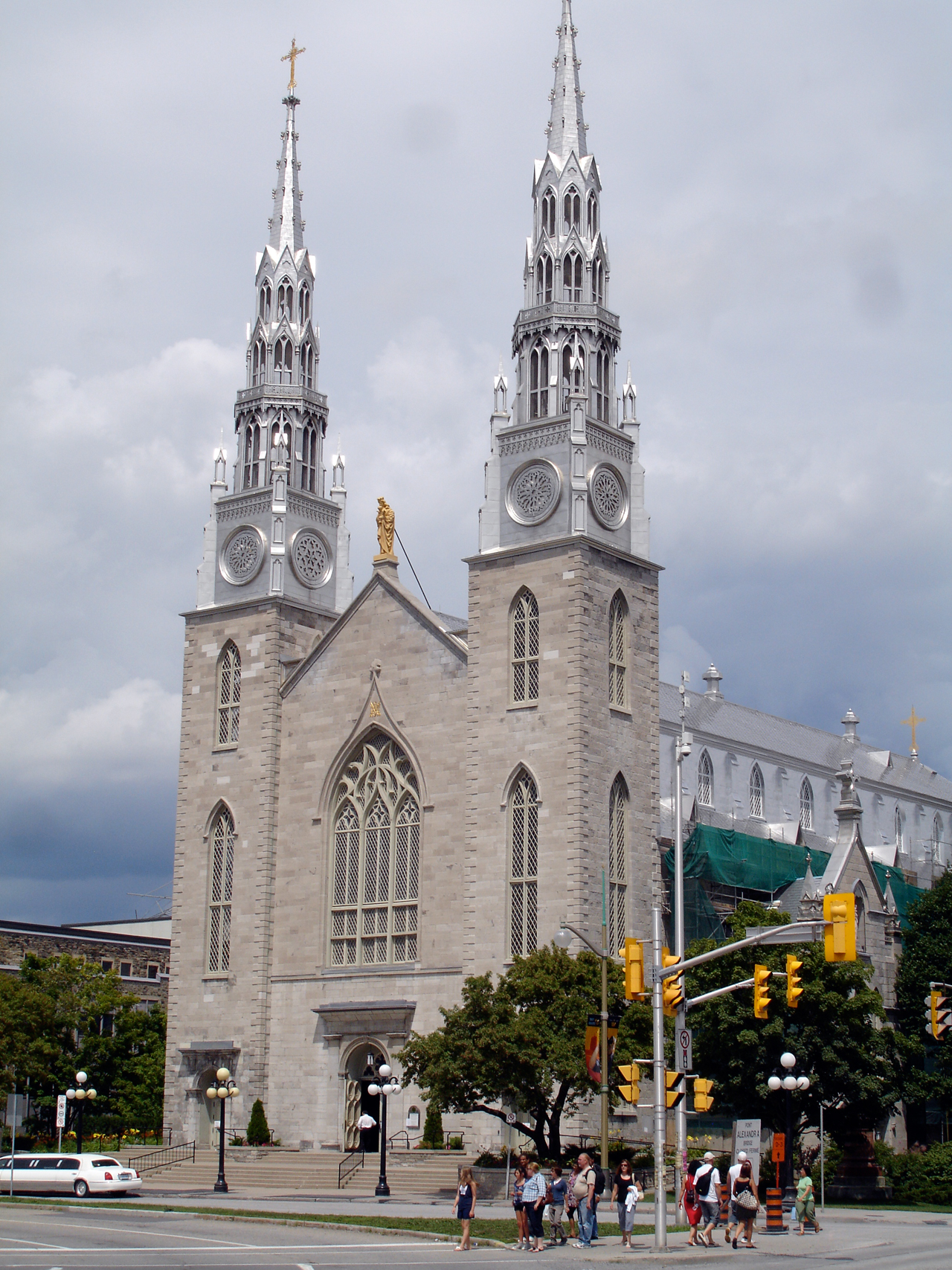
From the outside, the building commands attention. Its twin spires rise sharply against the skyline, their pointed silhouettes a familiar sight in downtown Ottawa. The façade is a study in Gothic Revival detail—tall, narrow windows, intricate stone carvings, and a sense of verticality that draws the eye upward. Inside, the effect is even more striking. The nave stretches high above, its vaulted ceilings supported by slender columns that create an illusion of weightlessness. Light filters through stained glass, casting shifting patterns of color across the stone floors, while the marble and gilded altar at the far end glows softly in the dim interior.
The basilica’s story is woven into the fabric of Ottawa itself. The first church on this site was a small wooden structure built in 1832, when the city was still known as Bytown. As the population grew and Ottawa was chosen as the capital of the Province of Canada in 1857, the need for a grander place of worship became clear. Construction of the current building began in 1841 under architect Antoine Robillard, though it would take over two decades to complete. The design evolved during those years, reflecting both the ambitions of the growing city and the architectural trends of the time.
The interior is where the basilica’s character truly unfolds. In the 1880s, local craftsmen were commissioned to adorn the space, and their work remains one of its most enduring features. Philippe Paré, a master woodcarver, created much of the intricate detailing—sculptures, reliefs, and the ornate choir stalls, all richly gilded and painstakingly carved. The stained glass windows, added later, were imported from France and depict scenes from the lives of saints and biblical stories, their colors deepening with the angle of the sun. Together, these elements give the basilica a sense of warmth and craftsmanship that feels almost personal.
Beyond its religious function, Notre-Dame has long been a gathering place for the city. In 1866, just before its completion, it hosted the official welcome for Lord Monck, Canada’s first governor general. Over the years, it has also served as a venue for concerts, particularly those featuring its historic organ, one of the oldest in North America. The instrument, installed in the 19th century, still fills the space with sound during services and recitals, its deep tones resonating through the high ceilings. For many Ottawans, the basilica is more than a landmark—it’s a backdrop to life’s milestones, from baptisms and weddings to quiet moments of reflection.
The architecture of Notre-Dame reflects a pivotal moment in Canadian history. Built during the mid-1800s, when the country was still defining its identity, the basilica’s Gothic Revival style was a deliberate nod to European traditions. Yet it also feels distinctly Canadian—its stone and spires rooted in the local landscape, its presence a reminder of the country’s layered past. Today, it stands as a bridge between eras, a place where the weight of history is palpable but not overwhelming.
Visiting the basilica is a study in contrasts. Outside, the city moves quickly—traffic hums, people hurry past, and the river flows steadily beyond. Inside, time seems to slow. The air is cool and still, the only sounds the occasional murmur of voices or the creak of a pew. In summer, tourists linger on the steps, photographing the façade or pausing to take in the view. In winter, the basilica’s silhouette against the snow-covered streets is almost storybook-like. Yet no matter the season, the interior remains a sanctuary, its quietude a rare commodity in the heart of a capital city.
Though it has stood for over a century and a half, Notre-Dame is far from a relic. It remains an active parish, with services held regularly and a choir that performs everything from Gregorian chants to contemporary hymns. For some, it’s a place of faith; for others, a museum of craftsmanship and history. But for all who enter, it offers a moment of respite—a chance to step out of the present and into a space that feels both timeless and deeply human.
If you find yourself in Ottawa, even a brief visit to Notre-Dame is worth the time. You don’t need to be religious or an architecture enthusiast to appreciate its atmosphere. There’s something about the way the light moves through the stained glass, or the way the old wood and stone absorb sound, that makes the basilica feel alive in a way few buildings do. It’s a place that invites you to pause, to look up, and to remember that some things—like the quiet dignity of this old church—endure.