Zaslavl is one of those Belarusian towns where history lingers in the air, not as something distant or abstract, but as a quiet presence woven into the fabric of everyday life. Just half an hour from Minsk, it sits along the banks of the Svislach River, a place where the pace slows down almost immediately. There are no crowded streets or hurried footsteps here—just narrow lanes, old churches, and a sense of time moving differently. At the heart of it all is Zaslavl Park, a place that feels less like a manicured green space and more like a living extension of the town’s past.
The park occupies what was once the estate of the Chapsky counts, a noble family who shaped this land in the 19th century. The manor itself is gone, but its spirit remains in the old trees and winding paths that still follow the contours of the original design. Unlike the rigid symmetry of French gardens, this one was laid out in the English style—gentle slopes, meandering waterways, and clusters of trees that look as if they grew there naturally. It’s the kind of place where you can walk for hours without realizing how far you’ve gone, simply because the landscape invites you to keep moving.
One of the park’s most striking features is its system of ponds, once part of the estate’s infrastructure. Today, they’re home to ducks and swans, their surfaces reflecting the sky on clear days. In winter, the frozen water becomes a skating rink, drawing locals who glide across the ice under the bare branches of willows. The ponds are fed by small streams, and if you stand close enough, you can see fish darting beneath the surface—nothing dramatic, just the quiet rhythm of life continuing as it has for decades.
Near the water stands an old mill, its stone walls weathered by time and softened by moss. It hasn’t worked in years, but that only adds to its charm. The wooden beams are darkened with age, and the whole structure has a way of making you wonder about the hands that once turned its wheels. There’s no plaque explaining its history, no guided tour—just the mill itself, standing as a silent witness to the generations that passed through here.
Zaslavl Park isn’t just a place for quiet walks; it’s also where the town gathers for events that feel rooted in tradition. In summer, open-air concerts and folk festivals spill across the lawns, while winter transforms the park into a scene from a storybook—frosted trees, snow-dusted paths, and the occasional sound of laughter from skaters on the ponds. Locals come here year-round, not for any grand spectacle, but because the park has a way of making even ordinary days feel special.
The town itself dates back to the 11th century, when it was founded as a fortress on the edge of the Polotsk lands. While little remains of those early days, the park carries traces of that history in subtle ways. Information boards dot the paths, offering fragments of the past—how the estate changed hands, how the town survived wars and occupations, how the land itself was shaped by the people who lived here. Occasionally, archaeologists work in the area, and if you’re lucky, you might stumble upon a dig in progress, a small reminder that history is still being uncovered beneath the surface.
What makes the park feel different from so many others is the way it balances presence and absence. There are no grand monuments or towering statues, no attempts to force meaning onto the landscape. Instead, it’s a place where history is felt rather than declared—where the weight of centuries isn’t announced with fanfare, but lingers in the quiet rustle of leaves or the way sunlight filters through the branches. It’s easy to imagine the people who walked these same paths before: the estate workers, the counts strolling in the evenings, the soldiers who marched through during wartime. Their stories aren’t written down here, but they’re part of the air.
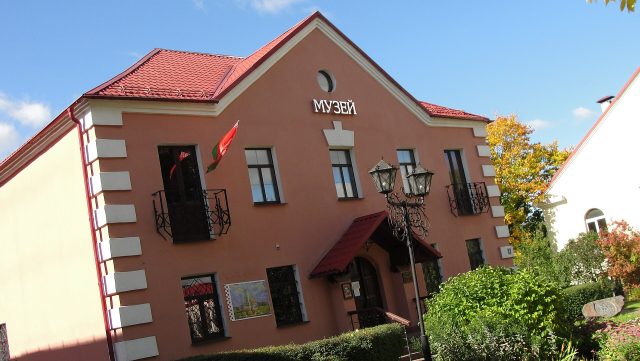
For those who prefer to explore actively, the park offers cycling trails and walking routes that lead toward the Svislach River or into the surrounding countryside. There’s a small museum in town with exhibits on Zaslavl’s past, but even without it, the park itself tells a story. You could spend an afternoon following the paths, or you could do nothing at all—just sit by the water, watching the swans drift across the pond, and let the hours slip by unnoticed.
Zaslavl Park isn’t the kind of place that demands attention. It doesn’t have the grandeur of a palace garden or the meticulous beauty of a botanical collection. What it does have is a quiet, unassuming charm—a sense that this land has been lived on, cared for, and passed down without ever losing its connection to the people who call it home. There are no crowds, no tourist traps, no pressure to experience it in any particular way. Just the slow, steady rhythm of nature and history, side by side. Maybe that’s why people keep coming back. Not for anything dramatic, but for the simple, enduring pleasure of a place where time feels a little softer.