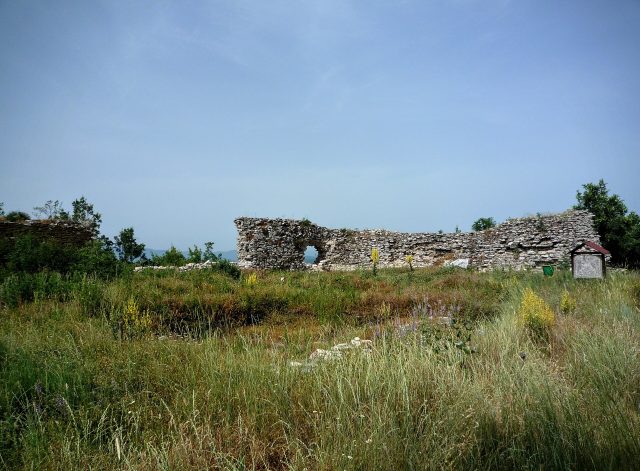
The Arda River near Ivaylovgrad flows with a quiet patience, as if reluctant to leave this corner of southern Bulgaria. Here, close to the Greek border, it carves out a valley of gentle hills, where scattered oaks and thickets of wild shrubs soften the landscape. The park along its banks isn’t a manicured recreation area but rather an extension of the land itself—a place where nature and people coexist without the intrusion of paved paths or flashy amenities. Locals don’t come here for attractions or cafes; they come for the stillness, broken only by the rustle of leaves and the murmur of water against stone.
For centuries, the Arda has been a silent witness to the region’s history. In ancient times, its banks served as a route for traders moving between Thrace and the Aegean coast. Later, during the Middle Ages, the river marked the shifting border between Bulgarian kingdoms and the Byzantine Empire. The water here is clear, with a faint greenish tint, and the riverbed is strewn with smooth stones that locals call the "tears of the Arda." In summer, the river warms enough for swimming, though the current is barely noticeable—the water seems to linger between the hills, as if in no hurry to move on.
The park stretches for several kilometers along the river, though its boundaries are loose, more of an idea than a defined space. It’s simply where the land dips toward the water, where you can pull over, spread a blanket on the grass, or wade into the shallows. The road to the river winds past vineyards and orchards before giving way to willows and poplars that lean over the water. Their shade offers relief from the midday sun, and in the evenings, a cool dampness rises from the river. Fishermen sometimes appear with rods, though the days of catching large fish here are long gone. Instead, you might spot turtles basking on the rocks or schools of small fish darting near the shore.
There’s little in the way of grand architecture here—just a few old bridges spanning the river. One, a low-arched stone bridge, dates back to the early 20th century. It once carried the road to Dimitrovgrad but now serves only pedestrians, its worn surface bearing the marks of time. Another, made of metal and concrete, feels unfinished, with missing railings and rusted sections. Yet both bridges have become part of the landscape, their imperfections adding to the river’s quiet charm.
Spring is when the valley comes alive. From April to May, the hills burst into color, blanketed in wildflowers, while the air fills with the scent of thyme and sage. Dragonflies skim the water’s surface, and locals say the river is at its most generous during these months—the water softer, the fish rising closer to the light. Summer transforms the park into a gathering place: teenagers splash in the shallows, families lay out picnics, and elderly men sit on the banks with fishing rods, lost in memories. Winter is quieter, though even then the river rarely freezes, and the occasional snow melts quickly under the southern sun.
Ivaylovgrad is a small town, and for its residents, the park along the Arda isn’t just a place to visit—it’s woven into daily life. There are no crowds, no tourist traps, not even on weekends. Locals know every bend in the river, every path leading to the water, every rock that makes a good perch for fishing. For outsiders, it’s a chance to see Bulgaria without the gloss—no postcard-perfect scenes, just a place where life moves at the pace of the river, shaped by the seasons.
In recent years, there have been attempts to tidy up the area—benches installed, trash bins placed, a few paths laid down. But these efforts feel unnecessary. The park thrives on its own terms, and too much intervention would only disrupt its natural rhythm. There are no signs, no informational plaques, no rules posted. Just the river, the hills, and the sky above. That’s the real appeal of this place: it doesn’t try to impress. It simply exists, as it has for generations, indifferent to the passage of time.