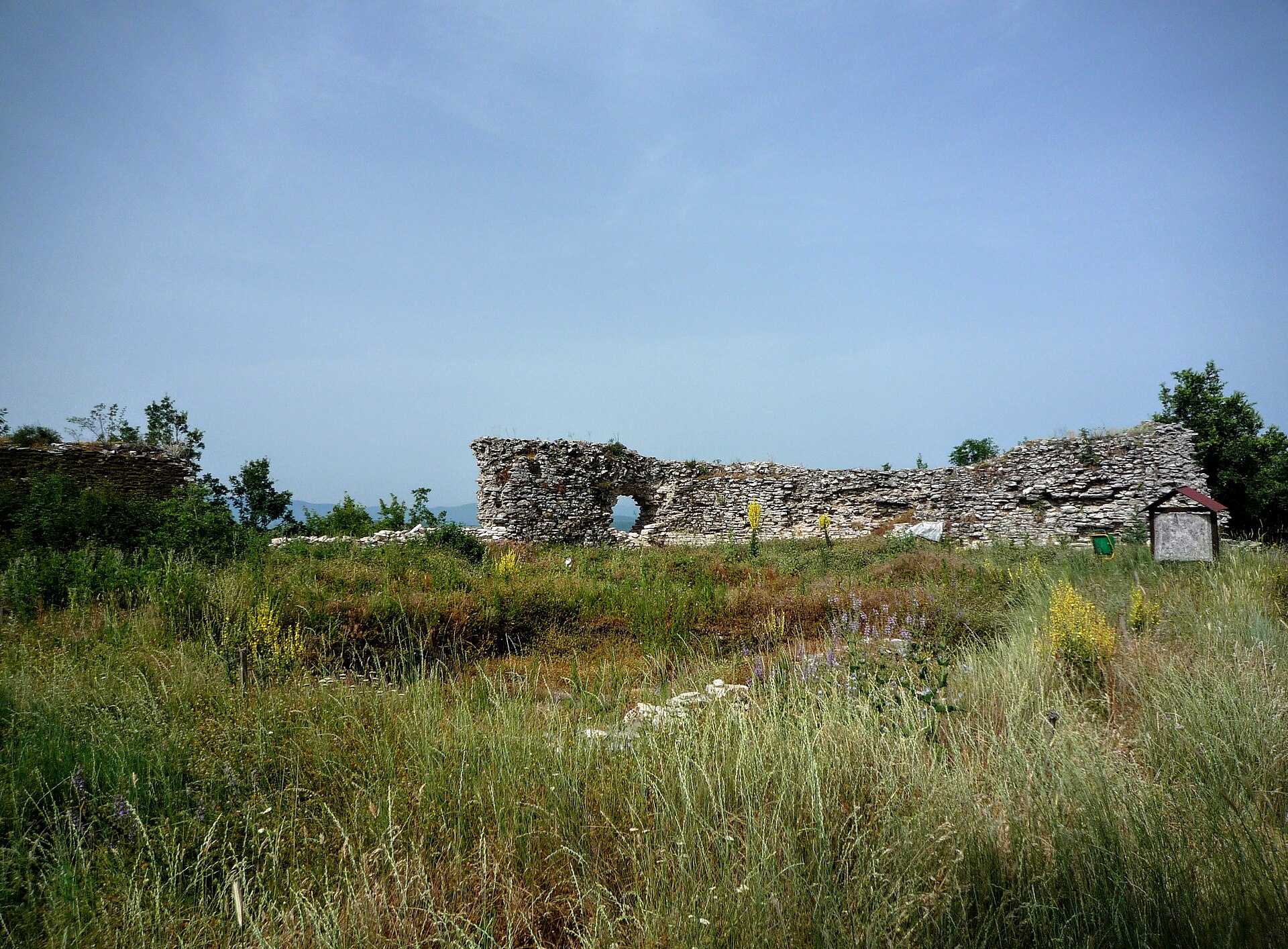
Perched on a low hill above the Arda River, not far from Ivaylovgrad, the fortress of Lyutitsa watches over the landscape like a silent guardian. Its weathered stone walls rise against the sky, catching the light in a way that makes them glow warmly in the late afternoon sun. The place feels remote, untouched by the usual tourist crowds. If you visit on a weekday, you might find yourself completely alone, with nothing but the wind and the distant murmur of the river for company. The surrounding Rhodope Mountains stretch out in gentle slopes, covered in oak and pine, while the Arda winds below, cutting through rocky banks and patches of greenery.
Lyutitsa isn’t the kind of fortress that immediately impresses with sheer size or grandeur. Instead, it reveals itself slowly, the longer you look. The walls, built from large blocks of local stone, still stand firm in places, though some sections have surrendered to time, softened by moss and wild grasses. Inside, only fragments of structures remain—enough to imagine the life that once filled this space. There would have been storerooms, living quarters, perhaps even a small chapel. Archaeologists have uncovered coins, pottery, and everyday objects here, hints of a place that was more than just a military outpost. Lyutitsa was a town, with its own rhythm and stories.
The history of Lyutitsa is quieter than that of Bulgaria’s more famous medieval strongholds. The first records of it date back to the 11th century, when this region was part of the Byzantine Empire. Back then, it served as a key defensive point along the route from Thrace into the Rhodopes, controlling both trade and military movements. Later, during the Second Bulgarian Empire, the fortress came under Bulgarian rule, becoming part of the southern border defenses. Armies passed through here, caravans stopped for rest, and locals sought shelter within its walls during raids. But as borders shifted and threats faded, Lyutitsa lost its strategic importance. Over time, it was abandoned, left to the mercy of nature, which has been slowly reclaiming it ever since.
The architecture of Lyutitsa is classic Byzantine—thick walls reinforced with corner towers, narrow gates designed for easy defense, and an inner layout built to withstand long sieges. The fortress isn’t large, covering barely a hectare, but it was designed with efficiency in mind. The Byzantines knew how to build for purpose, and Lyutitsa is a perfect example of that. The walls curve to follow the contours of the hill, making the most of the natural terrain. Inside, the remains of buildings are scattered, their foundations barely visible beneath the grass. It’s easy to picture how the space was used—where soldiers stood watch, where supplies were stored, where people gathered in times of danger.
Today, Lyutitsa feels like a place where time has paused. Walking through its ruins, you can almost hear the echoes of the past—the footsteps of merchants, the clatter of weapons, the murmur of voices. The wind carries the sound of the river below, unchanged over centuries. There are no signs, no explanatory plaques, not even well-trodden paths. It’s just you, the stones, and the open sky. Some might find it too quiet, too empty, but for those who appreciate places where history feels tangible, Lyutitsa is perfect. It doesn’t offer grand narratives or polished tourist experiences. Instead, it invites you to piece together its story for yourself.
Getting here takes a bit of effort. From Ivaylovgrad, you head south toward the Greek border, then turn onto a narrow road that winds toward the river. The drive is scenic, with rolling hills and patches of forest, but the road can be rough in places. Eventually, the walls of Lyutitsa appear on the horizon, and the journey suddenly feels worthwhile. From the parking area, it’s a ten-minute walk uphill, nothing too steep, but the stones can be slippery, especially after rain. There’s no visitor center, no café, not even a bench to sit on. This isn’t a place that caters to tourists. It’s raw, unfiltered history, and that’s part of its charm.
Lyutitsa isn’t the kind of fortress that gets restored and turned into a major attraction. There are no souvenir stalls, no guided tours, no crowds. It’s a place for those who want to see history as it is—weathered, incomplete, and real. That’s probably why it doesn’t draw many visitors. But those who do make the trip often leave with a quiet sense of awe. You can sit on one of the walls, look out over the river and the mountains, and imagine the lives that unfolded here. Battles were fought, people lived and died, and for a time, this was home. Now, it’s just a ruin, but one that still holds onto its past.
If you’re planning a visit, spring or autumn are the best times to come. The weather is mild, and the landscape is at its most vibrant. Summer can be hot and dry, while winter brings rain and even snow, making the roads tricky. But no matter when you visit, Lyutitsa has a way of making you slow down. It’s a place that doesn’t give up its secrets easily, but if you’re patient, it rewards you with a sense of connection to something much older than yourself. The stones here have seen centuries pass, and standing among them, you can’t help but feel a part of that long, quiet story.