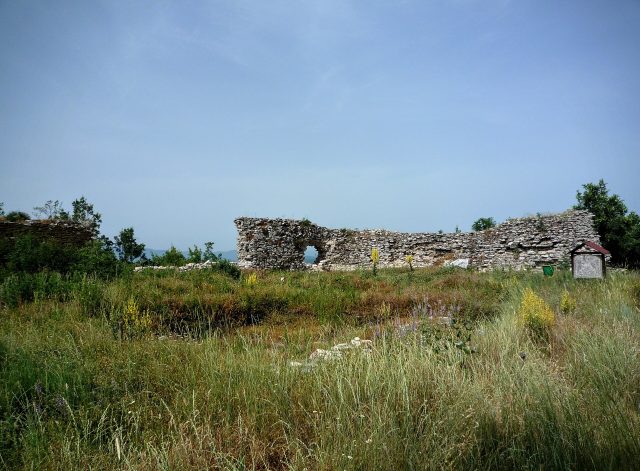
Villa Armira is one of those rare places where time seems to stand still, preserving the spirit of an era long past. Tucked away near the quiet town of Ivaylovgrad in southern Bulgaria, this ancient Roman villa was once a lavish countryside estate belonging to a wealthy family. Today, its ruins offer a glimpse into life nearly two thousand years ago, revealing the grandeur of Roman architecture and the daily rhythms of a world that has since faded.
Built in the first century AD and inhabited until the fourth, Villa Armira takes its name from the small Armira River that flows nearby. At the time, this region was part of the Roman province of Thrace, and the villa served as more than just a retreat—it was a hub of agricultural and economic activity. Vineyards and olive groves surrounded the estate, where wine and oil were produced, alongside various crafts. The complex included not only living quarters but also baths, workshops, and even a small temple, underscoring its importance in the local landscape.
What makes Villa Armira particularly striking are its mosaics. The floors of many rooms are adorned with intricate geometric patterns and scenes from mythology, their vivid colors and precise craftsmanship still impressive after centuries. One of the most remarkable fragments depicts Medusa, her serpentine hair rendered in such detail that it’s easy to imagine how she was meant to ward off evil spirits. These mosaics hint at the wealth and status of the villa’s owner, a person of considerable influence in Roman society.
The architecture of Villa Armira follows the classic design of Roman country estates. The main building centered around an inner courtyard with a colonnade, where a pool once reflected the sky. Living and communal spaces radiated from this open area, some decorated with frescoes, others warmed by a hypocaust system—a sophisticated underfloor heating method that was a luxury in its time. Such engineering feats speak to the ingenuity of Roman builders, who managed to create comfort even in the harshest climates.
Over the centuries, the villa fell into disrepair. Whether due to barbarian invasions, natural disasters, or simply the passage of time, it was abandoned by the fourth century. Its walls were gradually swallowed by the earth, and its existence faded from memory until 1964, when fragments of its mosaics were accidentally uncovered by locals. Systematic excavations didn’t begin until the 1980s, and since then, the site has slowly revealed its secrets.
Today, Villa Armira is an open-air archaeological site, accessible year-round. Unlike more famous ruins, it remains relatively untouched by mass tourism, allowing visitors to wander its paths in quiet contemplation. The absence of crowds makes it easier to imagine the sounds that once filled these spaces—laughter, conversations, the clinking of cups during feasts. The surrounding landscape, with its rolling hills, vineyards, and forests, adds to the sense of stepping into another time.
Ivaylovgrad and its surroundings hold traces of many civilizations—Thracian burial mounds, medieval fortresses, and old churches—but Villa Armira stands out for its rarity. Well-preserved Roman villas are uncommon in Bulgaria, and this one offers a tangible connection to the empire that once stretched across these lands. It’s a reminder of how cultures and histories intertwined here, shaping the region in ways that are still visible today.
Visiting Villa Armira isn’t just about seeing ancient stones; it’s about feeling the weight of history beneath your feet. There are no reconstructions or glass cases here—just the original mosaics, the worn pathways, and the walls that have witnessed centuries of change. The experience is humbling, a quiet nudge to consider how much of the past lies buried just beneath the surface, waiting to be rediscovered.