Trim Park unfolds along the banks of the River Boyne in the heart of the town that shares its name, a place where Ireland’s past lingers in the air like mist over the water. This isn’t a manicured garden or a polished tourist attraction, but something quieter—a landscape where nature and history exist side by side, as if the land itself remembers the people who once walked here. The ruins of medieval buildings rise from the grass, their stones worn smooth by centuries, while the river flows past with the unhurried patience of something that has seen it all. There’s a sense here that the past isn’t just preserved; it’s still alive, waiting to be noticed in the curve of a wall or the shadow of a tower.
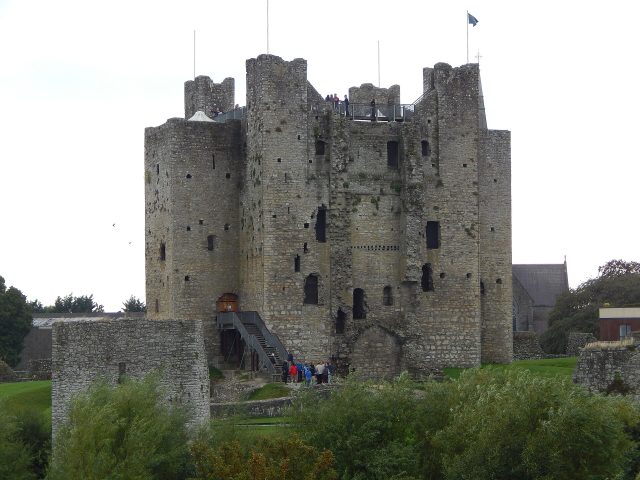
The most striking feature of the park is Trim Castle, its broken walls and towers looming over the river. Built in the late 12th century by Hugh de Lacy, a Norman knight granted these lands by King Henry II, the castle was meant to be a stronghold, a symbol of control over the region of Meath. For centuries, it stood as a center of power, its thick stone walls witnessing battles, political schemes, and the daily lives of those who lived within or around it. Today, only fragments remain—the shell of the keep, parts of the curtain walls, a few towers—but even in ruin, the castle carries a weight of history. Climbing one of the surviving towers offers a view of the river bending through the landscape, the same fields where markets once bustled and armies gathered. The wind up there is sharp, carrying the scent of grass and damp earth, as if the past is still whispering in the air.
Not far from the castle, the remains of St. John the Baptist’s Priory lie half-hidden in the grass. Founded in the 13th century by the Augustinian order, the monastery was once a place of prayer and learning, its cloisters filled with the murmur of monks. Now, only a few arches and walls stand, their stones softened by time and ivy. The most striking part is the arcade of the inner courtyard, where the arches still frame the sky like windows into another era. Walking among them, it’s easy to imagine the quiet rhythm of monastic life—the footsteps on stone, the rustle of robes, the distant sound of the river. The meadows around the ruins are peaceful, especially in summer when the sun warms the old stones and the grass sways in the breeze.
Trim Park isn’t just a place for history; it’s part of the town’s everyday life. In warmer months, families spread out picnics on the grass, children chase each other along the paths, and cyclists weave through the trees. The riverbank is a favorite spot for those who want to sit and watch the water flow, its surface reflecting the changing sky. When winter comes, the park takes on a different mood—bare branches, gray light, and the quiet hush of the river make everything feel still, as if time itself has slowed. The old stone bridges along the Boyne add to the charm, their arches mirrored in the water. One of the most picturesque is the bridge on the road to Athboy, its reflection creating a perfect circle in the river below.
For anyone curious about the past, Trim Park is a gift. There’s no rush here, no crowds pressing you forward—just the chance to wander, to touch the stones, and to let your imagination fill in the gaps. The castle and the priory are only the beginning. Nearby, the Yellow Steeple, once part of the town’s defenses, rises like a sentinel over the landscape, while the ruins of a medieval mill along the river hint at the industry that once thrived here. Each of these places tells a small part of the story, and together they weave a tapestry of life in this corner of Ireland over hundreds of years.
What makes the park special is its connection to the land and the river. The Boyne isn’t just a body of water; it’s a thread running through Irish history. In ancient times, it was a vital trade route, its banks lined with settlements and fortresses. Later, it became a witness to battles and pilgrimages, its waters carrying the weight of countless stories. Today, the river moves slowly, its mood shifting with the seasons—sometimes swollen and swift after rain, other times calm and glassy under the summer sun. There are spots along the bank where you can sit and watch it flow, the sound of the water blending with the rustle of leaves and the distant call of birds.
Trim itself is a town where history isn’t locked away in museums but lives in the streets, the buildings, and the very air. The park acts as a bridge between then and now, a place where the past feels close enough to touch. You don’t need to be a historian to appreciate it. Whether you’re drawn to the ruins, the river, or simply the quiet of a place where time moves differently, Trim Park offers something rare—a sense of connection. There are no grand gestures here, no tourist traps, just the steady presence of the land and the stories it holds. The stones remember. The river remembers. And if you listen, you might hear them too.