Hill of Tara is one of those places in Ireland where history isn’t just something you read about—it’s something you feel beneath your feet. Rising gently from the rolling farmland of County Meath, not far from the quiet village of Rathoath, this unassuming hill was once the beating heart of the island. Today, it’s a place of wind-swept silence, where sheep graze on emerald slopes and visitors climb to the summit for the kind of view that makes you understand why this spot was chosen as the seat of power. On a clear day, you can see half of Ireland from here, the landscape stretching out in every direction like a living map of the past. But if you listen closely, the whispers of old stories still linger—tales of kings, battles, and rituals that shaped a nation.
Tara wasn’t always just a hill. In the Iron Age and early medieval period, it was a sacred site, a place where the political and spiritual lives of Ireland’s tribes converged. This was the ceremonial home of the High Kings, rulers who, in theory, held sway over the entire island, though in reality, power was often fragmented among local chieftains. Archaeological evidence suggests that Tara was inhabited as far back as the Neolithic era, but its golden age came between the 3rd and 12th centuries. During this time, it wasn’t just a political center but a religious one, where assemblies were held, laws were passed, and festivals celebrated the cycles of the seasons. Some of these gatherings were tied to ancient pagan traditions, honoring the land and the sky in ways that modern visitors can only imagine.
The name Tara comes from the Old Irish *Temair*, which roughly translates to "place of greatness" or "elevated place." In Irish mythology, the hill is woven into the fabric of legend, often depicted as a dwelling of gods and heroes. One of the most enduring stories is that of Conn of the Hundred Battles, a semi-legendary king said to have ruled in the 2nd century. According to the tales, it was here that he forged an alliance with the Tuatha Dé Danann, a mythical race of supernatural beings who were believed to live beneath the earth. Even Christian monks, who later recorded these sagas, couldn’t ignore Tara’s significance, though they often tried to reframe its pagan past within their own beliefs.
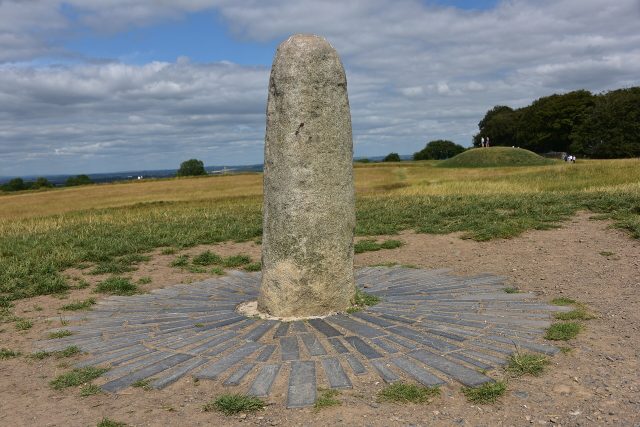
What remains of Tara today are mostly earthworks, stone circles, and scattered ruins that hint at its former grandeur. The most famous of these is the Lia Fáil, or Stone of Destiny, a standing stone said to have roared when the true king of Ireland touched it. It still stands on the summit, though now it’s just a weathered pillar half-buried in the grass. Nearby, you can find the remnants of ancient fortifications, like the Royal Enclosure and the so-called Banqueting Hall—a long, raised earthwork that may have been used for gatherings of the nobility. There are no grand reconstructions here, no museum displays to guide you. Instead, the history is written in the land itself, in the contours of the hills and the placement of the stones.
Walking Tara is different from visiting a typical historical site. There are no crowds, no gift shops, no guided tours with scripted stories. Instead, there’s space—space to wander, to think, and to feel the weight of the past. The hill has a way of slowing time, as if the centuries between now and its heyday have collapsed into something more immediate. Locals sometimes speak of gatherings that still take place here, especially around Beltane in early May, when fires are lit and old traditions are honored. Even if you don’t believe in the rituals, it’s hard not to be moved by the atmosphere, by the sense that this place has always been more than just a hill.
Tara is deeply tied to Ireland’s identity, not just as a historical site but as a symbol of unity and resistance. In the 19th century, during the struggle for independence, it became a rallying point for Irish nationalists. Rallies were held here, and the name Tara itself became a metaphor for freedom and a return to roots. Today, it draws not only tourists but also those who want to connect with the deeper currents of Irish history. On a clear day, the view from the summit is breathtaking—endless green fields, winding rivers, and distant hills that once formed the boundaries of a single kingdom. It’s easy to see why this place was chosen as the center of it all.
Despite its importance, Tara remains a quiet, almost understated place. There are no tourist traps, no hawkers selling trinkets, no grand entrances or exit signs. It’s just a hill, open to the sky, where you can sit and let the wind carry away the noise of the modern world. Some come at dawn, when mist clings to the slopes, or stay until sunset, watching the light turn the landscape gold and pink. In those moments, it’s not hard to imagine what it must have been like a thousand years ago—kings making decisions that would echo through generations, judges weighing justice, and people gathering to celebrate or mourn.
Tara isn’t just a relic of the past; it’s a living part of Irish culture. It appears in songs, poems, and stories passed down through the ages, a touchstone for anyone trying to understand what it means to be Irish. Even those who have never set foot in Ireland have likely heard of Tara as a symbol of the country’s ancient heritage. For locals, it’s more than a tourist attraction—it’s a piece of their identity, a reminder that Ireland’s history runs deep, and that the past is never really gone. There are no kings here now, no priests performing rituals, but the magic of the place endures, just as it has for centuries.