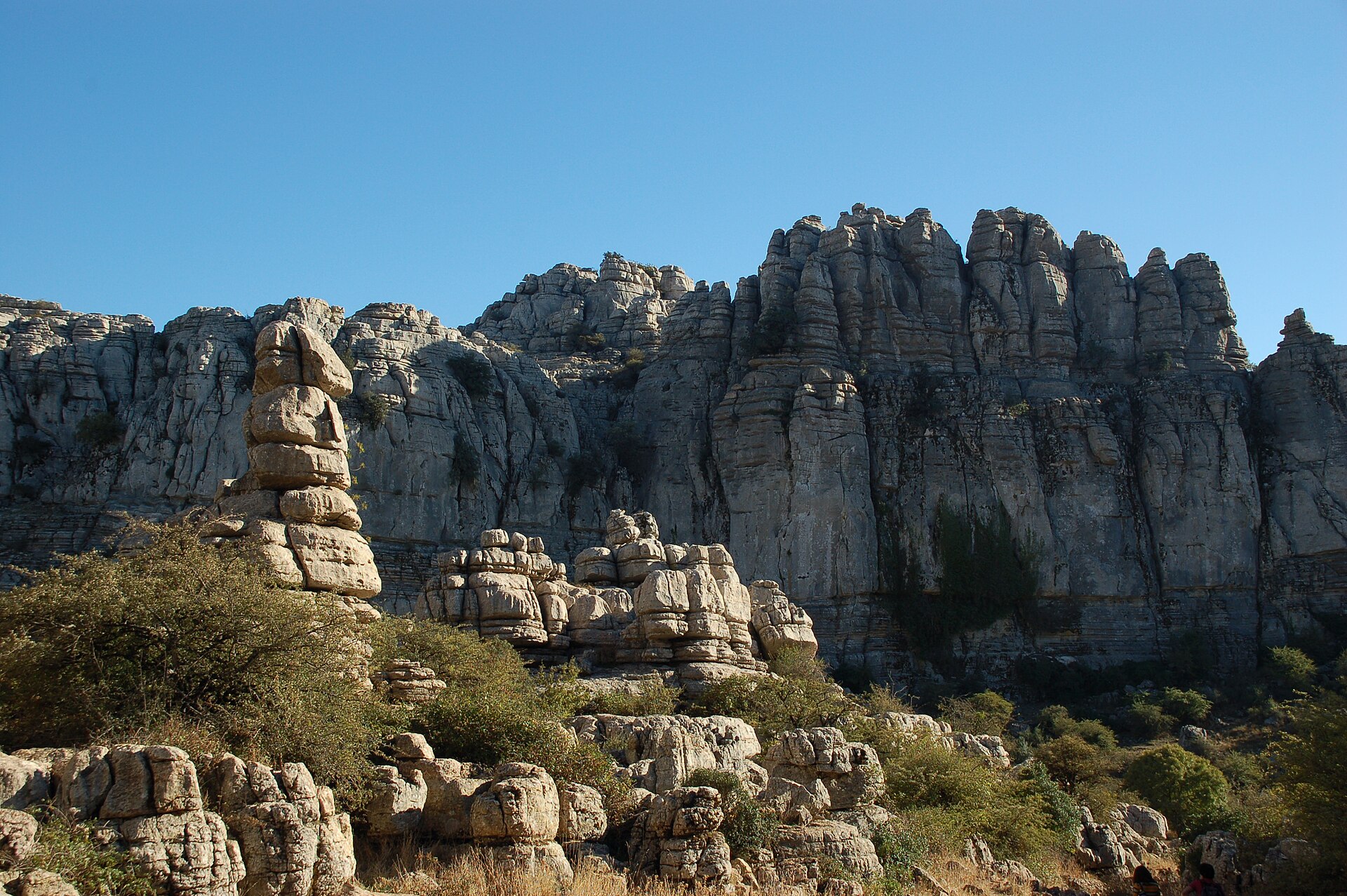
El Torcal de Antequera is one of those rare places where nature seems to have set aside its usual rules just to show what it’s truly capable of. Tucked away in the heart of Andalusia, not far from the town of Antequera, this mountain range is a surreal landscape of limestone formations shaped over millions of years by wind, water, and time. There are no lush forests or rolling meadows here—just an otherworldly expanse of rock, where every outcrop tells a story. Some resemble frozen giants, others the crumbling walls of ancient castles, and a few even take on the shapes of mythical creatures. Locals have given them names over the years—some see human profiles, others animal silhouettes—but no matter what you call them, the effect is the same: stepping into Torcal feels like entering a place where the laws of nature have been rewritten.
This isn’t just a striking natural wonder; it’s an open-air geological museum. The rocks here began their journey around 150 million years ago, formed from the sediments of an ancient sea that once covered the region. Over time, the water receded, and the limestone layers, compressed under immense pressure, slowly rose to form the mountain range we see today. But the real magic happened later, when rain and wind went to work. Water seeped into cracks, dissolving softer rock, while wind polished the surfaces into the fantastical shapes that now draw visitors from all over. Some of these formations tower dozens of meters high, appearing so precarious that it’s hard to believe they’ve stood for millennia, defying gravity and time.
The park is divided into several trails, each offering a different perspective on this extraordinary landscape. The most popular is the Green Route, a gentle path suitable for families and casual walkers. It’s short enough to complete in about an hour but long enough to take in some of Torcal’s most famous formations—the Sphinx, the Indian, the Camel’s Head. The walk is peaceful, with nothing but the sound of the wind whispering through the rocks and the occasional cry of a bird. On overcast days, when a light mist clings to the peaks, the place takes on an almost mystical quality, as if the rocks themselves are guarding secrets from another world.
For those who want a deeper experience, there are more challenging routes, like the Yellow and Red trails. These are longer and require a bit of stamina, but they lead to quieter corners of the park where few visitors venture. Here, you might spot wild goats leaping effortlessly between the rocks or discover rare plants clinging to the stony soil. The best time to explore these paths is early morning, when the first light of dawn begins to illuminate the peaks, casting long shadows across the landscape. In those moments, it’s easy to feel as though you’re the only person for miles, and the silence is so complete that the rocks seem to hum with their own quiet energy.
Torcal isn’t just a place for hikers—it’s also a living laboratory. Geologists and paleontologists study its formations, which contain fossils of ancient marine life that once thrived in the long-vanished sea. The park is also a sanctuary for wildlife, home to species found nowhere else in Spain, like endemic lizards and rare orchids that bloom in spring, turning the rocky slopes into a burst of color. For scientists, Torcal is a window into the Earth’s distant past; for everyone else, it’s a chance to step outside of time, if only for a little while.
Despite its beauty, Torcal remains somewhat off the beaten path, a hidden gem even in a region as rich in attractions as Andalusia. It’s not overrun with tourists, even in peak season, and there’s a sense of quiet dignity to the place. That might be because Torcal doesn’t offer the usual tourist amenities—no restaurants, no souvenir shops, no guided tours with flashy presentations. It’s a place for those who are content to walk, to breathe in the crisp mountain air, and to watch the way light and shadow play across the rocks. There’s no agenda here, no rush, just the slow unfolding of a landscape that has been millions of years in the making.
The best time to visit Torcal is in spring or autumn, when the weather is mild and the landscape is at its most vibrant. Summers can be scorching, especially around midday, while winters occasionally bring snow, transforming the park into a stark, monochrome world. No matter when you go, it’s worth bringing sturdy shoes, plenty of water, and a hat—the trails are rocky, and shade is scarce. A quick look at a map before setting out is also a good idea, as some paths branch off unexpectedly, and it’s easy to take a wrong turn in the maze of stone.
What makes Torcal so unforgettable isn’t just its dramatic scenery—it’s the way it makes you feel. Some leave with the sense of having visited another planet; others find something deeply personal in its silent grandeur, whether it’s inspiration for a painting or simply a moment of peace. There’s no pressure here, no need to hurry or prove anything. You can sit on a rock, watch the horizon, and realize how small the everyday worries of life really are when measured against the vastness of nature. That’s why people keep coming back—to feel, even for a little while, the strange and beautiful balance between strength and fragility, between the eternal and the fleeting.