El Romeral is one of those rare places that make time feel different—slower, deeper, almost tangible. Tucked away in the rolling hills of Andalusia, this ancient burial site was built over four thousand years ago, long before the first cities rose in this part of Spain. It belongs to the Copper Age, a time when people were just beginning to work with metal yet already capable of constructing monuments that still impress with their precision and scale. El Romeral isn’t just a stone tomb; it’s a testament to the complex social structures and spiritual beliefs of a people who lived here millennia before written history.
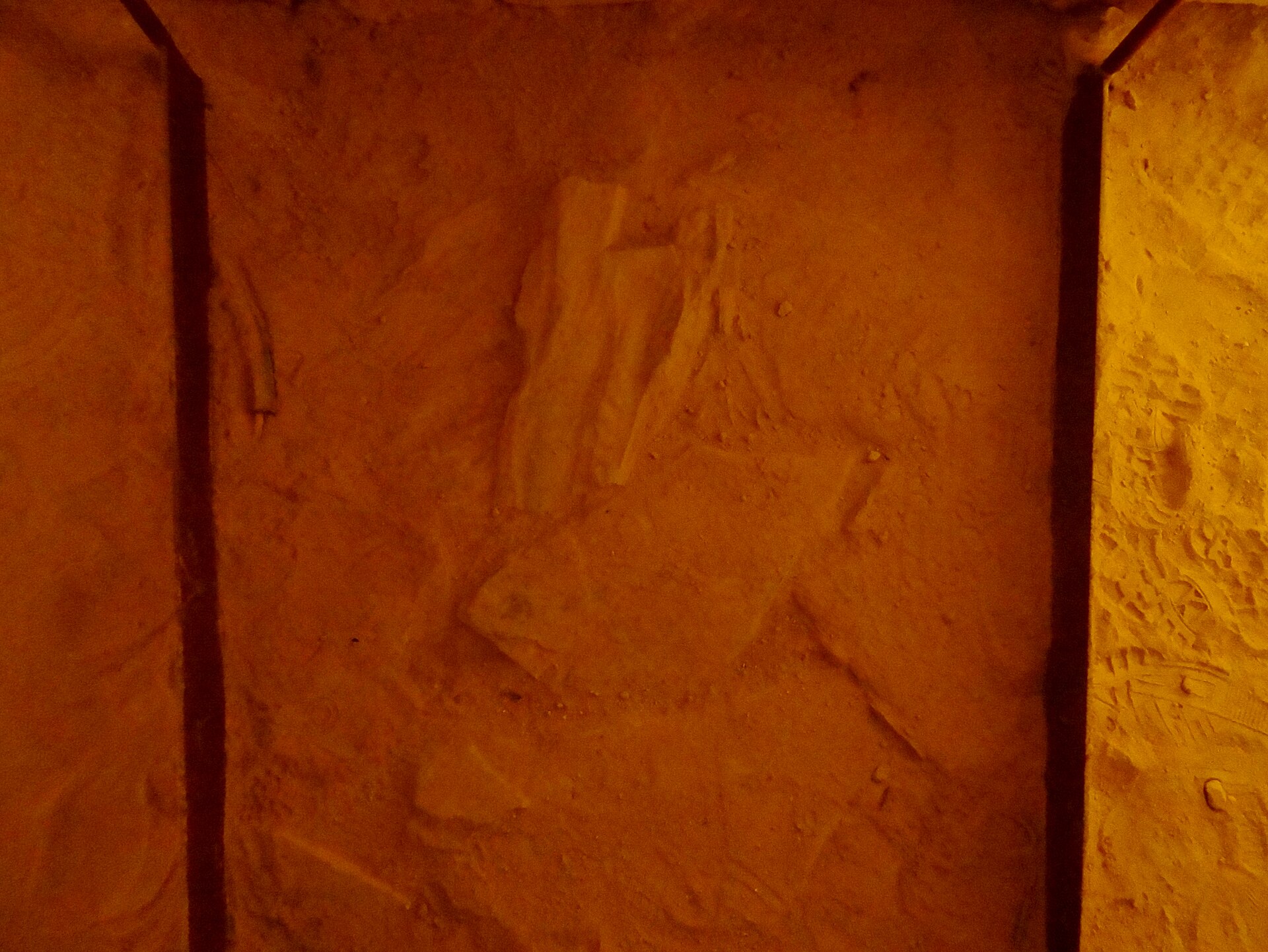
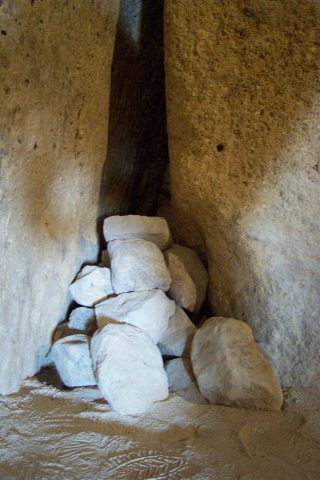
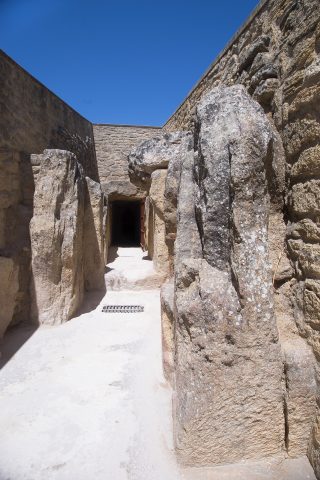
The dolmen itself is a corridor tomb, assembled from massive stone slabs, some weighing several tons. The entrance leads into a narrow passage that gradually widens into a circular chamber crowned with a false dome. The architecture plays with perspective: as you move inward, the stones grow larger, creating a sense of gradual immersion into something sacred. Light here isn’t incidental. At certain times of day, sunlight filters through the entrance, illuminating the interior in a way that feels deliberate, as if bridging the world of the living and the dead. Some researchers suggest the dolmen’s alignment might correspond to solstices or other astronomical events, though no definitive proof exists.
El Romeral is part of Antequera’s megalithic complex, which also includes the dolmens of Menga and Viera. Together, they form one of Europe’s most significant prehistoric sites. Unlike its neighbors, El Romeral stands out for its intricate design. While Menga overwhelms with sheer size and Viera impresses with its clean lines, El Romeral captivates with its attention to detail. Every stone fits with remarkable precision; the walls of the corridor and chamber are so tightly joined that not even a knife’s blade could slip between them.
The dolmen’s discovery was almost accidental. In the early 20th century, local farmers stumbled upon it while digging for a vineyard. For decades, it remained largely unexplored, but recent archaeological work has begun to uncover its secrets. Inside, researchers found human remains, pottery, and stone tools, likely used in burial rituals. These findings suggest El Romeral wasn’t just a tomb but a place of communal memory, where leaders or spiritual figures were laid to rest.
Today, the dolmen sits in a quiet park, surrounded by olive trees and wildflowers. Few tourists visit, which only adds to the sense of stepping into another era. It’s easy to imagine people gathering here thousands of years ago, performing rituals or honoring their ancestors. Unlike crowded archaeological sites, El Romeral retains an air of solitude and mystery, drawing those who see history not as a list of dates but as a living connection between past and present.
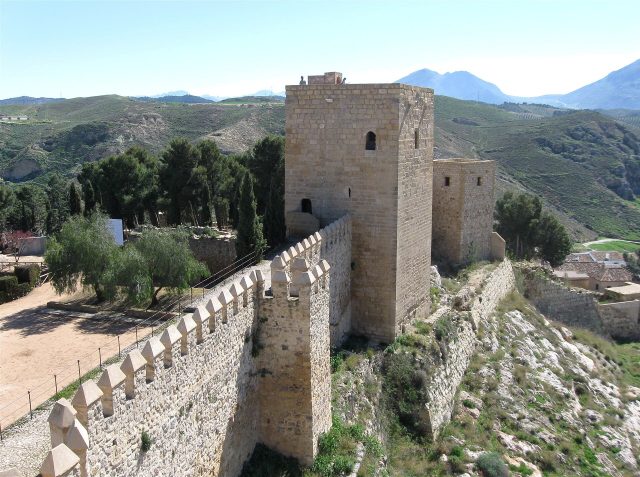
Antequera itself is a town layered with history. Founded during the Roman era, it later became a key trading and cultural hub under Moorish rule. Medieval churches, fortress walls, and winding streets still whisper of its past. Yet it’s the megalithic sites that give the area its unique character. They remind visitors that long before Romans, Arabs, or Christians arrived, a sophisticated civilization thrived here, leaving behind these silent witnesses to their existence.
Visiting El Romeral isn’t just a tour—it’s an experience that lingers. Standing inside the chamber, you can almost feel the weight of centuries pressing against the stones. The air seems to hum with the echoes of those who built it, those who came to mourn, and those who believed these stones held a power beyond the everyday. That’s the quiet magic of such places: they don’t tell their stories outright, but they make you feel them.