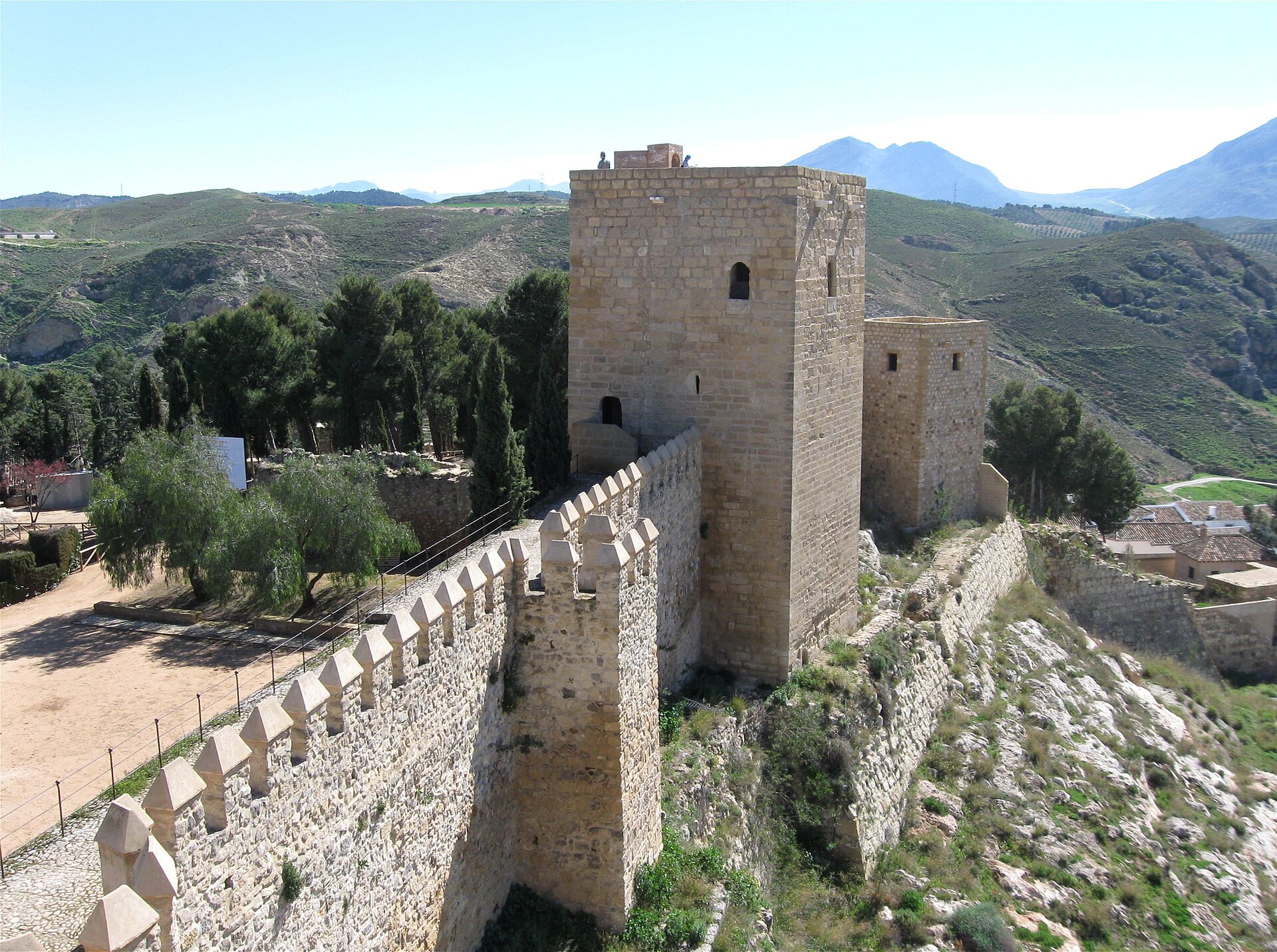
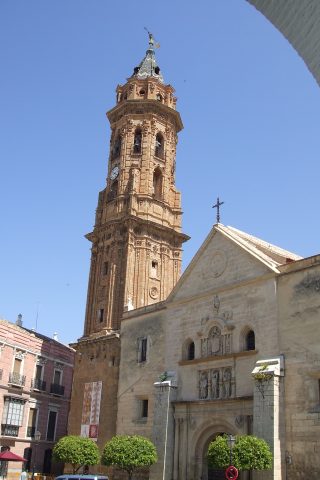
Perched above Antequera, the Alcazaba is a fortress of weathered gray stone. Built in the 11th century on older foundations, it was once the center of Moorish rule in the region. Its walls and towers, though worn, still rise above the whitewashed houses on the hillside below. The climb up the steep path reveals the town unfolding in the valley, framed by rolling hills.
The Alcazaba feels like a place where time has settled unevenly. Some structures remain intact—ruins of living quarters, water cisterns, and a small mosque later repurposed as a Christian chapel. These remnants show how Islamic and Christian influences merged over centuries. The fortress was never just a military stronghold; it was a living space, a place of worship, and a symbol of authority.
The Torre del Homenaje, the tallest tower, offers a view stretching to the Sierra Nevada on clear days. From here, church steeples punctuate the skyline, plazas are visible, and fields and olive groves stretch toward the horizon. The tower was once a lookout post, where rulers surveyed their domain. Today, it shows how geography and power shaped this part of Andalusia.
The Alcazaba has been a prison, a military garrison, and a royal residence when Spanish kings passed through Antequera in the 16th century. Its decline came as its strategic importance faded. Restoration efforts in the 20th century preserved much of its character. Small exhibitions inside show Antequera’s history, but the real draw is the atmosphere—the wind through the ruins, the light on stone, the sense of standing where countless lives unfolded.
The Alcazaba doesn’t feel like a stage set for tourists. There are no crowds, no souvenir stalls, no rushed guided tours. Instead, there’s space to wander, to sit on a crumbling wall, or to trace the outlines of an archway and imagine the hands that built it. The silence isn’t empty; it carries the weight of stories.
Antequera moves to its own rhythm. The old quarter has narrow streets and hidden plazas. Houses with wrought-iron balconies lean into alleys, their facades adorned with potted geraniums. Churches stand where mosques once did, blending Gothic arches with Mudéjar details. The town doesn’t perform for visitors; it simply exists.
As the day fades, the Alcazaba changes. The stones glow in golden light, shadows stretch across the courtyards, and the fortress seems to hold its breath. The air fills with the scent of orange blossoms from below. It’s easy to imagine the fortress as it once was—a place of voices echoing through halls, of rulers, soldiers, and ordinary people going about their lives. Now, it’s a place of stillness.
The real allure of the Alcazaba isn’t in its grand architecture or historical significance. It’s in how it makes history tangible. The stones tell the story—the cracks in the walls, the uneven steps worn smooth by footsteps, the light filtering through arches. All of it speaks of time passing, of lives lived, of endurance. For those who seek more than a snapshot, the Alcazaba offers a connection to the past that feels immediate and human.