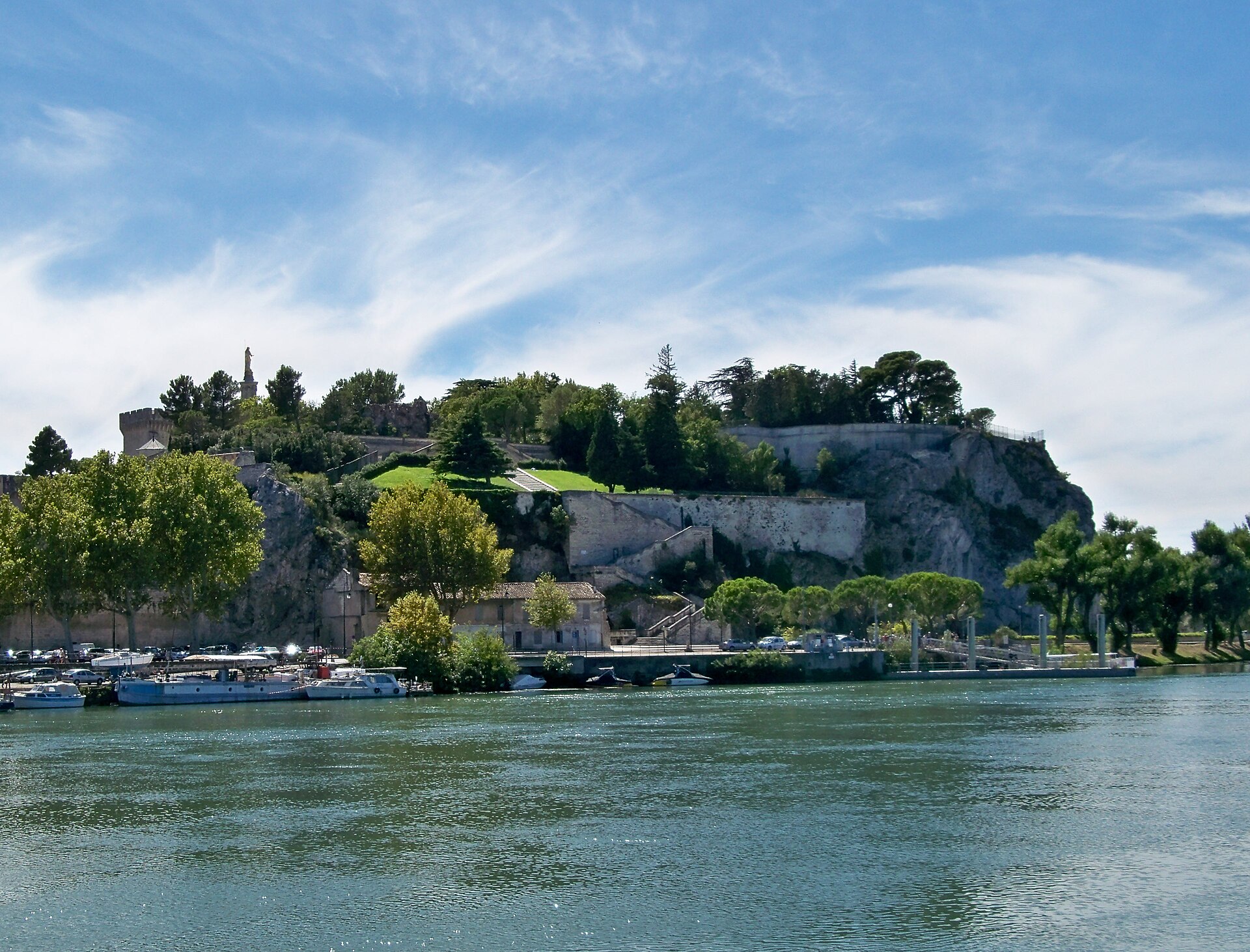
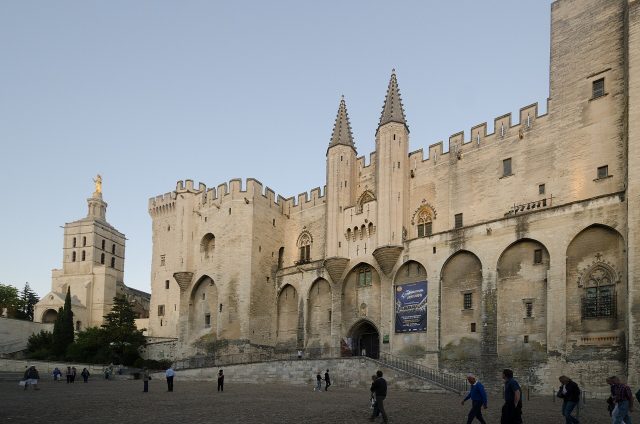
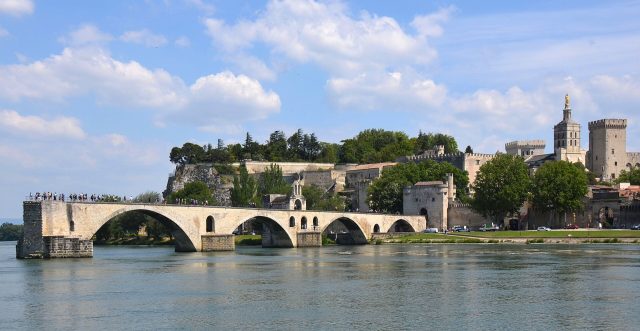
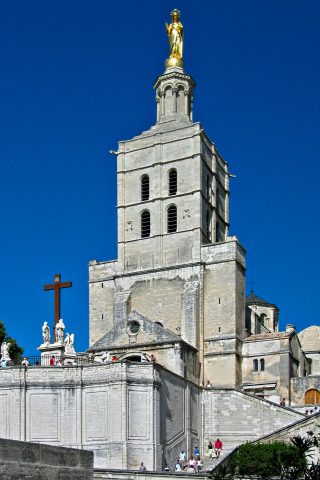
Roche de Dôme sits on a rocky outcrop beyond Avignon’s historic center. From here, the Rhône curves below, its waters catching the light as they pass old bridges and terracotta rooftops. On clear days, the Luberon mountains rise in the distance, their outlines soft against the sky. The park feels like a pause—somewhere the city’s rhythm slows enough to let you see it differently.
The hill has long been a vantage point. Its name, Roche de Dôme, comes from a medieval watchtower that once stood here, part of Avignon’s fortifications. The tower is gone, but the hill’s strategic importance remains. In the 19th century, an observatory was built at the summit. It still stands, now a meteorological station, a quiet marker of how people have tried to understand the world around them.
The park itself is a recent addition. For centuries, the slopes were wild or used for vineyards and olive groves. In the mid-20th century, the city shaped the area into a public space. The design follows the land’s natural contours. Winding paths lead past boulders and drought-resistant trees, toward viewpoints or patches of lavender that scent the air in summer.
The vegetation here is distinctive. Aleppo pines and holm oaks grow alongside oaks and pines common in Provence. These plants thrive in dry, rocky soil, keeping the park green even in summer. In spring, wildflowers—poppies, irises, thyme—cover the slopes. Autumn brings a quieter beauty, though foraging for mushrooms isn’t allowed.
Locals use the park differently. Some come for morning jogs, others for weekend picnics or an afternoon with a book. Families bring children, students lie on the grass, and older residents walk the paths. On weekends, the park fills with life—people take photos, sit on benches with coffee, or find shade under the trees. Even in summer, the hill stays cooler than the streets below.
The park’s structures are simple. Stone steps lead to the observatory, made from local limestone. Viewpoints have low railings that don’t distract from the scenery. Near the entrance, a small pavilion sometimes hosts exhibitions by local artists. Otherwise, the park feels like a natural overlook.
Winter changes Roche de Dôme. Bare trees stand against the sky, and fallen leaves cover the ground. The wind off the Rhône carries a sharp chill. Yet the season has its own beauty—the light turns crystalline, and views stretch farther without foliage. From the summit, the city below looks hazy, the river reflecting the pale winter sun.
Roche de Dôme isn’t on every tourist itinerary. There are no crowds, no souvenir stalls, no pressure to pose. It’s a place to see Avignon from a distance, to feel its pulse without the noise. You might spend an hour here or half a day, wandering the paths or watching clouds drift over the rooftops. Sometimes, the best memories of a city come from places where you can simply be still.