Monterrey Park in Huaraz is the kind of place that doesn’t announce itself with fanfare. Tucked into the hillside at the edge of the city, it offers a quiet retreat where the only sounds are the rustle of leaves and the occasional murmur of locals taking a break from the day. There are no flashy attractions here, no crowds of tourists snapping photos—just a gentle slope of trees, winding paths, and a view that unfolds slowly, revealing the snow-capped peaks of the Cordillera Blanca in the distance.
The park’s history is tied to Huaraz’s rise as a destination for travelers drawn to the Andes. In the mid-20th century, as the city began to embrace its natural surroundings, Monterrey became one of the first places where people—both residents and visitors—could escape the bustle and breathe in the crisp mountain air. The name itself is thought to echo the Spanish city of Monterrey, though the connection is more poetic than practical, evoking the quiet beauty of high-altitude landscapes.
What makes Monterrey special isn’t its size or grand design, but the way it feels lived-in and unpretentious. The paths twist and turn, leading to small clearings where benches face the best views. There’s no formal layout, just a sense that the space was shaped by the land itself. In the early morning, the light softens the peaks into shades of pink and gold, while in the late afternoon, the shadows stretch long and cool. It’s a place where time seems to slow down, where the only agenda is to sit and watch the mountains change with the light.
There’s little in the way of architecture here—no ornate structures or manicured gardens. Instead, the park’s charm lies in its simplicity: stone steps worn smooth by years of use, wooden benches tucked beneath the trees, and the occasional shelter where people gather to share a thermos of tea or coffee. On weekends, families come for picnics, and children dart between the trees, but even then, the atmosphere remains calm. It’s the kind of place where you can spend an hour or an entire afternoon without feeling like you’ve missed anything.
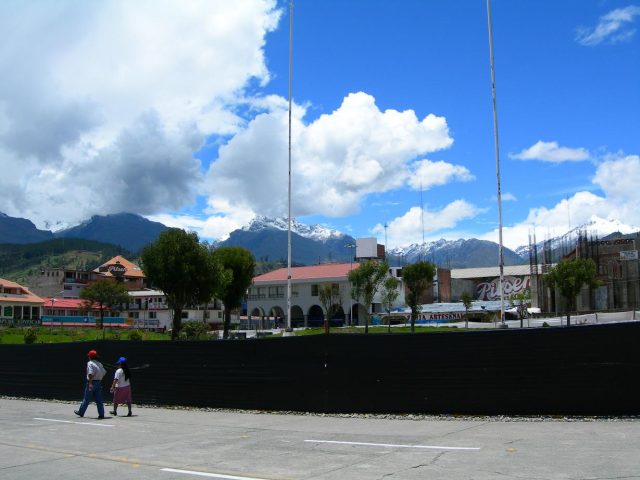
The real draw of Monterrey is the view. From its slopes, you can see the Callejón de Huaylas valley stretching out below, one of the most striking landscapes in the Ancash region. On clear days, the silhouette of Huascarán, Peru’s highest peak, dominates the horizon, while closer in, the patchwork of fields and rooftops of Huaraz spreads out like a quilt. The scene is especially vivid during the rainy season, when the mountains turn a deep, lush green and the clouds drift low, casting shifting patterns of light and shadow across the slopes.
Though Monterrey isn’t a protected area, the city takes care to maintain it. The paths are kept clear, the grass is trimmed, and small signs have been added in recent years to help visitors find their way. For locals, the park is a familiar part of daily life, a place they return to without thinking. For travelers passing through Huaraz, it offers a quiet counterpoint to the more famous attractions like Laguna Llanganuco or Huascarán National Park—a chance to experience the city’s natural beauty without the crowds.
The park changes with the seasons. In winter, the air is sharp and cold, the kind of chill that cuts through even the warmest layers. Snow is rare, but the wind off the mountains makes the cold feel deeper, a reminder of the altitude. Locals bundle up, while visitors from the coast often find themselves shivering, unprepared for the bite of the Andean air. Summer, from December to March, brings milder weather, and the park becomes a perfect spot for leisurely walks or simply sitting with a book, watching the light play across the peaks.
Monterrey isn’t the kind of place that makes it onto postcards or travel brochures. It doesn’t have the drama of a glacier or the grandeur of a cathedral, but that’s part of its appeal. For those who live in Huaraz, it’s a backdrop to everyday life, a place where you can go to think, to talk, or to do nothing at all. There’s no pressure to see or do anything specific—just the quiet invitation to slow down and take in the view. Whether you spend an hour or a whole day here, the park leaves you with the sense that you’ve touched something real, something unhurried and enduring. That, in the end, is what makes it worth the visit.