High in the Peruvian Andes, where the air grows thin and the mountains stretch endlessly toward the sky, lies Chavín de Huántar—a place where the past doesn’t just linger in artifacts and ruins but hums through the very stones. Nestled in the Mosna River valley, this ancient complex was once the spiritual heart of one of South America’s earliest and most enigmatic civilizations. Unlike the later empires of the Incas or the Moche, the Chavín people didn’t rule through conquest or grand cities. Their power was woven from belief, from the unseen forces that shaped the world around them, and from rituals that could make the earth itself seem alive.
Built nearly three thousand years ago, Chavín de Huántar became the center of a culture that spread its influence across much of what is now Peru. The Chavín didn’t leave behind vast palaces or battle-scarred fortresses, but something far more enduring: a cosmology where gods took the forms of jaguars, serpents, and condors, where humans were not separate from nature but part of its endless cycle. At the core of their belief system stood Lanzón, a deity carved into a towering granite monolith, its face a fusion of feline, reptilian, and human features. The image still watches over the temple’s dimly lit galleries, as if waiting for the next supplicant to step into its shadow.
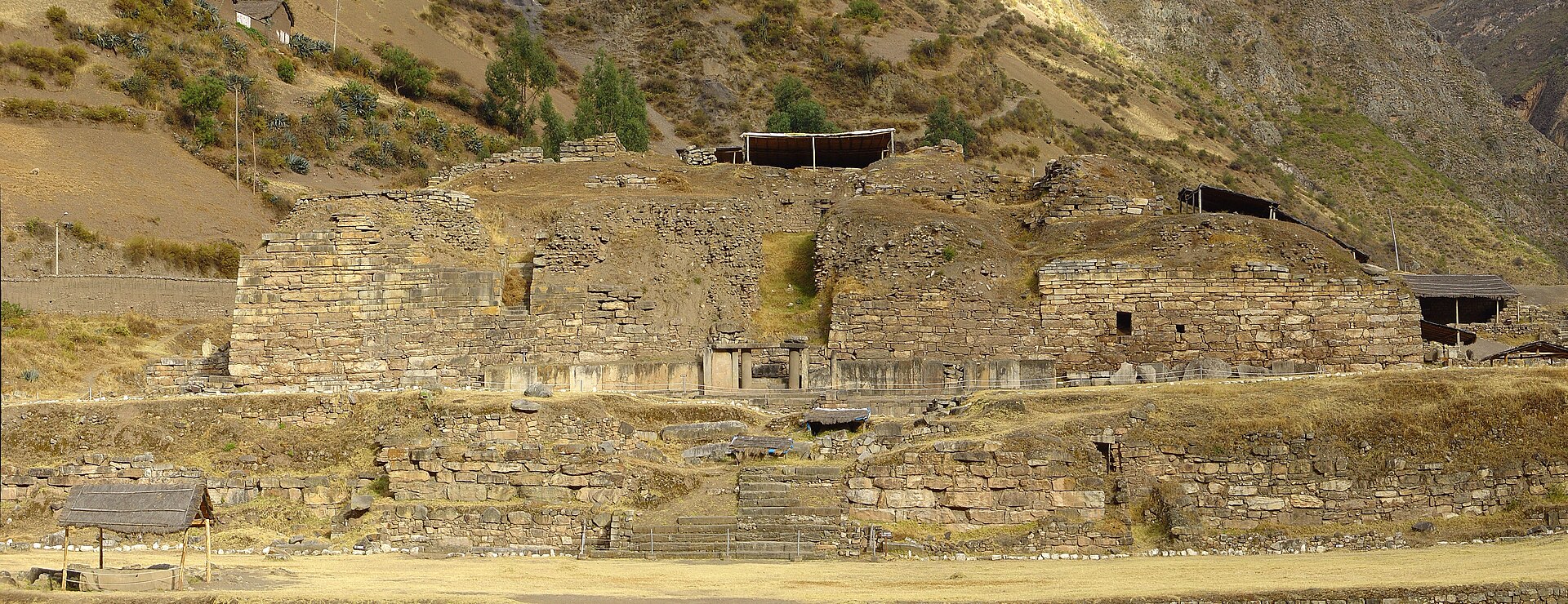
The architecture of Chavín de Huántar is less about scale than about intention. The central structure, known as the Old Temple, is a labyrinth of platforms, plazas, and underground passages, designed not just for ceremony but for sensory experience. Narrow corridors twist and turn, their walls constructed to amplify sound in eerie, disorienting ways. A whisper or the low note of a pututu—a conch-shell trumpet—could echo through the chambers, growing louder, more insistent, until it seemed to come from everywhere at once. This was no accident. The Chavín understood the power of acoustics, how sound could unsettle, awe, or even terrify those who entered their sacred space. Deep within these tunnels, the Lanzón monolith stands, its surface worn smooth by centuries of touch, its purpose still debated: was it an oracle, a god, or a conduit between worlds?
Water played a crucial role in the temple’s design. The Chavín engineered an intricate system of canals and drains, tapping into natural springs to feed the complex. Some channels were purely functional, supplying water to the temple and the surrounding fields. Others were part of the ritual. Water rushing through hidden tunnels could mimic the sound of distant thunder or the murmur of spirits, while carefully placed drains created the illusion of sacred springs bubbling from the earth. In a land where drought was a constant threat, water was more than sustenance—it was a symbol of life, renewal, and the unseen forces that governed existence.
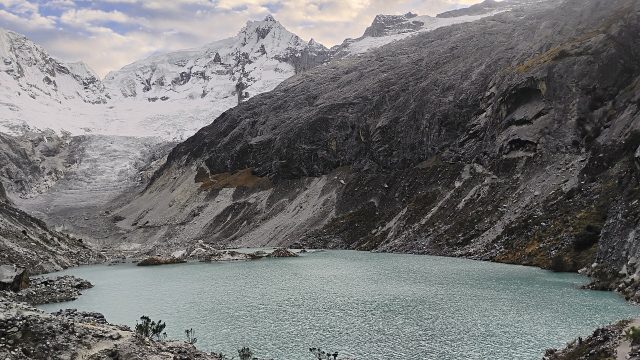
Today, Chavín de Huántar feels less like a ruin and more like a place still holding its breath. The stones are cool underfoot, worn smooth by millennia of footsteps, and the air carries the faint scent of earth and distant rain. Visitors can wander through the same passages where priests once led processions, their voices bouncing off the walls, or stand in the central plaza, imagining the crowds that once gathered here for festivals and sacrifices. The surrounding valley is quiet, framed by low hills and the jagged peaks of the Cordillera Blanca. It’s easy to picture how this place must have felt to those who traveled here in ancient times—remote, sacred, a threshold between the human world and something far greater.
Though the Chavín civilization faded long before the Spanish arrived, its legacy endured. Many of the motifs that defined their art—jaguars with bared fangs, serpents coiling through the dark, birds of prey with outstretched wings—later appeared in the iconography of the Moche, the Nazca, and even the Incas. Some scholars believe the Chavín were among the first to articulate a shared Andean worldview, one where the natural and supernatural were inseparable, where mountains were gods and rivers carried messages from the underworld. The temple’s influence rippled outward, shaping the beliefs of cultures that followed, even if its original meaning was lost to time.
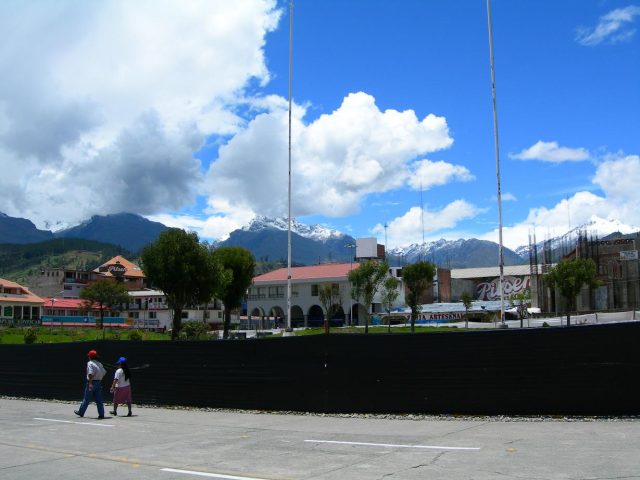
Visiting Chavín de Huántar is not like touring a museum. There are no crowds here, no vendors hawking souvenirs, no guided tours rushing from one highlight to the next. The journey from Huaraz takes about an hour, winding through valleys where farmers till the same terraced fields their ancestors once did, past villages where life moves at the pace of the seasons. The site itself sits at an elevation of nearly 10,500 feet, where the air is crisp and the silence profound. It’s a place that demands patience, where the best way to understand it is not through explanations but through presence—sitting on a sun-warmed stone, listening to the wind, letting the weight of centuries settle into your bones.
What makes Chavín de Huántar so compelling is not just what we know about it, but what we don’t. Archaeologists continue to uncover new chambers, new artifacts, new clues about a people who left no written records. Each discovery peels back another layer of mystery, revealing a culture that was far more sophisticated than once believed. Yet for all the knowledge gained, the temple retains its secrets. The symbols carved into its walls—spirals, fangs, geometric patterns—remain open to interpretation. Were they maps of the cosmos? Warnings? Invocations? Or simply the Chavín way of making sense of a world that was vast, unpredictable, and alive with unseen forces?
Chavín de Huántar doesn’t offer answers. It offers something rarer: a sense of connection to a past that is both alien and deeply human. Here, among the stones and the silence, you can feel the echoes of a civilization that once thrived in these high valleys, that looked at the same mountains and saw not just rock and ice but the faces of their gods. It’s a place that reminds us how little we truly know about the people who came before us—and how much of their world still lingers, just beneath the surface.