Dzintari Park is one of those quiet corners of Jūrmala where time seems to slow down, untouched by the bustle of the main beaches or the lively streets of the town center. Tucked between Jūrmalas iela and the shore of the Gulf of Riga, it feels like a green refuge, preserving the understated charm of the old resort era. There are no crowds here, no hurried footsteps toward the sea—just the rustling of pine needles, the distant cry of gulls, and the kind of stillness that invites you to linger. The park isn’t large, but its modest size gives it an intimate, almost private feel, like a garden meant for slow walks, deep breaths, or an afternoon spent reading on a bench.
The history of Dzintari is woven into the story of Jūrmala’s rise as a seaside retreat. In the late 19th century, when the first summer villas and guesthouses began appearing along the coast, the park emerged as a natural extension of this growing resort. Wooden boardwalks were laid down, leading toward the sea, and benches were placed just so, offering views of the sunset over the gulf. Back then, Dzintari was a gathering place for St. Petersburg’s aristocracy, artists, and musicians—people who came not just for the sun and sea, but for the quiet inspiration the place seemed to offer. Even now, there’s a faint echo of that era in the air, a sense of nostalgia for a time when leisure was measured in slow afternoons and long conversations.
The park’s design is simple, almost unassuming, and that’s where its charm lies. The main path, a wooden boardwalk stretching from the street to the beach, is a nod to tradition—such walkways were once common throughout Jūrmala. The planks give slightly underfoot, softening each step, and even on the warmest days, the shade of the pines keeps the air cool. The trees themselves, tall and slender, form a natural canopy, their resinous scent mingling with the salt of the sea. There are no grand statues or fountains here, just a few old-fashioned lampposts, remnants of a time when electric light was still a novelty in resort towns.
One of the park’s most distinctive features is its open-air concert hall, built in the mid-20th century. A modest structure with wooden benches and a stage framed by pines, it became a symbol of Jūrmala’s summer music festivals. Over the years, it hosted classical concerts, jazz evenings, and performances by popular artists. Though small, the hall’s acoustics are remarkable—sound carries clearly even without amplification. On summer nights, when an orchestra plays and the audience sits with glasses of wine, the moment feels suspended in time. These days, the hall is used less often, but it remains a quiet landmark, a reminder of the park’s cultural past.
The beach near Dzintari is one of Jūrmala’s most peaceful. It’s narrower than the stretches in Majori or Jaunķemeri, but that also means fewer people and cleaner sand. The shoreline slopes gently into the water, making it ideal for families with children. Wooden walkways run along the beach, offering a place to sit and watch the sea or step down to the water’s edge. On stormy days, waves crash dramatically against the shore, while on calm evenings, the gulf mirrors the sky like glass. As the sun sets, painting the horizon in shades of pink and gold, the beach draws not just tourists but locals, all drawn by the quiet beauty of the moment.
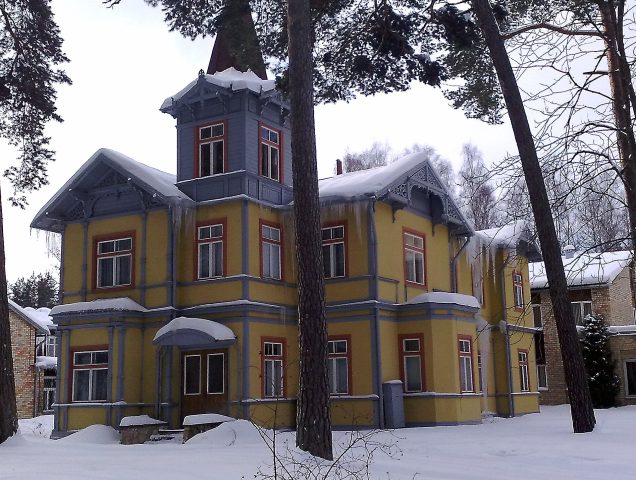
Beyond the park and beach, Dzintari is a small neighborhood of its own, filled with cozy houses that have retained much of their original character. There are no towering hotels or loud restaurants here, just a handful of cafés where you can grab a coffee or an ice cream. One of them, located near the park entrance, has been around since Soviet times. Inside, the scent of fresh pastries lingers, and the walls are lined with old photographs of Jūrmala. In summer, tables spill onto the sidewalk, offering a perfect spot to sit under an umbrella and watch the world go by.
A walk through Dzintari offers a different side of Jūrmala—not the one from tourist brochures, with its crowds and busy attractions, but something quieter, more personal. There’s no rush here, no pressure to see or do. Instead, there’s the hush of the pines, the sound of the sea, and the sense that time moves at its own pace. The park hasn’t changed much in a hundred years, and that’s its greatest appeal. It doesn’t try to impress or entertain; it simply exists, a quiet haven for those who need a break from the noise of everyday life.
In autumn and winter, Dzintari becomes even more secluded. The tourists leave, the cafés close, and the park empties. But this is when it’s at its most atmospheric. The pines sway in the wind, the sea turns dark and restless, and the air fills with the scent of pine needles and salt. Occasionally, you might see a lone fisherman on the shore or a couple strolling along the boardwalk. On days like these, Dzintari reminds you that Jūrmala isn’t just a summer resort—it’s a place where you can find solitude and connection with nature in any season.
If you come to Jūrmala not for excitement but for peace, Dzintari is the perfect spot. There’s nothing extraordinary about it, and that’s precisely what makes it special. It’s a place where you can just be—walking, breathing, listening to the sea, and letting time slip by unnoticed. Sometimes, the best kind of rest isn’t about grand adventures, but about those quiet moments that stay with you long after you’ve left.