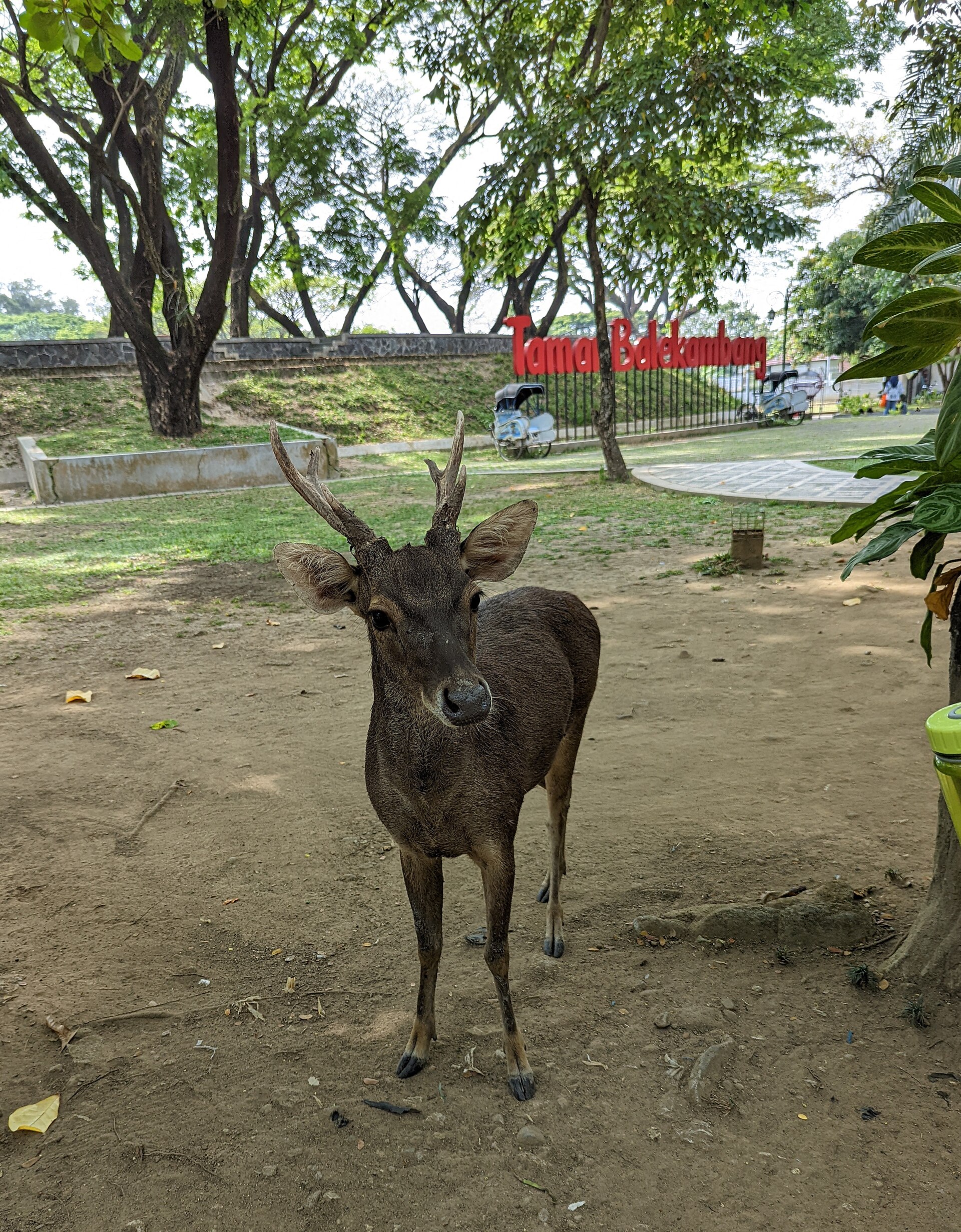
Balekambang Park is one of those quiet corners of Solo where the city’s usual hum fades into the rustle of leaves and the stillness of open space. Tucked away from the main tourist routes, it doesn’t draw crowds or flashy attractions. Instead, it offers something far simpler: wide lawns, shaded paths, and a handful of artificial lakes that give the park its gentle charm. Families come here on weekends to spread out picnic blankets, children chase dragonflies near the water, and older locals sit on benches, watching the world go by at its own unhurried pace.
The park’s story is woven into Solo’s own history. This city, often called Surakarta, has long been a keeper of Javanese traditions, where the past isn’t just remembered but lived. Balekambang emerged in the mid-20th century as part of an effort to bring green spaces into urban life. At the time, Indonesia was stepping into modernity, and parks like this became symbols of progress—places where people could escape the concrete without leaving the city behind. Decades later, that purpose hasn’t changed. The park remains a quiet refuge, a place where time moves differently.
There’s nothing grand about Balekambang’s design, and that’s precisely what makes it feel welcoming. No towering monuments or ornate gates, just wooden pavilions, small bridges over ponds, and winding paths that invite you to wander. The centerpiece is a lake with a tiny island, connected by a narrow footbridge. On any given day, you might see fishermen casting their lines or kids sending paper boats across the water. The lake’s surface is usually calm, mirroring the trees and the sky above, and the air carries the faint scent of damp earth and foliage.
For locals, the park is part of everyday life. Mornings often begin with yoga sessions on the grass, while weekends bring small markets selling snacks like *klepon* or *wedang jahe*. Sometimes, a street musician sets up near the lake, playing soft melodies on a *gamelan* or a guitar. Artists occasionally sketch the scenery, their easels propped up under the trees. There’s no rush here—just the slow rhythm of people enjoying the little things: a book under a tree, the ducks gliding across the water, or the way the light filters through the leaves in the late afternoon.
What makes Balekambang special for visitors is the chance to see Solo as its residents do. There are no tour groups hurrying from one attraction to the next, no vendors pushing souvenirs. Instead, you’ll find ordinary people who’ve come for the same reasons anyone seeks out a park: fresh air, quiet, and a moment away from the noise. It’s not the kind of place that demands attention or tries to dazzle. It simply exists, offering a slice of peace to anyone who wanders in.
The park changes with the seasons. During the rainy months, the lakes swell, and the grass turns a vibrant green. In the dry season, the colors soften, but the place doesn’t lose its appeal. The best time might be at dusk, when the setting sun paints the sky in warm hues, and the shadows stretch long across the paths. For a little while, it feels like the rest of the world has faded away.
Balekambang isn’t the kind of place you visit for dramatic photos or thrilling experiences. It’s not where you go to check something off a list. Instead, it’s a spot where you can step into the slower, quieter side of Solo—the side that locals know and love. There’s nothing forced or artificial about it. The park doesn’t ask for anything in return; it just gives people a place to breathe, to sit, to be. Maybe that’s why it’s so cherished. In a city that’s always moving forward, Balekambang offers a rare chance to pause.