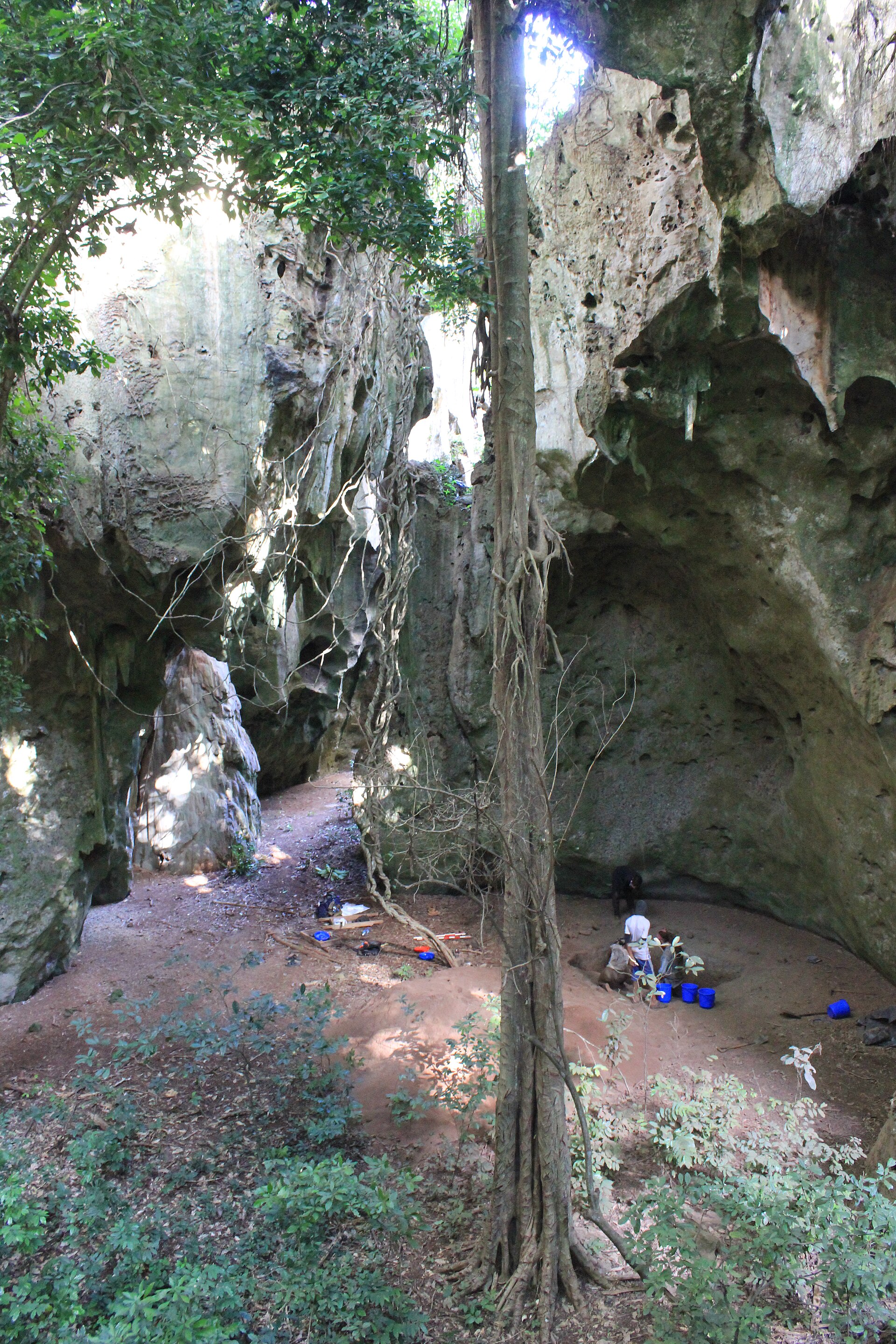
Panga ya Saidi is one of those rare places where the past doesn’t just feel close—it feels alive. Tucked into the limestone hills near Kilifi on Kenya’s coast, this cave has watched over the land for tens of thousands of years, its entrance half-hidden by tangled vines and the broad leaves of coastal trees. The name itself, which loosely translates to "Saidi’s Knife," carries an air of mystery. No one knows for certain where it came from, though some say it refers to the sharp edges of the rock formations inside, while others whisper that it hints at something older, something lost to time.
What we do know is that people have sought shelter here for millennia. Archaeologists have uncovered layers of history within its damp, cool chambers—stone tools so finely crafted they could only have been made by skilled hands, animal bones bearing the marks of ancient meals, and the faint traces of fires that once crackled against the walls. These finds paint a picture of a place that was more than just a refuge. It was a home, a workshop, a gathering spot for generations of hunter-gatherers who roamed these hills long before the first cities rose along the Swahili coast. Later, as the climate shifted and farming took root in the region, the cave may have sheltered the first farmers, their lives shaped by the same rhythms of rain and drought that still define this land today.
Stepping inside Panga ya Saidi is like walking into another era. The air is thick with the scent of wet earth and stone, and the only light comes from the narrow entrance, casting long, shifting shadows across the walls. The cave isn’t vast, but it’s spacious enough to imagine how it once functioned—a natural shelter where people could rest, work, and tell stories by firelight. In some corners, the soot from those fires still clings to the rock, darkened by time. Elsewhere, you might spot more recent marks: names scratched into the stone or simple drawings left by visitors in the last century. These modern additions sit alongside the ancient, a quiet reminder that people have always been drawn to this place, whether for survival, curiosity, or something deeper.
For the communities around Kilifi, Panga ya Saidi has never been just a cave. It’s a place woven into local memory, where history and legend blur. Elders speak of it as a sanctuary during times of conflict, a hidden stronghold when raiders swept through the coast. Some still believe it holds the spirits of those who came before, and approach it with a quiet reverence. Even now, you might meet someone on the path who will pause to share a story about the cave—how it saved their ancestors, or how it still whispers when the wind blows just right. These tales aren’t just folklore; they’re a living connection to a past that refuses to fade.
Reaching Panga ya Saidi isn’t a journey for those who prefer well-trodden paths. The route winds through rolling hills thick with acacia and baobab trees, where the ground is uneven and the trails can vanish beneath overgrowth. A guide is more than just helpful here—it’s essential, unless you’re prepared to lose yourself in the bush. But the effort is worth it. The walk itself is a glimpse into the landscape that has shaped this part of Kenya for centuries: the dry, dusty earth giving way to sudden patches of green, the distant shimmer of the Indian Ocean on the horizon, and the sense that you’re following in the footsteps of countless others who have come this way before.
What makes Panga ya Saidi special isn’t just what it contains, but what it doesn’t. There are no glass cases, no neatly printed signs, no reconstructed scenes of the past. Instead, there’s the raw, unfiltered presence of history—cool stone under your fingers, the echo of your own voice bouncing off walls that have heard the same sounds for thousands of years. It’s a place that demands something from you, whether it’s curiosity, patience, or simply the willingness to sit still and listen. For archaeologists, it’s a treasure trove of clues about how early humans adapted to East Africa’s changing environment. For travelers, it’s a rare chance to step outside the usual narratives of Kenya—the safaris, the beaches, the postcard-perfect sunsets—and encounter a quieter, older side of the country.
In recent years, the cave has drawn researchers from around the world, each hoping to uncover something that might rewrite our understanding of human history. Every excavation season brings new discoveries, from fragments of pottery to beads that hint at early trade networks. Some believe Panga ya Saidi could hold answers to questions we haven’t even thought to ask yet. But even if it doesn’t, the cave remains a powerful reminder of how little separates us from those who came before. The need for shelter, the comfort of fire, the instinct to leave a mark—these things haven’t changed. What has is the way we look at them.
Standing inside Panga ya Saidi, it’s easy to forget the modern world outside. The noise of engines and the hum of phones fade away, replaced by the rustle of leaves and the occasional call of a bird. The cave doesn’t offer grand revelations or dramatic stories. Instead, it offers something simpler: the chance to touch a piece of the past and realize that, in some ways, it’s not so different from the present. That’s the real magic of this place—not the artifacts buried in the earth, but the quiet, enduring sense of connection it leaves behind.