Kilifi Bridge doesn’t shout for attention, but it stays with you. It spans the bay after which the town is named, linking two sides of a coastal settlement wedged between the Indian Ocean and mangrove thickets. The bridge isn’t high, but its length makes it stand out—especially at dusk when the water below turns rose and gold.
Constructed in the 1950s under British rule, it was part of a push to improve coastal roads. Kilifi, once a quiet fishing village, became a key stop between Mombasa, Malindi, and Lamu. Repairs over the years haven’t changed its original design: concrete pillars, steel spans, no frills. Its simplicity feels deliberate, a relic of an era when utility mattered more than aesthetics.
For locals, the bridge is part of everyday life. It’s where people commute to work, transport goods to market, or return from fishing. At peak times, trucks laden with fish or produce create bottlenecks. But step onto a side path near the shore, and the noise fades. You can lean on the railing and watch the tide’s work: mudflats at low water, herons picking at crabs, or the bay rising almost to the deck at high tide, making the bridge seem to hover.
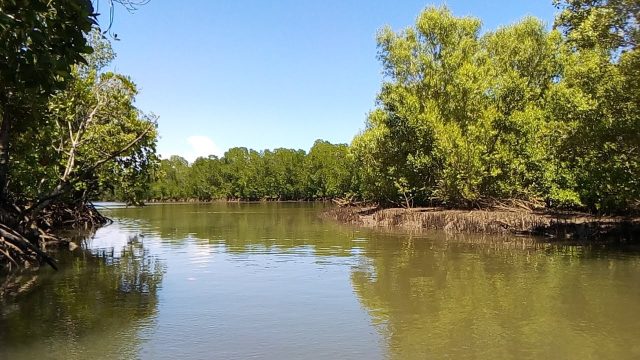
The bay moves to its own rhythm. Shallow and calm, its currents shift with the tides, carrying nutrients that sustain the mangroves. Their roots shelter fish, shrimp, and birds, while fishermen know every contour of the shoreline. Sometimes, dhows with patched sails pass underneath, returning with the day’s catch. In those moments, the bridge feels less like a road and more like a border between town and sea.
From here, Kilifi looks different. To the north, mangroves hide villages and small resorts. To the south, beaches stretch toward the ocean, where waves break over coral. At sunset, the sky turns orange and violet, and the town’s lights reflect on the water. Teenagers sit on the edge, legs dangling, while visitors take photos. But the real view isn’t in the frame—it’s the quiet that settles when you stand still, listening to waves and gulls.
Guidebooks don’t mention Kilifi Bridge. No museums, no tours, no plaques. That’s why it’s worth stopping for. It’s not polished or staged. It tells you about the town in ways a brochure can’t: the road to the ocean, the path to the market, the route home for people who live here. It has seen Kilifi change—traditional huts beside new hotels, fishing boats sharing the water with yachts—yet remains unchanged itself. Easy to miss until you pause and really look.
If you’re in Kilifi, don’t just drive across. Pull over, get out, and lean on the railing. Watch the water, the dhows slipping through the arches, the light shifting over the bay. Maybe then you’ll feel the rhythm of this place—slow, steady, tied to the sea and wind. The bridge won’t just be a way to cross the water. It’ll be the moment you remember.