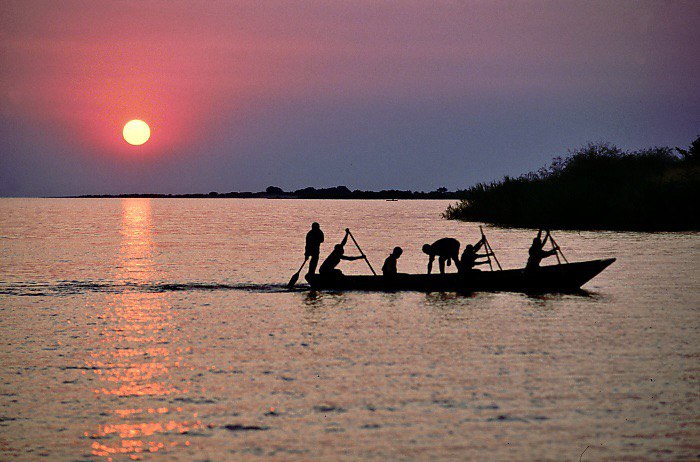
Lake Tanganyika is the kind of place where time seems to slow down, as if the world beyond its shores has forgotten to keep pace. Stretching across four countries, its most captivating stretch lies along Tanzania’s shores near Kigoma, where the water takes on a quiet, almost hypnotic beauty. There are no crowded resorts or neon signs here—just vast open spaces, the gentle lapping of waves, and the sense that the hours move differently. The lake is so immense that the opposite shore vanishes beyond the horizon, and on clear days, the water becomes a perfect mirror, reflecting nothing but the endless sky.
This is the second-deepest lake in the world, after Siberia’s Lake Baikal, and the longest freshwater lake on the planet. Its age is measured in millions of years, and over time, it has become a world unto itself. Hundreds of fish species thrive in its depths, many found nowhere else. Local fishermen have long relied on its waters, pulling in ndagala, tilapia, and other catches that sustain communities along the shore. Aquarium enthusiasts around the globe know Tanganyika as the birthplace of vibrant cichlids, prized for their colors and adaptability. But the lake’s wonders extend beyond its fish—hippos wallow near the shallows, crocodiles lurk in the reeds, and birds from pelicans to kingfishers dart across the surface.
The lake’s history is woven into the fabric of East Africa. In the 19th century, its shores became a crucial stop for European explorers searching for the source of the Nile. It was here, in 1858, that Richard Burton and John Speke first laid eyes on Tanganyika, and in 1871, Henry Stanley famously encountered David Livingstone in the lakeside village of Ujiji. These expeditions reshaped the world’s understanding of African geography and marked the beginning of the colonial era. Today, traces of that past linger in old trading posts, rusted docks, and even the skeletal remains of steamships resting on the lakebed.
Kigoma, the main port on Tanzania’s side, is a town that moves to the rhythm of the water. Each morning, fishing boats set out before dawn, returning by midday with the day’s catch, which quickly finds its way to local markets. By evening, the town quiets, save for the occasional flicker of lanterns on the water, a reminder that life continues beyond the horizon. There are no luxury hotels here, just a handful of modest guesthouses where visitors can settle into the unhurried pace of local life. From Kigoma, it’s easy to venture to Gombe Stream National Park, where Jane Goodall once studied chimpanzees, or to Ujiji, where Stanley’s famous meeting with Livingstone took place.
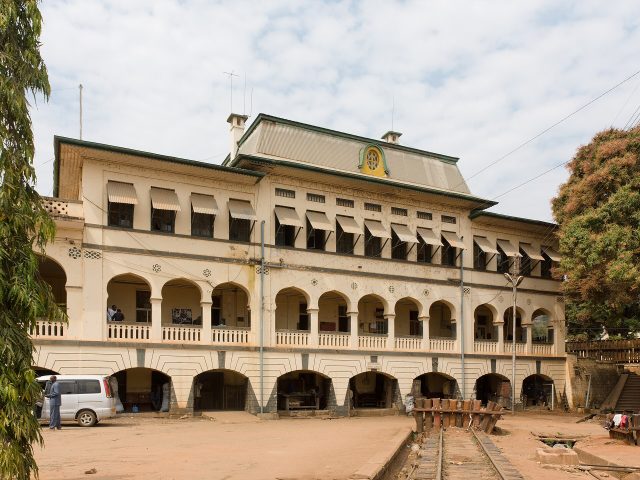
The architecture along Tanganyika’s shores is simple and practical. In the lakeside villages, homes are built from mud and wood, their roofs thatched with palm leaves. Kigoma retains a few colonial-era buildings, remnants of a time when the town was a bustling trade hub. But the lake itself is the true marvel—its shoreline a mix of pebbled beaches, rocky outcrops, and papyrus thickets. In some places, the water edges right up to the forest, as if the jungle might swallow it whole.
The weather here is mild, with none of the dramatic shifts found elsewhere in Tanzania. Even during the rainy season, the lake remains calm, its surface rarely disturbed. The best time to visit is between May and October, when the skies are clear and the water is at its most transparent. Snorkeling and diving are possible, though the underwater scenery isn’t as vibrant as a coral reef. Instead, divers might glimpse deep-water fish adapted to near-total darkness, or the eerie outlines of sunken ships resting on the lakebed.
For those who live along its shores, Tanganyika is more than just a body of water—it’s the foundation of daily life. Fishing, trade, and transport all revolve around the lake, with boats ferrying goods between Tanzania, the Democratic Republic of Congo, Burundi, and Zambia. In Kigoma, you can watch fishermen mending their nets or women selling dried fish at the market, scenes that have changed little over generations. This isn’t a staged tourist experience; it’s the quiet, enduring reality of life by the water.
There’s something about Tanganyika that makes it easy to forget the rush of the outside world. There’s no need to hurry, no checklist of sights to tick off. You can sit on the shore, listening to the water and watching the sunset paint the sky in shades of orange and pink. Or you can take a boat out into the open lake, where the only companions are the gulls and the wind. It’s a place that draws those who seek not excitement, but a kind of stillness.
Yet the lake has its mysteries. Sometimes, strange circles appear on the surface, created by wind-driven currents. In other spots, the water suddenly churns, a sign of deep-sea gases rising from below. And on quiet nights, you might hear a distant rumble—the sound of a passing steamer or the echo of the lake itself, bouncing between the shores. Tanganyika holds secrets, and perhaps that’s why it calls to those who are willing to listen.