Gombe is a quiet corner of wilderness in western Tanzania, where dense jungle spills down to the shores of Lake Tanganyika. Far from the well-trodden tourist paths and the noise of cities, this place feels like a world apart—a rare patch of untouched forest where nature still dictates the rhythm of life. Unlike the open savannas of Tanzania’s famous national parks, Gombe is intimate and unassuming, more like an open-air research station than a typical safari destination. Here, the forest thrives undisturbed, and humans are merely observers, stepping lightly into a landscape that has remained largely unchanged for centuries.
The story of Gombe is inseparable from the work of Jane Goodall, the British primatologist who arrived here in 1960 to study chimpanzees. What began as a scientific endeavor soon reshaped our understanding of these animals. Goodall’s observations revealed that chimpanzees use tools, form complex social bonds, and even wage wars between communities—discoveries that challenged long-held assumptions about the boundaries between humans and other species. Today, Gombe remains a vital hub for primate research, though access is carefully controlled. The research station Goodall founded still operates, welcoming scientists from around the world who continue her work, studying not just chimpanzees but the broader ecosystem of the forest.
The landscape of Gombe is a tangle of steep valleys and narrow streams cutting through thick tropical forest, all leading down to the edge of Lake Tanganyika. The lake itself is deceptive—its surface may appear calm, but its waters are deep and cool, with a shoreline of jagged rocks and tangled vegetation. The forest is alive with more than just chimpanzees; red colobus monkeys swing through the trees, baboons forage along the ground, and countless birds, butterflies, and reptiles add to the sense of a living, breathing ecosystem. Walking through Gombe feels like stepping into a natural museum, where every rustle in the leaves or distant call hints at the complexity of life here.
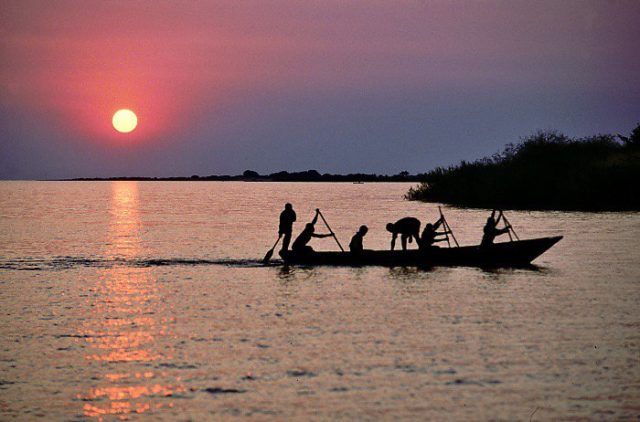
Reaching Gombe is part of the experience. There are no roads leading here, no hotels with air conditioning or restaurants serving familiar dishes. Instead, visitors arrive by boat from Kigoma, a small port town on the lake’s edge. The journey takes about an hour, and as the boat cuts through the water, the forest looms closer, its greenery pressing right up to the shoreline. Upon arrival, park rangers greet visitors and lead them along narrow trails that wind through the trees. There are no guarantees of wildlife sightings—this isn’t a zoo, and the animals move on their own terms.
A visit to Gombe is less about ticking off a checklist of sights and more about immersing yourself in the world of the chimpanzees. Groups are small, and encounters with the animals happen by chance rather than design. Sometimes, a troop of chimpanzees will cross the path ahead, their dark forms moving effortlessly through the branches as they forage for fruit. Other times, they stay hidden in the depths of the forest, their hoots and calls echoing through the trees. The guides, many of whom have worked here for years, share not just facts about the chimpanzees but also stories about the plants, birds, and the history of the park itself. Their knowledge turns a simple walk into something richer—a glimpse into a place where science and nature intertwine.
Gombe isn’t for those seeking luxury or entertainment. Accommodations are basic: simple cabins or tents, cold-water showers, and meals cooked over an open fire. But it’s this very simplicity that makes the place special. There are no distractions here, no barriers between you and the forest. At night, the sounds of the wilderness fill the air—the distant calls of chimpanzees, the rustle of leaves, the gentle lapping of waves against the shore. When dawn breaks over Lake Tanganyika, the light filters through the trees, and the world feels reduced to just two elements: water and green.
Despite its remoteness, Gombe plays a crucial role in conservation. The forests here are one of the last strongholds of wild nature in Tanzania, a place where animals can live without constant human interference. The research conducted in the park helps scientists understand tropical ecosystems and develop strategies to protect them. For the local communities, Gombe also brings benefits—some of the revenue from tourism supports development projects, and a few residents work as guides or park staff, bridging the gap between the forest and the outside world.
A trip to Gombe is more than just a journey; it’s an experience that lingers long after you’ve left. There are no crowds, no souvenir stalls, no staged performances—just the quiet hum of the forest and the chance to see chimpanzees living as they have for generations. It’s a place that makes you reflect on the fragility of wild spaces and the importance of preserving them. Perhaps that’s why Gombe, though not as famous as other destinations in Tanzania, leaves such a deep impression. It’s a reminder that some of the most extraordinary places are those where nature is allowed to exist on its own terms.