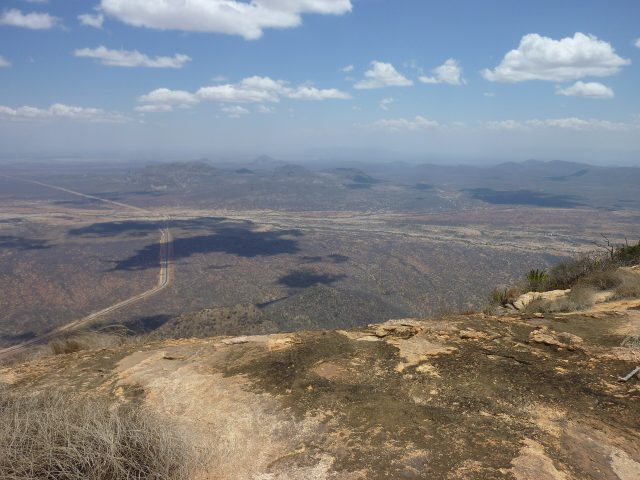
Lake Paradise is one of those places that feels almost too perfect to be real—until you stand at its edge and see it for yourself. Tucked into the heart of Marsabit National Park in northern Kenya, it appears like a mirage after hours of driving through dry, dusty plains. The landscape here is shaped by ancient volcanic forces, where dense forests cling to the slopes of long-dormant craters, and the sudden sight of still, reflective water framed by green hills feels like stepping into another world. It’s a place where the contrast between arid savanna and lush greenery is so stark that it leaves you wondering how such a scene could exist in the middle of a region where rain is a rare gift.
The lake itself formed in the crater of an extinct volcano, its waters fed by underground springs that have sustained it for millennia. For the local Samburu and Rendille communities, this has always been more than just a source of water—it’s a sacred place, woven into stories of ancestors and the unseen forces that govern the land. Their traditions speak of the lake as a symbol of life’s persistence in a harsh environment, where survival depends on respecting the balance between people and nature. Even today, the area retains a sense of quiet reverence, as if the land itself remembers its significance.
Reaching Lake Paradise is part of the experience. The journey begins on paved roads from Nairobi, but the last stretch is a slow, winding drive along rough tracks that cut through savanna and rocky outcrops. Along the way, the landscape shifts from open plains to clusters of acacia trees, where elephants or giraffes might appear on the horizon, their silhouettes blending into the golden light. By the time you arrive, the isolation of the place becomes part of its charm. There are no crowds here, no grand lodges—just a handful of simple cottages and campsites designed to blend into the surroundings rather than dominate them.
The lake is small but striking, its clear waters mirroring the sky and the surrounding forest. Swimming isn’t recommended—the shores are marshy, and crocodiles are known to lurk in the reeds—but that doesn’t diminish its beauty. Instead, visitors are drawn to the walking trails that wind through the forest, where the air is thick with the calls of monkeys and the rustling of leaves. The best moments come at dawn, when the first light spills over the water, turning it shades of pink and gold, and the morning mist lingers like a veil. It’s easy to lose track of time here, where the pace of life slows to match the rhythm of the wind and the distant cries of birds.
The wildlife around Lake Paradise is as much a part of its allure as the scenery. The forests of Marsabit are home to species rarely seen elsewhere in Kenya, including forest elephants—smaller and more elusive than their savanna cousins—who come to drink at the water’s edge. Birdwatchers will find plenty to admire, from the vibrant plumage of turacos to the sharp eyes of African fish eagles perched in the trees. Buffalo and antelope sometimes venture close to the shore, while at night, the distant roar of lions reminds you that this is still wild country. The animals here move with a quiet caution, as if aware of the lake’s sacred status.
The climate around Marsabit is gentler than in much of northern Kenya, thanks to the elevation of around 1,400 meters above sea level. The air is cooler, the humidity higher, creating a microclimate that allows forests to thrive in what would otherwise be a semi-arid landscape. During the rainy seasons—March to May and October to December—the area transforms. The trees burst into fresh green, the lake fills to its brim, and the whole place feels alive in a way that’s almost tangible. Even in the dry months, the contrast between the lush crater and the parched plains beyond is a reminder of how fragile and precious such an oasis can be.
This isn’t a place for those seeking luxury or entertainment. There are no fancy resorts, no guided tours with set itineraries—just the raw, unfiltered beauty of the land. Most visitors stay in basic campsites or small lodges, where the accommodations are simple but the views are unforgettable. Local guides offer walks through the forest, sharing stories of the land’s history and the traditions of the people who have lived here for generations. Their knowledge adds depth to the experience, turning a visit into something more than just a scenic stop.
Lake Paradise is a reminder of what makes Kenya’s wild places so special—not just the big game or the dramatic landscapes, but the quiet corners where nature still holds sway. It’s a place that demands patience and respect, where the rewards come not from ticking off a checklist of sights, but from slowing down and letting the land reveal itself on its own terms. Here, the real magic isn’t just in the lake itself, but in the way it makes you feel: small, yet connected to something vast and enduring. In a world where so much is changing, it’s a rare comfort to find a place that still feels untouched, as if time itself has paused to let you witness its beauty.