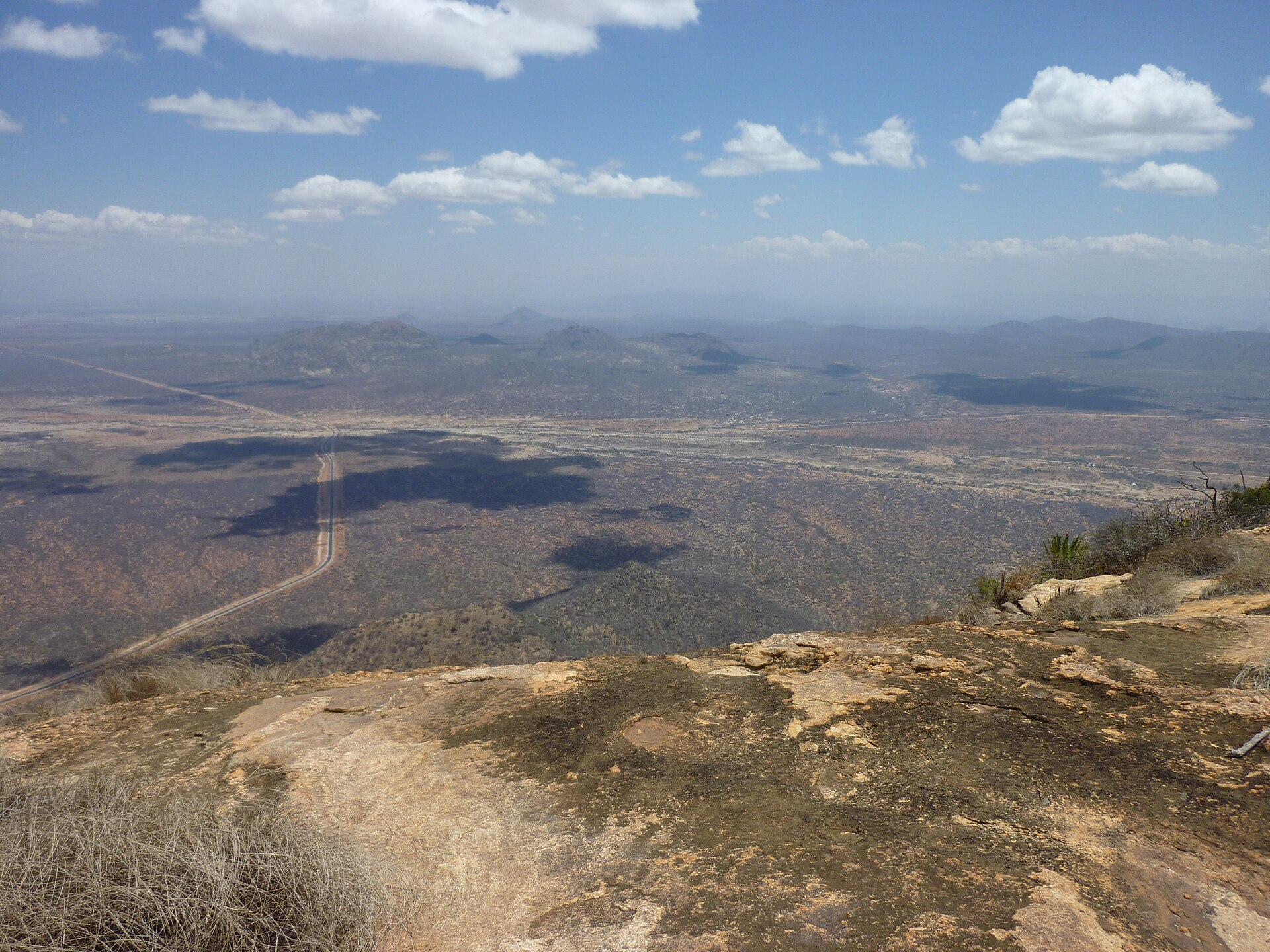
Marsabit sits quietly in northern Kenya, far from the well-trodden paths of safari jeeps and beach resorts. There are no souvenir stalls here, no guides calling out offers, no crowds pressing in. Instead, the land stretches out in every direction, vast and unhurried, where life moves to the rhythm of seasons and the needs of livestock. The town rests on a plateau of the same name, a highland island surrounded by semi-arid plains and patches of green where water sources and grazing land dictate where people settle.
This is not the Africa of postcards—no lions lounging under acacia trees, no elephants marching in dramatic silhouettes. Instead, it’s the Africa of everyday moments: camels ambling down dusty roads, women balancing clay pots on their heads as they walk to the market, children playing outside low-slung houses made of mud and thatch. The air carries the scent of woodsmoke and dry earth, and the only sounds are the occasional bleat of goats or the distant hum of a generator.
Marsabit’s history is woven into the lives of the nomadic communities that have called this region home for generations. The Borana, Rendille, and Gabra peoples have long relied on herding cattle, goats, and camels, following the rains and the fresh grass. The town itself took shape during the colonial era, when the British established an administrative outpost here to oversee the northern territories. A few remnants of that time remain—old stone buildings, crumbling roads—but Marsabit was never meant to be a grand settlement. It was, and still is, a place where life bends to the demands of the land.
The architecture reflects this simplicity. Most homes are built from locally sourced materials: sun-baked mud bricks, rough-hewn stone, and timber frames. Roofs are patched together with corrugated iron or thatch, depending on what’s available. In the town center, a handful of colonial-era structures stand, but they don’t dominate the landscape. Instead, they blend in, as if they’ve always been part of the terrain. The market is where the town’s pulse beats strongest. Here, traders sell camel milk in plastic jerrycans, strips of dried meat, spices in small cloth bundles, and bolts of brightly colored fabric. You’ll find handmade leather bags, beaded jewelry, and wooden carvings—not as souvenirs, but as practical items made for daily use. The market isn’t a spectacle; it’s just life unfolding.
The plateau rises above the surrounding plains, offering sweeping views of a landscape that shifts between rocky outcrops and sparse vegetation. From this vantage point, the horizon seems endless, broken only by the occasional lone tree or distant hill. Nearby, small lakes dot the terrain, their presence a lifeline in an otherwise dry land. Paradise Lake, though modest in size, is a striking contrast to the arid surroundings. Dense thickets of greenery encircle its shores, and the water draws in birds, monkeys, and even elephants that come to drink. The Marsabit National Park, a short distance from town, is home to zebras, giraffes, buffalo, and the occasional leopard, though sightings are never guaranteed. The animals here move on their own terms, and visitors quickly learn that patience is part of the experience.
Life in Marsabit is shaped by the cycles of drought and rain. During the dry season, the town slows to a near standstill. Many families pack up and move with their herds in search of grazing land, leaving the streets quiet and the market stalls half-empty. But when the rains come, everything changes. The earth softens, turning a vibrant green, and the herds return. The Borana people mark the arrival of the rains with ceremonies, where elders offer blessings for the land and the livestock. There’s no fanfare, no grand spectacle—just a quiet acknowledgment of the balance between human life and the natural world.
This isn’t a place for those seeking luxury or convenience. There are no high-end lodges or fine-dining restaurants, no air-conditioned tour buses or guided itineraries. What Marsabit offers instead is something far more rare: a glimpse into a way of life that has remained largely unchanged for centuries. The hospitality here is genuine. Locals might invite you into their homes for tea, or share a meal of ugali and stew around a fire. The roads leading to Marsabit are long and rough, often reduced to little more than dirt tracks where the occasional camel caravan or herd of goats crosses your path. The journey itself is part of the experience, a reminder that getting here requires effort—and that’s part of the appeal.
Marsabit doesn’t try to impress. It doesn’t need to. The town exists as it always has, a quiet outpost where the land and its people move in sync. For those who make the journey, it offers a chance to step away from the familiar and into a world where time feels different. You might spend your days wandering the hills, watching the light change over the plains, or simply sitting on a porch as the sun sets, listening to the sounds of the savanna and the distant calls of night birds. The stars here are brighter than in most places, unobscured by city lights, and the silence is profound. This is Africa stripped of pretense—raw, beautiful, and utterly real.