- Home
- Kenya
- Lake Nakuru
- Lake Nakuru
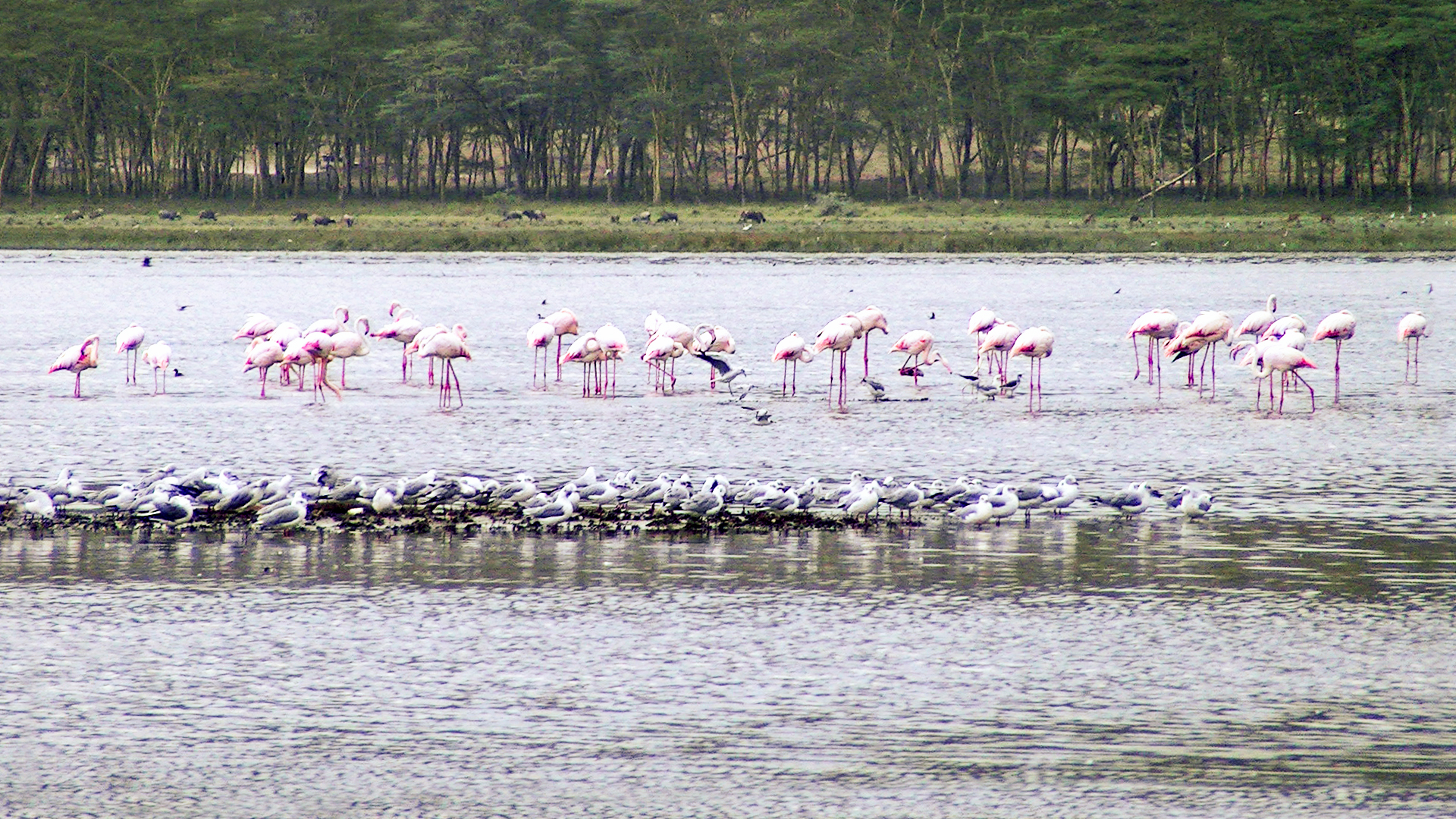
Photo: Lyfec, CC BY-SA 4.0
Lake Nakuru
out of 5 0 ratingsLake Nakuru sits in the heart of Kenya’s Great Rift Valley, a few hours’ drive from Nairobi, where the land feels untouched by time. Unlike the manicured landscapes of tourist resorts, this place follows its own rhythm, shaped by seasons and the slow pulse of wildlife. The lake itself is a shifting canvas—its waters rise and fall with the rains, sometimes flooding the reeds along the shore, other times receding to reveal cracked, salt-encrusted flats. The hills around it are dotted with acacia trees and patches of dry bush, their silhouettes sharp against the sky. But what draws people here isn’t the scenery alone; it’s the life that thrives within it.
The lake is best known for its flamingos, vast flocks of them that turn the shallows into a sea of pink. There are moments when the birds seem to outnumber the water itself, their reflections rippling as they stir the surface in search of algae. The algae, a blue-green bloom, is what gives the lake its unusual hue and sustains these birds in staggering numbers—sometimes hundreds of thousands at once. But Nakuru is more than just a flamingo spectacle. Pelicans glide low over the water, their wings skimming the surface, while fish eagles perch in the trees, watching for prey. On the fringes of the park, where the land dries into savanna, herds of buffalo graze, and the occasional leopard slips through the tall grass. The park is also one of the few places where you might spot a white rhino, a species nearly hunted to extinction in the last century but slowly recovering here under strict protection.
The land around Nakuru has been shaped by forces far older than the park itself. Millions of years ago, this part of the Rift Valley was submerged under a vast inland sea, and the lake is one of its last remnants. Over time, the water receded, leaving behind layers of sediment and salt, which now define the landscape. Long before conservationists arrived, the Maasai people moved through these lands with their cattle, considering the lake and its surroundings sacred. For them, it was a place of spirits, a source of life in an otherwise harsh environment. European explorers only reached Nakuru in the early 1900s, drawn by stories of its wildlife and the promise of big game. By then, the area was already changing—first as a hunting ground, then as a protected reserve, and finally, in 1961, as a national park.
Today, Lake Nakuru National Park covers nearly 180 square kilometers, a mix of open savanna, dense thickets, and rocky outcrops. Unlike the vast plains of the Maasai Mara, where wildebeest migrations dominate the scene, Nakuru offers something quieter but no less compelling. The park is a refuge for species that have vanished elsewhere, like the Rothschild’s giraffe, its coat darker and more patterned than its cousins, and the rare black rhino, which moves through the bush with a quiet, almost prehistoric presence. There are no lions here, no endless herds of elephants, but the absence of those familiar safari sights makes the encounters that do happen feel more intimate. A troop of baboons crossing the road, a pair of warthogs rooting in the dirt, or a lone hyena trotting past at dusk—each moment carries the weight of something rare.
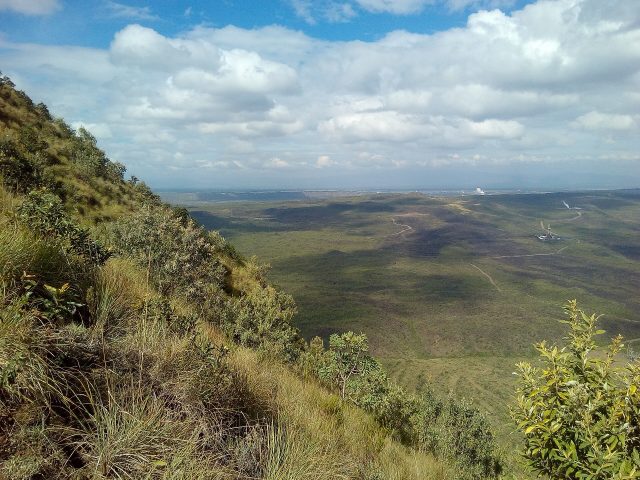
The park’s most striking feature isn’t man-made, but it’s hard to ignore the way the landscape itself feels like a monument. Baboon Cliff, a rocky promontory overlooking the lake, offers one of the best views in the park. From its summit, the water stretches out below, framed by the rolling hills and the distant haze of the Rift Valley. Local stories say the cliff was once the lookout of a Maasai chief, who watched over his people from this vantage point. Now, it’s where visitors come to watch the sunrise paint the sky in shades of gold and pink, or to sit in silence as the light fades and the first stars appear. Nearby, the Mbaraki Caves hold faint traces of the past—rock paintings left by nomadic tribes, their meanings lost to time but their presence a reminder of how long humans have been drawn to this place.
A visit to Nakuru isn’t about ticking off a checklist of sights. There are no crowded viewpoints, no guided tours with scripted commentary. Instead, it’s a slow immersion into a world where time moves differently. Safaris here begin before dawn, when the air is cool and the animals are most active. The roads are rough, little more than tracks worn into the earth, and the jeeps move cautiously, stopping whenever something catches the eye—a herd of impala frozen in the grass, a python coiled in the branches of a tree. Patience is key. You might spend hours waiting for a leopard to emerge from the undergrowth, or for a rhino to amble into view. But even if the big moments don’t come, the smaller ones linger: the way the light slants through the acacias at midday, the sound of a fish eagle’s cry echoing over the water, the sudden hush that falls when a flock of flamingos takes flight.
The weather here is as unpredictable as the wildlife. Mornings can be chilly, especially in the higher elevations, while by noon the sun beats down with an intensity that makes the air shimmer. Rain is infrequent but dramatic when it arrives, turning the dusty roads to mud and swelling the lake until it spills over its banks. The best time to visit is during the dry season, from July to March, when the animals congregate around the remaining water sources and the flamingos are at their most numerous. But even then, the elements have a way of surprising you—a sudden downpour, a bank of fog rolling in from the hills, or a wind that whips across the lake, sending the birds into a frenzy of movement.
There are no luxury lodges here, no fine-dining restaurants. Instead, a handful of small camps and lodges blend into the landscape, their thatched roofs and open-air verandas designed to feel like part of the surroundings. Some have pools where you can cool off after a day in the sun, or fire pits where travelers gather in the evenings to swap stories. The food is simple—grilled meat, fresh vegetables, the occasional local dish—but it tastes better eaten under the stars, with the sounds of the bush drifting in from the darkness. The staff, many of whom grew up in the area, know the land intimately and share its secrets willingly: where to find the best views, which animals are active at certain times of day, how to read the signs of the wild.
Nakuru isn’t a place for those who want comfort or constant entertainment. It demands attention, a willingness to slow down and let the landscape reveal itself on its own terms. You might spend a morning watching flamingos feed, their long necks bending in unison, or an afternoon tracking a rhino through the bush, its massive form barely visible among the trees. There’s no grand finale, no moment that sums it all up—just the quiet accumulation of experiences, each one adding to the sense of being somewhere untamed. It’s the kind of place that stays with you long after you’ve left, not because of any single memory, but because of the way it makes you feel: small, in the best possible way, and connected to something far older and wilder than yourself.
Day around this place
Where else to go on the same day
Building the day…
Where it is
-0.36667, 36.08333