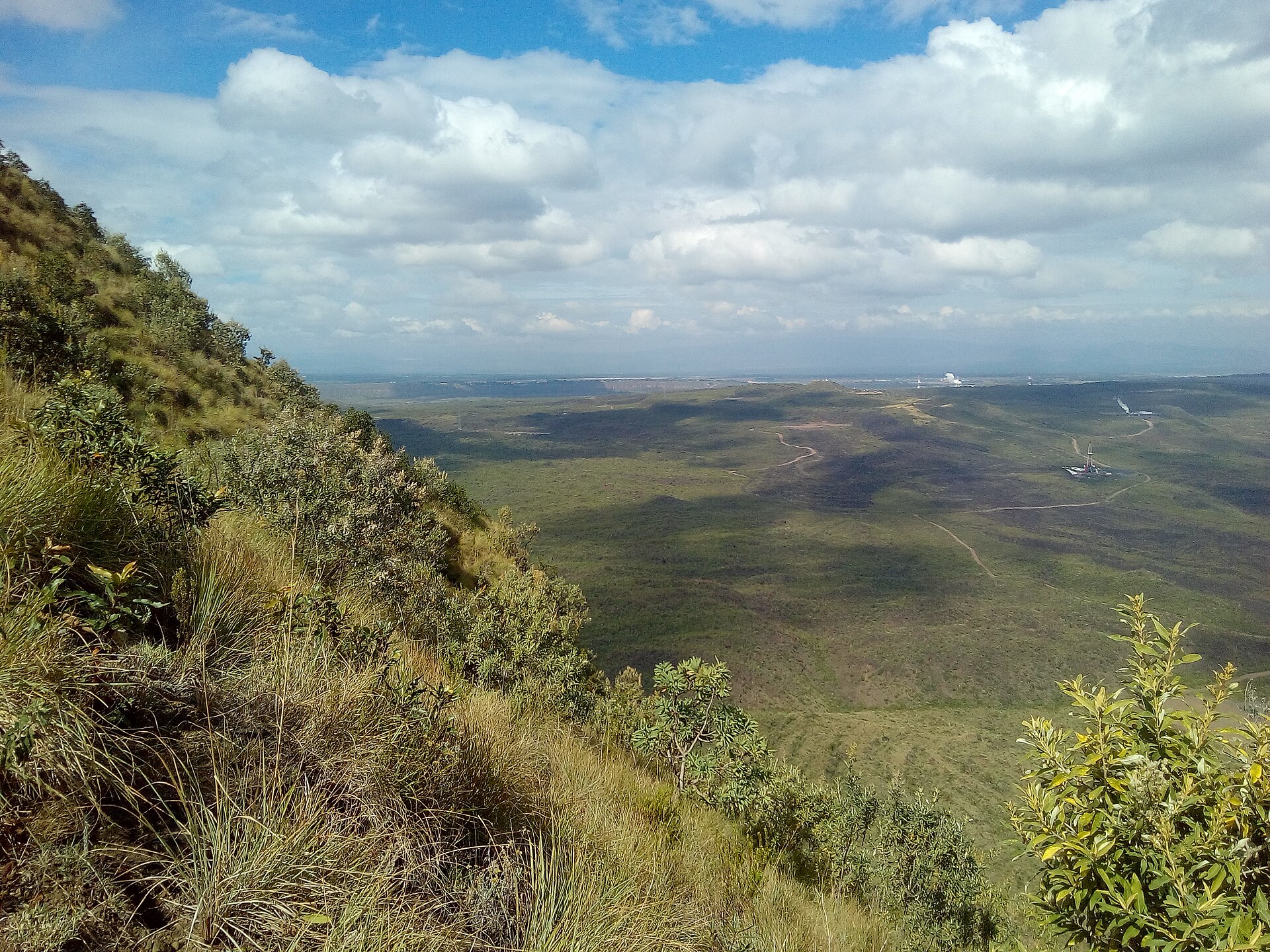
Menengai Crater is one of those places where the raw power of nature feels almost tangible. Perched on the edge of Nakuru, this vast volcanic caldera draws visitors not just for its dramatic landscapes, but for the quiet sense of scale it imposes. From the rim, the view stretches across rolling hills that fade into the savanna, with the distant shimmer of Lake Nakuru just visible on the horizon. The air here is different—cleaner, lighter—and the silence makes it easy to forget the noise of everyday life. It’s the kind of place that invites you to pause, to look out, and to simply exist for a while without distraction.
The crater was formed around eight thousand years ago during a massive volcanic eruption, one of the largest in the region’s geological history. Today, it stands as one of the world’s most impressive calderas, with a diameter of nearly twelve kilometers. Inside, the floor is a vast expanse of grass and shrubs, while the walls rise sharply, their jagged edges a reminder of the forces that shaped them. Geologists believe Menengai was once one of the most active volcanoes in East Africa, though it has long been dormant. Now, its presence is more about stillness than destruction—an ancient giant at rest.
For the Maasai people, Menengai has always been more than just a geological feature. Their oral traditions speak of it as a sacred place, where the spirits of ancestors linger and the land itself holds memories. Some Maasai still come here to perform rituals or to reflect on their heritage, treating the crater not as a tourist attraction, but as a living connection to their past. There’s something humbling about standing in a place that has meant so much to so many generations. The wind carries no answers, but it does carry a sense of continuity—of people coming here for the same reasons, century after century.
Reaching the rim isn’t a walk in the park, but the effort is worth it. The path winds upward from the base, cutting through rocky outcrops and patches of dry bush. Along the way, you might pass herders guiding their cattle or goats, their figures small against the vastness of the landscape. The higher you climb, the thinner the air becomes, and the more the world below seems to shrink. When you finally reach the top, the view hits you all at once—not just the physical expanse, but the weight of the place itself. It’s the kind of sight that makes words feel unnecessary.
Inside the caldera, the land is a mix of open grassland and scattered thickets. Wildlife moves through it in quiet rhythms: antelope graze near the edges, buffalo sometimes wander in from the surrounding plains, and if you’re lucky (or unlucky, depending on your perspective), you might catch a glimpse of a leopard in the distance. During the rainy season, the crater transforms, its slopes turning lush and green while the rest of the region bakes under the sun. Local farmers occasionally bring their livestock here, and for a few weeks, the crater feels almost domesticated—cows dotting the hillsides, herders sitting on rocks, watching over them.
Beyond its natural beauty, Menengai is also a place of scientific interest. Geologists study its structure to better understand the volcanic processes that shaped the Rift Valley, while ecologists examine the unique microclimate that has developed within the caldera. The soil here is rich in minerals, a testament to the violent history beneath the surface. For researchers, the crater is like an open-air laboratory, offering insights into everything from plate tectonics to the resilience of ecosystems in harsh environments.
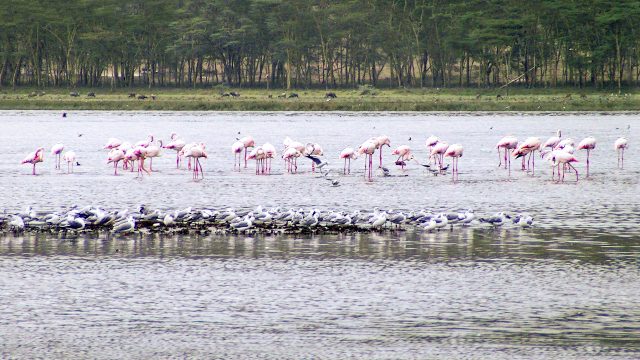
For visitors, the crater offers a few different ways to explore. The most straightforward is to walk along the rim, where the views are best, especially in the early morning or late afternoon when the light softens the landscape. Those looking for a more immersive experience can descend into the caldera itself, though the path is steeper and less defined. On clear days, the horizon stretches endlessly—mountains rise in the distance, valleys dip and swell, and if the conditions are right, you can just make out the pink haze of flamingos on Lake Nakuru. As the sun sets, the sky turns gold and rose, and the crater seems to glow from within.
Despite its growing popularity, Menengai hasn’t been overtaken by tourism. There are no souvenir stalls, no guided tours with scripted spiels—just the land as it is. That’s part of its appeal. People come here for different reasons: photographers chasing the perfect shot, hikers looking for solitude, or travelers simply wanting to stand somewhere quiet and vast. The lack of crowds makes it feel like a secret, though it’s not exactly hidden. Maybe that’s the point—some places aren’t meant to be tamed or packaged. They’re meant to be experienced as they are.
If you find yourself in Nakuru, take the time to visit Menengai. It’s not the kind of place you can fully grasp from a photo or a description. You have to stand on the edge, feel the wind, and let the scale of it sink in. There’s no grand revelation, no sudden epiphany—just a slow, quiet understanding of how small we are in the face of something so old and enduring. And maybe that’s enough. Maybe that’s the whole reason to come.