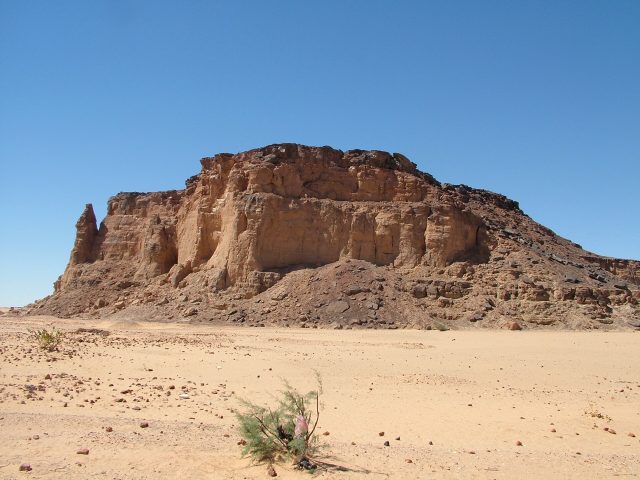
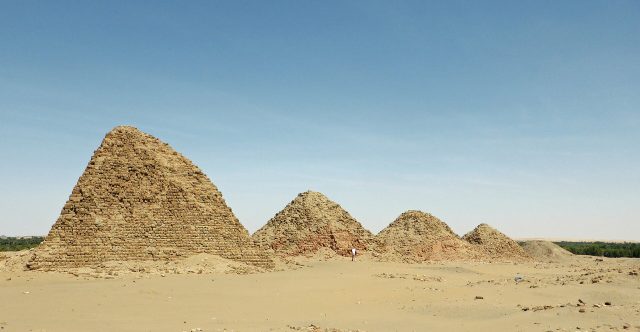
Nuri is one of those rare places where the weight of history feels almost tangible, yet the silence around it makes it feel untouched by time. Tucked away in the northern reaches of Sudan, not far from the ancient city of Napata, this site sits at the edge of the desert, where the shifting sands meet the remnants of a civilization that once rivaled Egypt in power and influence. The pyramids here are smaller than their famous counterparts in Giza, but their presence is no less striking. They rise from the arid landscape like silent sentinels, their weathered stones bearing witness to a kingdom that has long faded from memory.
This was the burial ground of the Kushite kings, who ruled between the 7th and 4th centuries BCE. Unlike the pyramids of Egypt, which were reserved for pharaohs alone, Nuri served as a dynastic necropolis, where rulers and their families were laid to rest in elaborate tombs. Around twenty pyramids once stood here, though many have crumbled over the centuries, their stones scattered by time and human hands. The largest belongs to Taharqa, one of the last great Kushite kings, who also ruled Egypt as part of the 25th Dynasty. His pyramid, though modest in scale, still commands attention, its steep sides and simple construction a testament to the skill of its builders and the enduring legacy of his reign.
The architecture of Nuri’s pyramids sets them apart from those in Egypt. They are shorter, with steeper angles, and often feature small annexes at their base—likely temples or chapels where rituals were performed. The stones used in their construction are rough-hewn and locally sourced, giving the structures a raw, unpolished appearance that somehow makes them feel more authentic. Inside, narrow passageways lead to burial chambers, some of which were looted in antiquity. Yet even in their emptiness, they offer glimpses of the past: fragments of sarcophagi, remnants of jewelry, and everyday objects that now reside in museums far from their original resting place.
Visiting Nuri is less about ticking off a tourist attraction and more about stepping into a different era. There are no crowds here, no vendors hawking souvenirs, no guided tours with rehearsed scripts. The only sounds are the whisper of the wind through the sand and the occasional cry of a bird circling overhead. The desert stretches endlessly in every direction, its vastness broken only by the pyramids, which stand as reminders of a time when this land was a thriving hub of trade and culture. Napata, the nearby city, was once a vital stop on the routes connecting Egypt to the heart of Africa, and Nuri was its spiritual and political core. Today, it feels like a place where the past lingers just beneath the surface, waiting to be rediscovered.
The isolation of Nuri is part of its appeal. It draws those who seek history beyond the well-trodden paths, who are willing to venture off the beaten track for the chance to stand in a place that few others have seen. There are no grand entrances or visitor centers here—just the pyramids, the desert, and the quiet understanding that you are walking in the footsteps of kings. If you encounter locals, they are likely to be welcoming but unobtrusive, aware of the significance of the site but not inclined to turn it into a spectacle. This lack of commercialization is rare in a world where so many historical sites have been packaged for mass consumption, and it only adds to the sense of authenticity.
The climate in Nuri is harsh, with scorching days and chilly nights. The best time to visit is between November and February, when temperatures are more bearable. Getting here is not easy—it requires a flight to Khartoum, followed by a long drive through the desert, where roads are sparse and the landscape unforgiving. But for those who make the journey, the reward is a sense of connection to a history that is both grand and deeply personal. There is something humbling about standing in a place where the passage of time is measured not in years, but in millennia.
Nuri is more than just a collection of ancient structures; it is a testament to a civilization that carved out its own identity in the shadow of a more dominant neighbor. The Kushites did not merely borrow from Egyptian traditions—they reinterpreted them, infusing their own symbols, beliefs, and artistic styles into the mix. The pyramids here reflect this synthesis: gods depicted with distinctly African features, inscriptions in the Meroitic script (which remains only partially deciphered), and architectural choices that set them apart from anything else in the ancient world. It is a reminder that history is not a single narrative, but a tapestry of cultures, each with its own story to tell.
What makes Nuri truly special is its refusal to conform to expectations. It is not a place that seeks fame or recognition; it simply exists, as it has for thousands of years. There are no grand claims of being the "greatest" or the "most important"—just the quiet certainty of a site that has endured. In a world where so much of travel has become about instant gratification and curated experiences, Nuri offers something different: the chance to step back in time, to feel the weight of history without the noise of the modern world intruding. It is a place where you can stand at the base of a pyramid and imagine what it must have been like to witness its construction, to walk these sands when they were alive with the sounds of a thriving kingdom.
For those who venture here, Nuri is not just a destination—it is an encounter with the past in its most unfiltered form. It is a reminder that history is not just something to be read about in books, but something to be felt, to be experienced firsthand. And perhaps that is the greatest gift of all: the realization that there are still places in the world where the echoes of ancient civilizations can be heard, if only you take the time to listen.