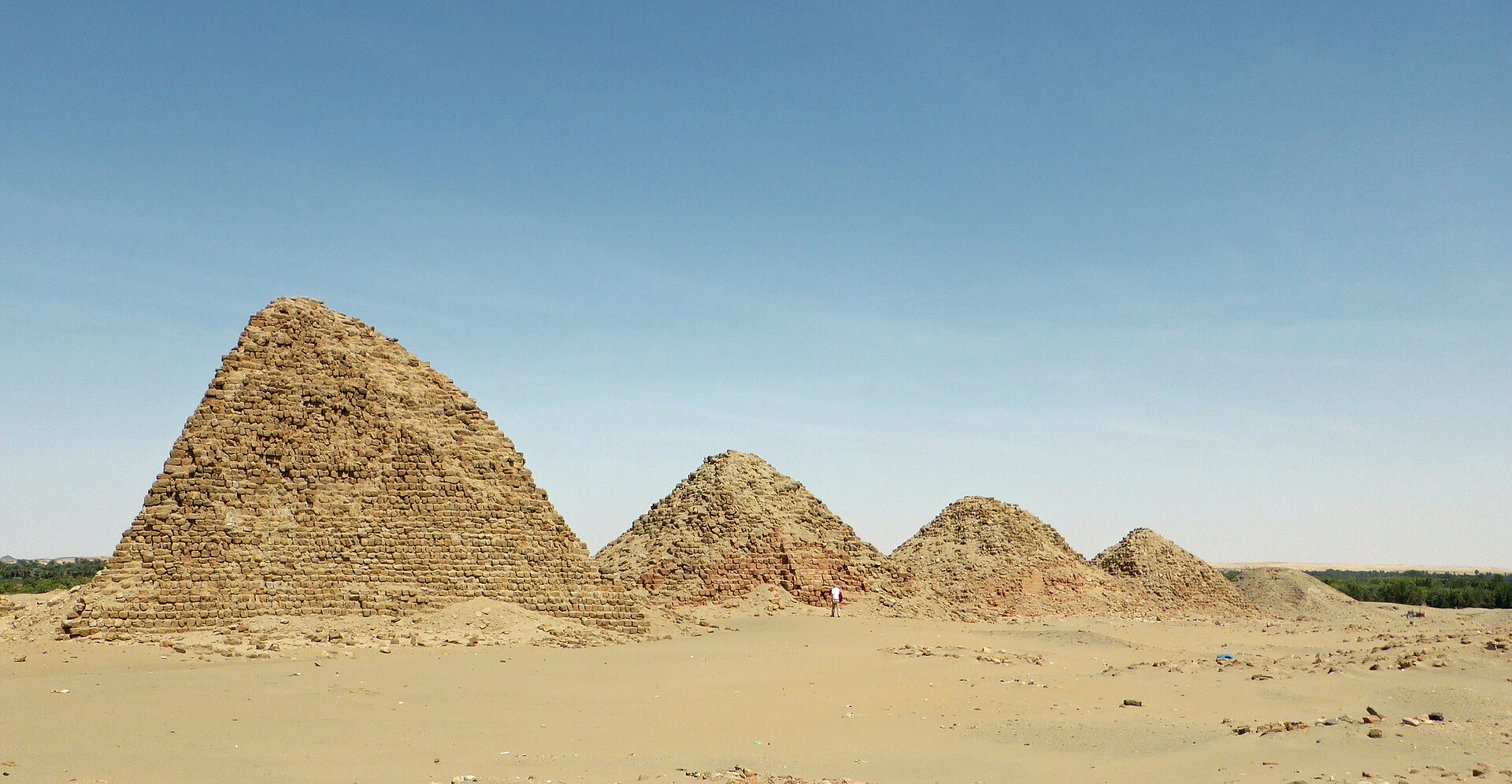
The pyramids of Nuri stand in the quiet vastness of northern Sudan, a place that feels suspended between the ancient world and the present. Unlike their more famous counterparts in Egypt, these structures are rarely crowded with visitors, their presence almost understated against the backdrop of the desert. They were built as tombs for the kings of Kush, a kingdom that once rivaled Egypt in power and influence, even ruling over it for a time. Today, they remain a testament to a civilization that flourished along the Nile, its story often overshadowed by its northern neighbor.
Nuri was the burial site of twenty-five Kushite rulers, including Taharqa, a pharaoh whose name appears in the Bible. The pyramids here are smaller than those in Egypt, their steep sides rising sharply from the sand, though many have lost their original capstones and the small temples that once crowned them. Over time, wind and erosion have worn them down, yet they still command attention, their weathered forms a stark contrast to the endless dunes. The site feels remote, not just in distance but in time, as if the modern world has barely touched it.
The construction of these pyramids reflects the unique traditions of Kush. Unlike the solid stone structures of Egypt, the pyramids at Nuri were built from sandstone blocks held together with clay mortar. Inside, narrow passageways lead to burial chambers carved into the bedrock, some still bearing faint traces of paintings and inscriptions. The entrances often face east, a detail that may have been tied to the Kushite sun cult, setting them apart from the northern tradition of north-facing tombs. The craftsmanship is evident, though much of it has been lost to looting and the passage of centuries.
Visiting Nuri is an experience far removed from the typical tourist trail. There are no souvenir stands, no guided tours with loudspeakers, just the sound of the wind and the occasional call of a bird. The few people you might encounter are likely to be locals going about their daily lives—herding livestock or tending small plots of land near the river. For them, the pyramids are not a curiosity but a familiar part of the landscape, a link to a distant past that still shapes their identity. The absence of crowds makes it easier to imagine what this place might have been like when it was a thriving necropolis, serving the nearby capital of Napata.
Napata itself was once a city of great importance, a center of trade and religion where caravans laden with gold, ivory, and other goods passed through on their way to Egypt and beyond. The pyramids of Nuri were its royal cemetery, a place where kings were laid to rest with the rituals and honors befitting their status. Today, little remains of the city’s former glory, but the pyramids endure, offering a glimpse into a time when this region was a crossroads of cultures. Even now, the landscape retains a quiet vitality—after the rains, the desert briefly blooms, and the banks of the Nile are lined with palm groves and fields of sorghum.
The pyramids are a reminder of how fleeting power can be. They have outlasted the kingdom that built them, yet they are slowly being reclaimed by the desert. Unlike the heavily protected pyramids of Egypt, those at Nuri receive far less attention, leaving them vulnerable to natural erosion and human interference. This neglect, however, also means that visitors can explore the site with a sense of discovery, as if stumbling upon a secret that few others have seen. The isolation adds to the sense of connection with the past, making the experience feel more personal.
For those who make the journey, Nuri demands a certain level of preparation. There are no paved roads leading to the site, no nearby hotels or restaurants. Travelers must bring their own supplies—water, food, and a reliable vehicle—and be ready to contend with the harsh desert climate. The heat can be intense, and the sand finds its way into everything. But those who persevere are rewarded with something rare: the chance to stand in a place where history feels tangible, where the weight of centuries is almost palpable.
Time moves differently here. You can spend hours wandering among the pyramids, tracing their slopes with your eyes, trying to picture them as they once were. Or you can simply sit in the sand, listening to the silence, the only sounds the whisper of the wind and the distant murmur of the Nile. In moments like these, it’s easy to understand why this place was chosen as a final resting ground for kings. The desert, the river, and the sky create a sense of timelessness, and the pyramids serve as a bridge between the past and the present. They are a quiet reminder that even the greatest civilizations fade, but their legacy endures in the stones they left behind.