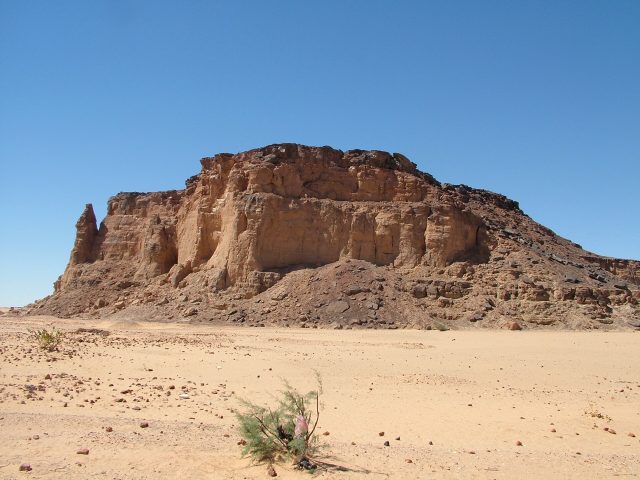
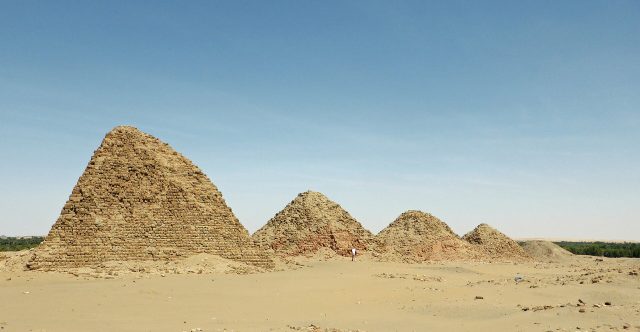
The Temple of Mutimwisa, known locally as Tabo, rests on the western bank of the Nile in what was once the heart of ancient Napata. This was the capital of the Kushite Kingdom, a place where power and faith once converged in ways that shaped an entire civilization. Today, the ruins stand quietly, half-buried in sand, their columns casting long shadows just as they have for millennia. The silence here is not empty—it carries the weight of a history that refuses to be forgotten.
Built in the 7th century BCE, when Napata was at the height of its influence, Tabo was more than just a temple. The Kushites, who ruled over a vast territory stretching from the Nile to the Red Sea, did not merely borrow from Egyptian traditions—they reinterpreted them. The temple was dedicated to Amun, but here, the god was not just a deity of the pantheon; he was the divine patron of Kushite kings, whose authority was believed to flow directly from the gods. The columns, crowned with lotus-shaped capitals, echo Egyptian design, yet the proportions of the structure and its deliberate placement reveal a distinct Kushite vision—one that sought to assert its own identity rather than imitate.
The temple is modest in size but carefully designed. Passing through the entrance, visitors step into a hypostyle hall where columns stand close together, creating a sense of enclosure. Narrow slits in the walls allow slivers of light to filter in, casting shifting patterns across the stone. The dimness lends the space an almost sacred stillness, as if the whispers of priests and the murmurs of ancient rituals still linger in the air. Beyond the hall lies the sanctuary, where a statue of Amun once stood. The walls were once adorned with reliefs depicting the deeds of Kushite kings, though today only fragments remain. Even so, these remnants offer a glimpse of the temple’s former grandeur, a silent testament to the craftsmanship and devotion of those who built it.
Napata was more than a political capital—it was the religious core of the Kushite Kingdom. This was where kings were crowned, where the most critical decisions of the realm were made, and where the divine and the earthly intersected. Tabo played a central role in this sacred landscape. The Kushites believed their rulers were direct descendants of Amun, and the temple served as the physical manifestation of that belief. Each new king underwent initiation rites here, seeking the gods’ blessing to legitimize their rule. The temple was not just a place of worship; it was a stage for the performance of power, where the fate of a kingdom was intertwined with the will of the divine.
Today, Tabo stands apart from the well-trodden paths of mass tourism. The surrounding landscape is one of quiet desolation—endless desert, the occasional visitor, and local herders guiding their camels along the riverbank. The Nile here is narrower than in Egypt, but its waters still sustain life, just as they have for thousands of years. Archaeologists occasionally return to the site, brushing away sand, deciphering inscriptions, and piecing together the fragments of Kushite history. Their work is a reminder that much of this civilization’s story remains untold, its secrets still waiting beneath the surface.
Visiting Tabo is like stepping into another time. There are no crowds, no souvenir stalls, no neatly printed signs—just stone, sand, and the wind whispering through the columns. You can sit on the temple steps and imagine the scene as it once was: the chanting of hymns to Amun, the scent of incense, the solemn processions of priests and kings. The absence of modern distractions makes it easier to feel the presence of the past, to sense the weight of the rituals that once unfolded here.
The temple also serves as a quiet rebuke to the idea that history is written only by the victors. The Kushite Kingdom is long gone, its capital reduced to ruins, its memory overshadowed by other empires. Yet Tabo endures, a silent witness to a civilization that thrived at the crossroads of cultures. In recent years, Sudan has begun to reclaim this history, and the temple has taken on new significance as a symbol of national identity. It is a place where the past is not just remembered but felt—a tangible connection to a people who carved their own destiny from the desert.
If you find yourself here, take your time. Pause at the temple’s edge, run your fingers along the weathered stone. Feel the coolness of the rock, the texture of time etched into its surface. There is nothing extraneous in this place—no noise, no clutter, just the enduring presence of history. In the stillness, you might just hear the echoes of a world that once was, and in doing so, understand why some stories refuse to fade.