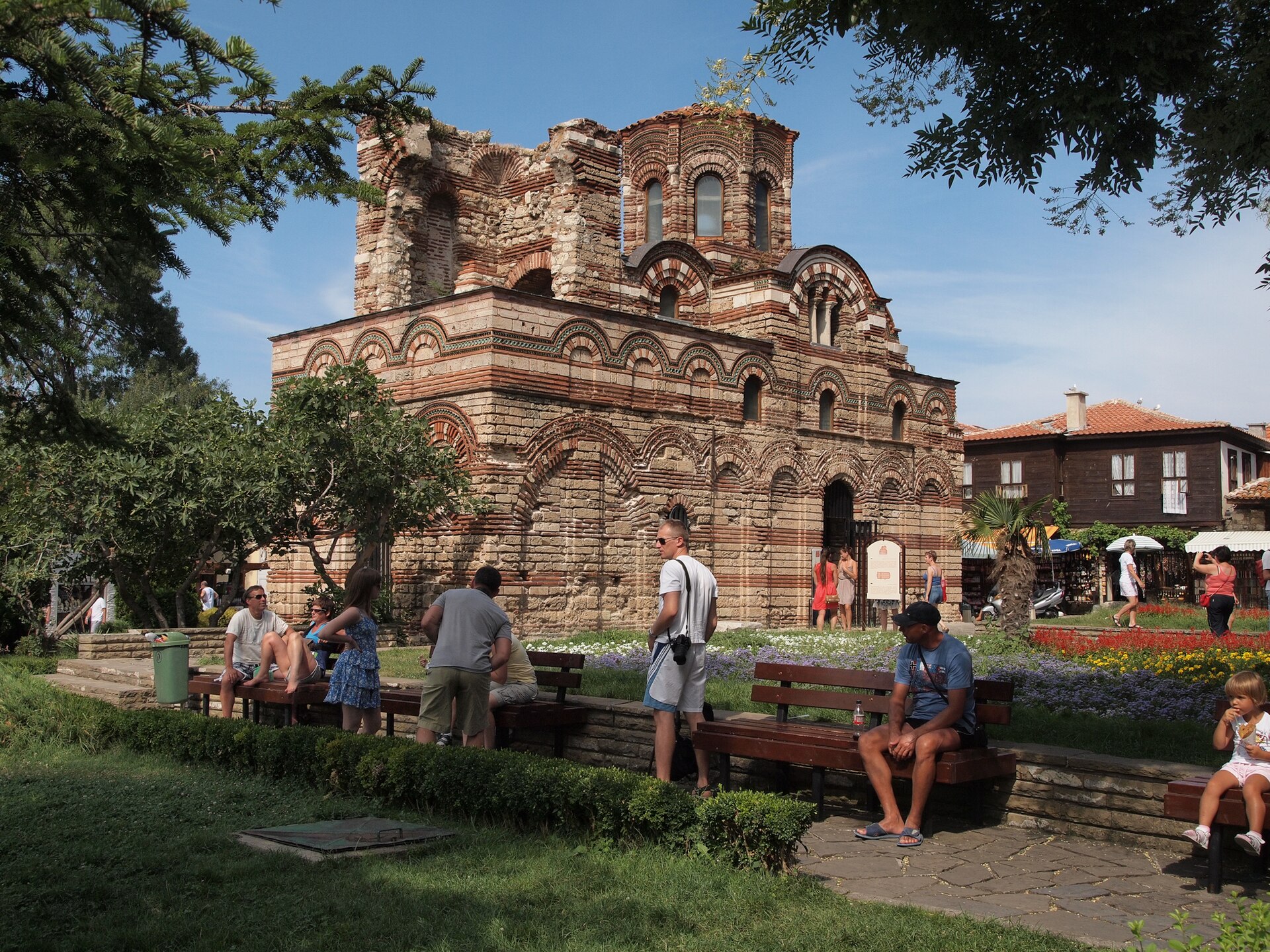
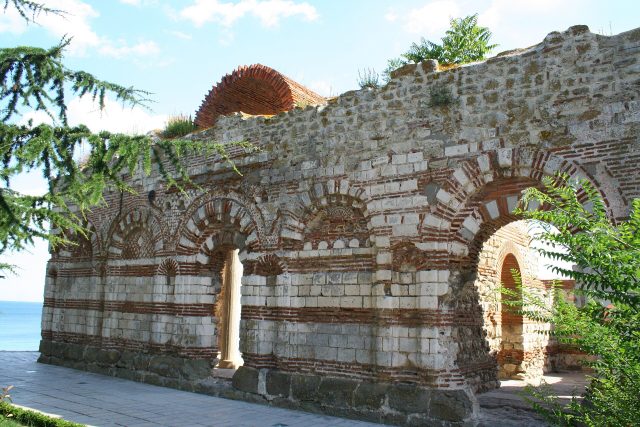
Nessebar is a place where time seems to slow down, especially as you wander through its narrow, winding streets. The old part of the city, a UNESCO World Heritage site, feels suspended between past and present, where every stone and wooden balcony carries the weight of centuries. Among the medieval walls and weathered houses, the Church of Christ Pantokrator stands as a quiet witness to history. It doesn’t just occupy a space in the city—it tells a story, one that unfolds in its architecture, its faded frescoes, and the very air around it.
Built in the 14th century, when Nessebar—then known as Mesembria—was a thriving religious and commercial hub of the Second Bulgarian Empire, the church reflects the grandeur of its time. Back then, the city was dotted with over forty churches, though only a handful remain today. Pantokrator is one of them, a fine example of late Byzantine design. Small in size but elegant in proportion, it captures the essence of an era when faith and art were inseparable. The church’s exterior is a testament to the craftsmanship of its builders, with intricate details that reveal themselves the longer you look.
The façade is adorned with ceramic inserts and stone carvings, a hallmark of Byzantine architecture. Crosses, rosettes, and geometric patterns create a delicate interplay of light and shadow, while the terracotta and ochre hues of the ceramic tiles blend seamlessly with the surrounding buildings. These elements weren’t just decorative—they were a language, a way of expressing devotion through form and color. Inside, the church once gleamed with frescoes, though only fragments remain today. What survives hints at the splendor that once covered every wall, a reminder of how art and worship intertwined in medieval Bulgaria.
Pantokrator’s history is as layered as its walls. After the Ottoman conquest, it was repurposed as a mosque, and later, it fell into disrepair. It wasn’t until the 20th century that restoration efforts began, carefully peeling back the layers of time to reveal its original beauty. Today, the church houses an exhibit on medieval Bulgarian art, but its true value lies in its presence—its weathered stones, its quiet corners, and the sense of continuity it offers. Walking inside, you can almost hear the echoes of the past: the murmur of prayers, the tolling of a bell, the footsteps of those who came before.
Nessebar has always been a crossroads of cultures, where Byzantine, Bulgarian, and Ottoman influences merged. Pantokrator embodies this blend, standing on a slight rise with views of the sea. On a clear day, the horizon stretches endlessly, and the church feels like a bridge between land and water, past and present. It’s easy to imagine the city as it once was—bustling with merchants, pilgrims, and townspeople, all drawn to this place of worship. The church wasn’t just a building; it was the heart of the community, a place where lives intersected and stories unfolded.
Nowadays, Pantokrator is one of Nessebar’s most cherished landmarks, yet it hasn’t been reduced to a mere tourist attraction. There’s a stillness here, broken only by the sound of waves and the cry of gulls. In summer, visitors step inside to escape the heat, while in winter, the church feels even more serene, surrounded by empty streets and the quiet rhythm of the old town. There’s no rush, no crowd—just the opportunity to take in the details, to trace the lines of a carving or study the texture of the stone, each mark a testament to the hands that shaped it.
Nessebar is often called an open-air museum, and Pantokrator is one of its finest treasures. The city is small enough to explore on foot in a few hours, but places like this church make you pause. It doesn’t command attention with towering spires or vast interiors, but there’s a quiet strength in its simplicity. Here, history isn’t confined to books or plaques—it’s alive in the walls, in the salt-tinged breeze, in the way the light falls through the arched windows. It’s a place where the past isn’t just remembered; it’s felt.