The National Museum of Brazil was once one of the most important scientific and cultural institutions in Latin America, a place where history, science, and national identity intersected in the heart of Rio de Janeiro. Founded in 1818 by King João VI of Portugal, it began as the Royal Museum, conceived as a hub for the study of natural history and anthropology in a colony still finding its place in the world. At the time, Brazil was not yet an independent nation, and the museum’s creation reflected a broader effort to cultivate knowledge in the New World. Over the decades, as Brazil gained sovereignty, the institution evolved under the patronage of the imperial family, expanding beyond scientific collections to preserve artifacts that told the story of the country itself.
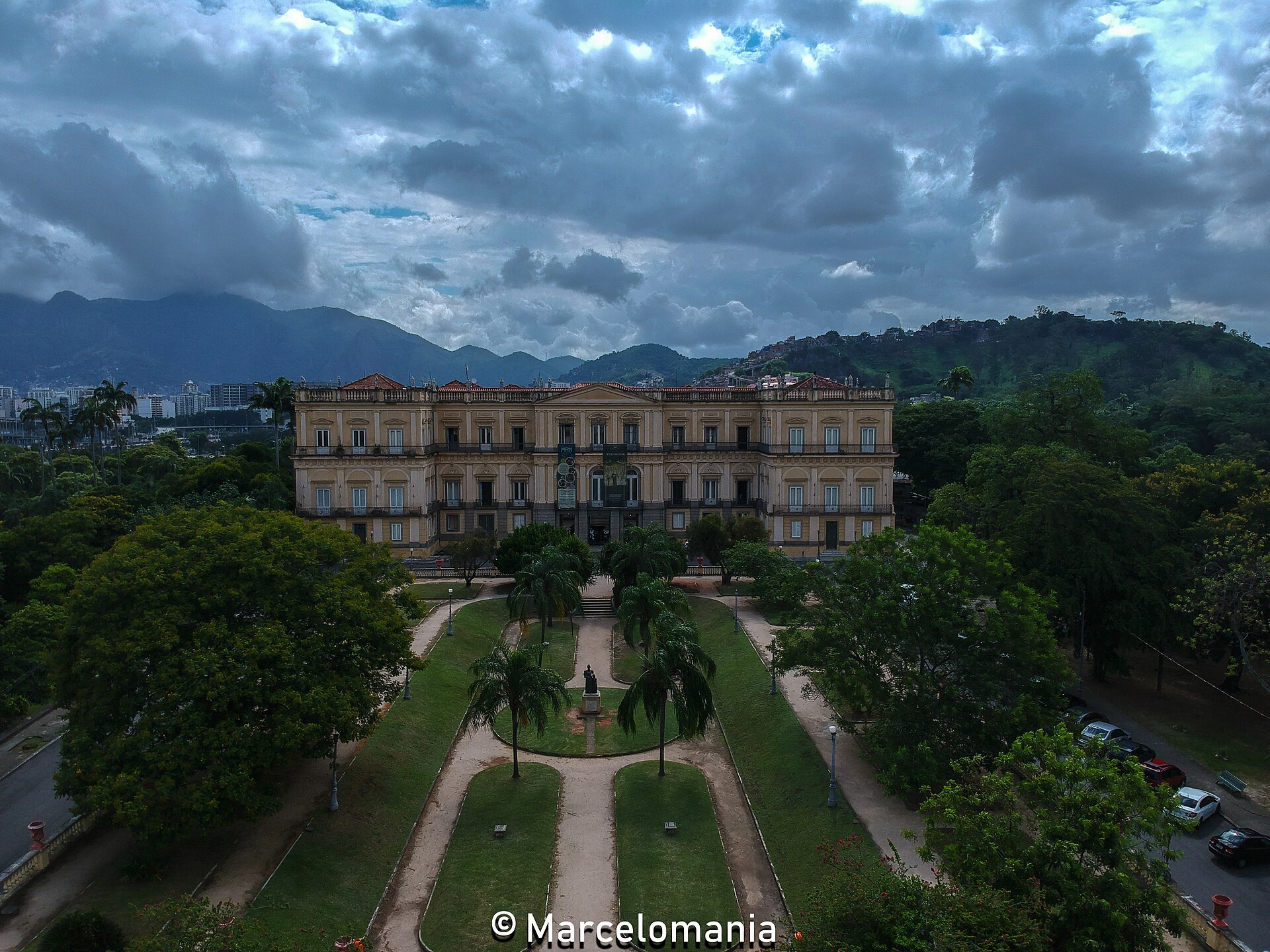
The building that housed the museum was as much a part of Brazil’s heritage as the treasures it contained. The former São Cristóvão Palace, constructed in the early 19th century, was a masterpiece of neoclassical architecture, designed to impress with its grandeur while adapting to Rio’s tropical climate. High ceilings, vast halls, and large windows allowed air to circulate in the heat, blending European elegance with practicality. The palace had once been home to the Portuguese royal family when they fled Napoleon’s invasion, and later served as the residence of Brazil’s emperors, Dom Pedro I and Dom Pedro II. Its interiors were a testament to imperial splendor—marble staircases, ornate plasterwork, and reception rooms where diplomats and nobility gathered for state affairs.
For nearly two centuries, the museum’s collections grew into one of the most extensive in the Americas, with over 20 million items spanning geology, paleontology, botany, zoology, and anthropology. Among its most celebrated holdings were rare minerals, meteorites, and fossils, including the skeleton of Maxakalisaurus, a dinosaur discovered in Minas Gerais. The museum also housed remarkable anthropological artifacts: Egyptian mummies, pre-Columbian relics, and objects from Brazil’s Indigenous peoples. One of its most famous pieces was the Bendegó meteorite, the largest ever found in Brazil, a silent witness to the cosmos that had crashed into the earth millennia ago. These collections drew researchers from around the world, shaping our understanding of South America’s natural and cultural history.
Beyond its role as a repository of knowledge, the museum was a vital center of scientific inquiry. Brazilian and international scholars worked within its walls, organizing expeditions into the Amazon and other remote regions, their findings enriching the museum’s archives. Emperor Dom Pedro II, a passionate advocate for science, personally supported the institution, ensuring its collections grew in both size and significance. In the 19th and early 20th centuries, the museum was a place of discovery—where lectures were held, exhibitions mounted, and research published, all contributing to the intellectual life of a young nation.
Yet the museum’s history was not without struggle. By the 20th century, financial neglect began to take its toll. Funding for maintenance and modernization dwindled, leaving parts of the building in disrepair and some collections vulnerable to decay. Despite these challenges, the museum remained a cultural landmark, drawing visitors not only for its scientific exhibits but for the history embedded in its walls. The palace had been the stage for pivotal moments in Brazil’s past—where laws were debated, treaties signed, and the foundations of a nation laid. For many, walking through its halls was a way to connect with that legacy.
The turning point came in September 2018, when a devastating fire swept through the museum. The blaze destroyed much of the collection, including irreplaceable artifacts—ancient manuscripts, Indigenous artifacts, and fossils that had survived for centuries. The loss was profound, felt not just in Brazil but across the global scientific community. Yet even in the aftermath, the museum refused to fade into memory. Efforts to salvage what remained began almost immediately, alongside initiatives to digitize records and preserve the stories of what had been lost.
Today, the National Museum of Brazil is slowly rebuilding. Some exhibits have reopened, offering a glimpse of what once was and what may yet be restored. Plans for full reconstruction are underway, though the process is painstaking, a reminder of how fragile heritage can be. The museum endures as a symbol of resilience, a place where the past is not just remembered but actively preserved. Even now, its halls echo with the weight of history—from the age of dinosaurs to the rise and fall of empires, from the first steps toward independence to the challenges of the modern era.
Visiting the museum is more than an encounter with artifacts; it is an immersion in the layers of time that have shaped Brazil. The palace’s grand staircases, once trodden by emperors, now lead to exhibits that tell quieter stories—of ancient civilizations, of scientific breakthroughs, of a nation’s evolving identity. The building itself, with its scars and its surviving beauty, stands as a testament to both loss and renewal. What remains is not just a museum, but a living connection to the past, one that depends on care and commitment to endure for future generations.