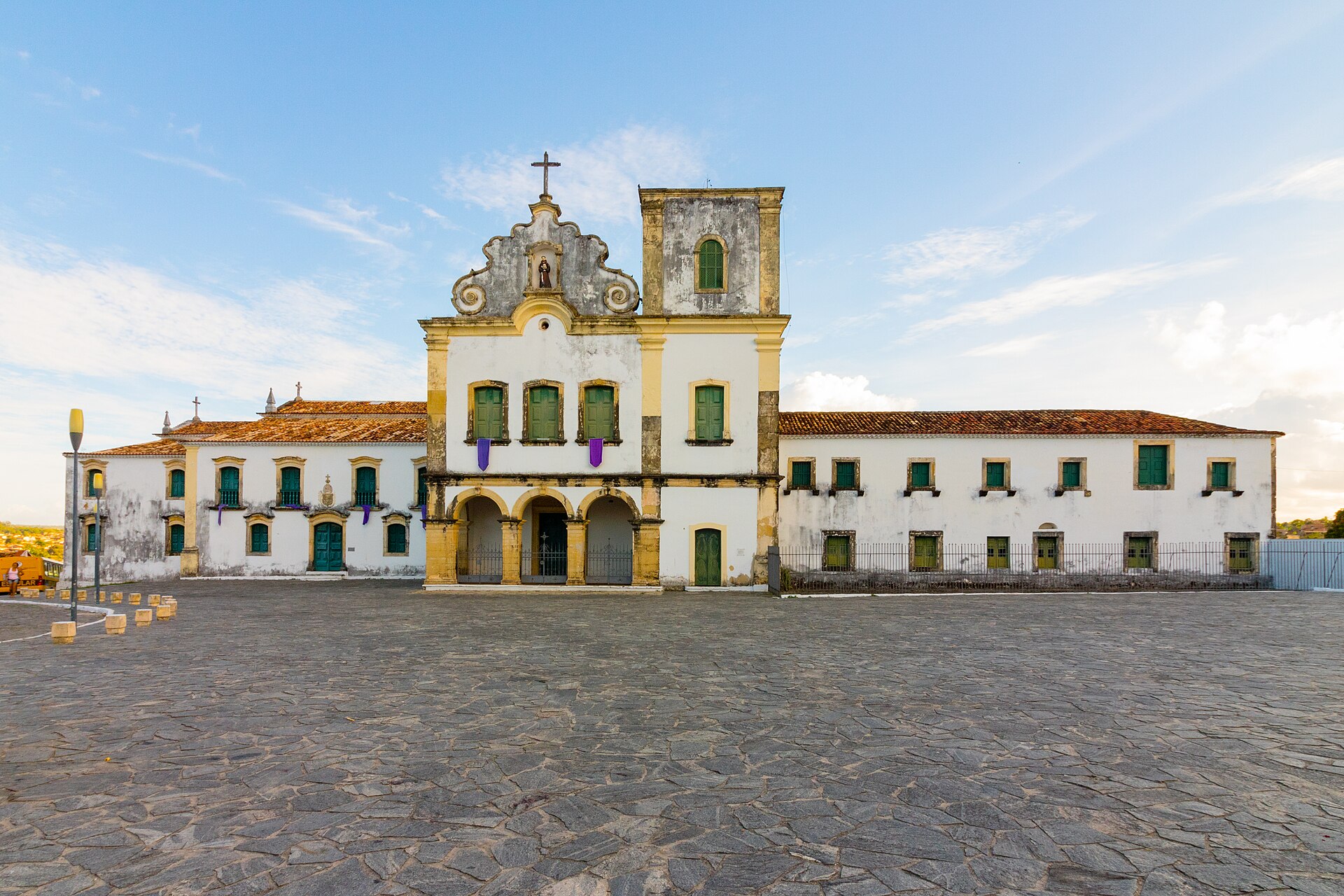
São Cristóvão is one of those quiet Brazilian towns that rarely makes it onto the usual tourist maps. Tucked away in the state of Sergipe, far from the bustling beaches and big cities, it holds a piece of colonial history that feels almost forgotten—yet deeply alive. At its heart stands the Church and Monastery of São Francisco, a place where time moves differently. This isn’t a site for quick snapshots or hurried visits. It’s somewhere to linger, to let the weight of centuries settle around you, to notice the way sunlight filters through old windows or how the scent of aged wood and candle wax lingers in the air.
The complex dates back to the late 16th century, when Franciscan monks arrived in Brazil alongside Portuguese settlers. Their mission was to spread Catholicism, but their monasteries often became more than just religious centers—they were places of learning, art, and community. São Cristóvão was no exception. The monastery grew slowly, its walls absorbing both European traditions and the realities of life in the New World. Today, it stands as one of the oldest surviving Franciscan sites in Brazil, a silent witness to the early days of a nation still finding its shape.
The architecture here is a striking example of Brazilian Baroque, a style that evolved into something distinct from its European roots. The church’s facade is restrained, almost severe, with twin towers framing a portal adorned with intricate carvings. Step inside, though, and the Baroque reveals its full grandeur. Gold-leafed woodwork glows in the dim light, altars twist into elaborate spirals, and frescoes depict biblical scenes with a mix of reverence and drama. The centerpiece is the main altar, crafted in *talha dourada*—gilded woodcarving—a technique that became a hallmark of colonial Brazilian craftsmanship. Every detail, from the carved pews to the wrought-iron grilles, speaks of the skill and patience of the artisans who built this place.
The monastery itself is a world apart, a quiet maze of cloisters, courtyards, and cells where monks once lived. Few visitors venture beyond the church, but those who do find a space that feels suspended in time. Arched walkways lead to secluded gardens, where the only sounds are the rustle of leaves and the occasional chime of a distant bell. There’s a small museum here, too, filled with relics of monastic life: faded manuscripts, wooden rosaries, and simple tools that hint at the daily rhythms of prayer and labor. In one courtyard, an ancient tree spreads its branches wide. Local legend says Saint Francis himself once rested beneath it, though history is likely less poetic. Still, the story adds to the sense of something sacred lingering in the air.
São Cristóvão has never been a large city, and the Church of São Francisco has always been its spiritual anchor. For centuries, it was where the town gathered—for baptisms, weddings, funerals, and festivals. Even after Brazil gained independence in the 19th century, the monastery remained a place of education, housing a school where boys studied not just scripture but also the basics of reading, writing, and arithmetic. Today, the church still holds services, though it sees far fewer visitors than the more famous churches of Salvador or Olinda. That’s part of its charm. There are no crowds here, no vendors hawking souvenirs, just the quiet hum of a place that has endured.
Visiting São Francisco is less about ticking off a landmark and more about stepping into a different era. The floors creak underfoot, the air is thick with the scent of old paper and beeswax, and the light through the stained glass casts shifting patterns on the walls. It’s easy to imagine the murmur of prayers, the scrape of a craftsman’s chisel, or the slow toll of a bell marking the hours. This is a place where history isn’t just remembered—it’s felt.
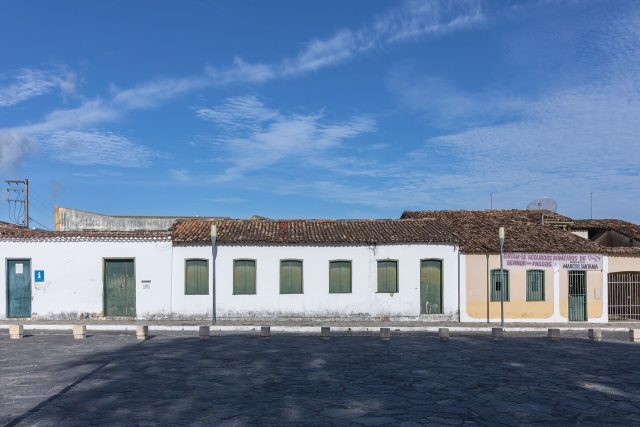
The town itself is worth exploring, too. Founded in 1590, São Cristóvão was once a key administrative hub, even serving as the capital of Sergipe in the 18th century. Its colonial past is still visible in the cobblestone streets, the low-slung houses with their terracotta roofs, and the small plazas where fountains trickle quietly. The church stands at the highest point, its bell tower offering a view over the red-tiled rooftops and the rolling green hills beyond. Walking through São Cristóvão feels like slipping into a slower, older version of Brazil, where the present fades just enough to let the past breathe.
If you come here, take your time. Sit on a bench in the monastery courtyard, watch the shadows lengthen across the stone. Stop at a café on the main square for a cup of strong Brazilian coffee and a *pão de queijo*, still warm from the oven. Strike up a conversation with a local—many will happily share stories about the town, its legends, and its people. You might hear about hidden treasures buried beneath the monastery or why thunder never seems to strike the church during storms. The details might be fanciful, but that’s part of the magic. These stories are what make a place feel alive.
São Francisco doesn’t demand attention. It doesn’t need to. Instead, it waits, patient and unassuming, for those who are willing to look beyond the surface. There are no tour groups here, no selfie sticks, no scripted narratives. Just old walls, quiet corners, and the quiet pulse of history. If you’re lucky, you’ll leave with the sense that you’ve touched something real—something that has outlasted empires, wars, and time itself.