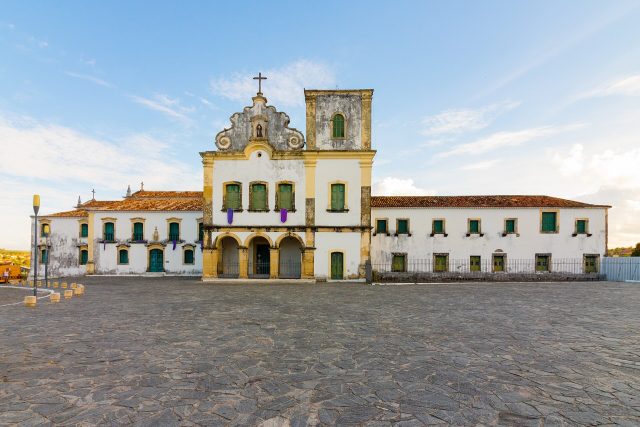
São Cristóvão is a town where time seems to move at its own pace, its cobblestone streets and colonial facades whispering stories of Brazil’s past. Among its quiet corners, the Museum of Sacred Art stands as a place where history isn’t just preserved—it lingers in the air, in the worn edges of wooden saints and the soft glow of silver chalices. Housed in a former Franciscan monastery, the museum is more than a collection of religious artifacts; it’s a bridge between centuries, where the spiritual life of colonial Brazil unfolds in layers of craftsmanship, faith, and cultural fusion.
The building itself is a testament to the era that shaped it. Constructed in the 18th century, its thick walls and lofty ceilings were designed to inspire reverence, their proportions echoing the grandeur of European monastic architecture while adapting to the realities of the New World. The inner courtyard, framed by arched galleries, offers a moment of quiet reflection, its open space a reminder of how deeply the monastery’s life was tied to the rhythms of nature. Even the sounds of the street outside seem to fade here, as if respecting the stillness that has settled into the stone over generations.
Inside, the museum’s collection spans from the 17th to the 19th century, a period when the Catholic Church was not just a spiritual force but a cultural and economic one. The wooden statues of saints, carved by anonymous local artisans, are among the most striking pieces. Their faces and postures reveal a blend of European iconography with the subtle influences of African and Indigenous traditions—details that make each figure feel distinctly Brazilian. Some saints bear expressions that seem almost human, their features softened by the hands of craftsmen who may have known their subjects personally.
The silver and gold liturgical objects tell another kind of story. Chalices, censers, and monstrances gleam under the museum’s careful lighting, their intricate designs reflecting the wealth of Brazil’s colonial economy. These were not mere decorative items; they were tools of devotion, crafted from metals mined in the region and transformed into objects of sacred significance. Some were destined for churches in Europe, while others remained in Brazil, passing through the hands of generations of clergy. Today, they rest behind glass, their polished surfaces still carrying the weight of centuries of prayer.
The paintings in the museum offer a different perspective on the intersection of faith and art. Created by Brazilian artists, many of these works were influenced by the Baroque and Rococo styles that swept through Europe, yet they are far from mere imitations. Local painters reimagined biblical scenes with a distinctly Brazilian sensibility—figures draped in robes that catch the light like tropical foliage, or saints whose faces bear the features of the people who prayed before them. These canvases are less about strict religious doctrine and more about the way faith was lived and interpreted in a land far from the centers of European power.
Textiles play an equally important role in the museum’s narrative. Vestments embroidered with gold thread, altar cloths adorned with delicate lace—these pieces were not just functional but works of art in their own right. The craftsmanship is astonishing, with some items so finely detailed that they seem almost too precious for everyday use. They speak to a time when beauty was considered an essential part of worship, a way to honor the divine through human skill. Even now, the care put into each stitch is palpable, a quiet testament to the hands that created them.
Beyond its exhibits, the museum invites visitors to slow down. The courtyard, with its play of light and shadow, is a perfect place to sit and absorb the atmosphere. The high-ceilinged halls, once filled with the murmur of prayers and the scent of incense, now offer a different kind of silence—one that allows for contemplation. There’s no rush here, no need to hurry from one display to the next. Instead, the space encourages a deeper kind of looking, the kind that notices the way wood darkens with age or how a silver surface catches the light just so.
São Cristóvão is a small town, and the Museum of Sacred Art holds a special place within it. It’s not just a repository of the past but a reminder of why preserving such places matters. In a world that often feels disconnected from history, museums like this one serve as anchors, grounding us in the stories of those who came before. A visit here isn’t just about seeing artifacts; it’s about stepping into a slower, more deliberate way of experiencing time. And perhaps, for a little while, feeling the weight of something enduring.