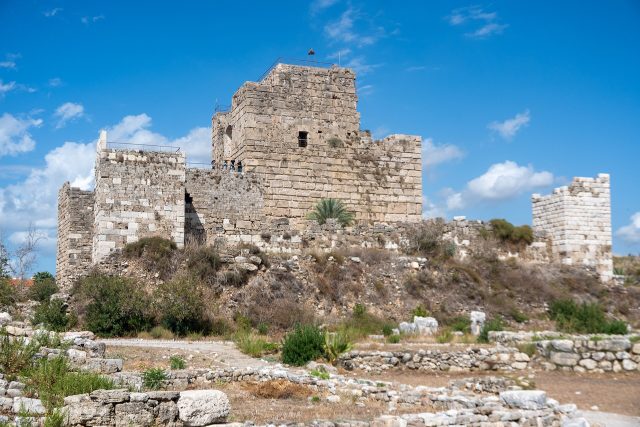
Byblos is one of those rare places where history isn’t confined to textbooks or locked behind glass cases. It’s a city where Phoenician, Roman, Crusader, and Ottoman layers remain visible in its streets, ruins, and the way sunlight touches ancient stones. The Wax Museum of Byblos doesn’t compete with archaeological sites or scholarly exhibits. Instead, it offers a different way to see history—not as dates or battles, but as human moments, frozen in time.
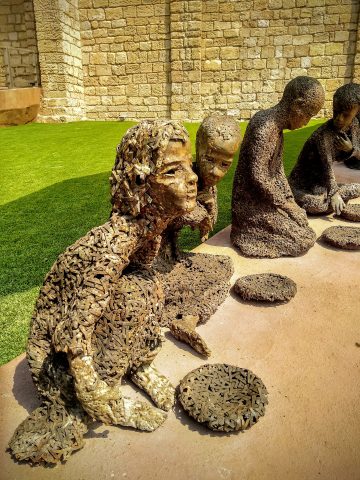
The museum is small, and that works in its favor. There’s no clutter, just a handful of figures, each representing someone who might have walked these streets centuries ago. A Phoenician merchant stands near the entrance, his posture weary yet proud, as if returning from a voyage across the Mediterranean. Nearby, a Roman legionary leans against a wall, his armor polished but his expression tired. In another corner, a glassblower shapes molten glass, his hands moving with the skill that made Phoenician artisans known. These aren’t statues; they’re attempts to show a time when Byblos was a thriving port.
What makes the museum unusual is its lack of pretension. The figures aren’t flawless reconstructions. Their clothes—wool tunics, linen robes, leather sandals—are accurate, but the focus is on the impression they leave. A Phoenician priestess’s fingers rest on an offering bowl. A farmer’s shoulders slump after a long day. A scribe’s gaze drifts over a scroll. These details don’t just show how people looked; they suggest how they lived. The museum doesn’t overwhelm visitors with facts. Instead, it lets the figures speak, inviting you to imagine their conversations and lives.
The building itself is part of the experience. It’s an old structure with thick stone walls and arched ceilings. Some original masonry remains, worn smooth by time. The rooms are softly lit, casting shadows that make the wax figures seem almost alive. There are no modern displays or interactive screens. The simplicity lets the figures stand out, as if they’ve been waiting for someone to notice them again.
Walking through the museum feels like stepping into scenes from the past. The figures are arranged in small groups, caught in the middle of a moment. A Roman official argues with a Phoenician trader. Women sit together, weaving or talking. A child tugs at his mother’s sleeve. These aren’t precise historical reenactments—they’re snapshots of everyday life, making the past feel close.
The museum doesn’t claim to tell the whole story of Byblos. It doesn’t need to. Its strength is in filling gaps, showing the people behind the ruins and artifacts.
Byblos is a city where the past is always near. You can walk from the medieval souk to the Roman theater in minutes, passing Crusader castles and Phoenician temples. The Wax Museum adds to this. It doesn’t focus on kings or conquerors, but on the people who built the city—merchants, artisans, farmers, priests. These were the people who woke up in Byblos, argued in the marketplace, prayed in temples, and buried their dead where their descendants now walk. The museum doesn’t just show what they looked like; it makes you wonder what they thought, feared, or hoped for.
That’s what draws you in. It’s not a definitive history of Byblos or Lebanon. It’s not a grand narrative of empires. Instead, it’s a reminder that history isn’t just about big moments—it’s about small ones, too. The way a mother braids her daughter’s hair. The sound of a blacksmith’s hammer. The smell of baking bread. These details don’t make it into textbooks, but they make a place feel real. The Wax Museum captures that reality simply and powerfully.
After visiting, Byblos changes. The ancient harbor isn’t just weathered stones—it’s where people once stood, watching for ships. The Crusader castle ruins aren’t just a tourist spot; they’re where soldiers lived and died. The museum doesn’t change the city, but it changes how you see it. History stops feeling distant and becomes immediate, human.
Byblos feels like a place where time slows. The Wax Museum is one way to experience that. It doesn’t offer grand revelations. Instead, it offers something simpler: a chance to look into the faces of the past and recognize something familiar. Maybe it’s a child holding his father’s hand or a shopkeeper’s tired smile. These connect us to the people who came before—not because we share their beliefs, but because we share the same human experiences. The museum doesn’t just show history; it makes you feel it. In a city where the past is always present, that might be the most valuable thing of all.