The Provincial Museum of Lugo sits quietly in the heart of this ancient Galician city, where the past lingers in the cracks of everyday life. The building itself is part of the story—a former Franciscan monastery founded in the 13th century, its thick stone walls and vaulted ceilings still carrying the weight of centuries. The cloister, once a place of monastic reflection, now offers visitors a moment of calm, its arched walkways framing a space where history feels almost tangible. The architecture isn’t just a backdrop; it’s a silent witness to how the city has evolved, from medieval piety to modern life.
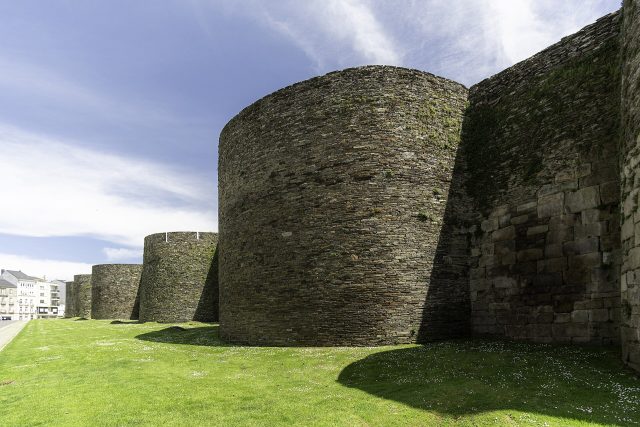
Inside, the museum unfolds the layers of Lugo’s history, beginning with its Roman roots. The city was once a key outpost of the empire in northern Hispania, and the exhibits here bring that era to life. Fragments of mosaics, coins, and everyday objects reveal how people lived two millennia ago, while remnants of ancient fortifications hint at the city’s strategic importance. What makes these artifacts compelling isn’t just their age, but how they connect to Lugo’s most enduring landmark—the Roman walls that still encircle the old town. Unlike many cities that lost their ancient defenses to time, Lugo preserved its walls almost intact, and the museum helps visitors understand why they mattered then and why they still do now.
The medieval section of the museum offers a glimpse into a time when Lugo was a hub of religion and trade. Religious relics, illuminated manuscripts, and intricate metalwork tell the story of a city shaped by faith and commerce. The collection of jewelry is particularly striking, showcasing the delicate filigree and enamelwork that became a hallmark of Galician craftsmanship. These pieces aren’t just decorative; they’re evidence of a tradition passed down through generations, where skill and artistry were as much a part of daily life as farming or fishing. Nearby, objects tied to the Camino de Santiago remind visitors that Lugo was once a stop on one of Europe’s most important pilgrimage routes, a place where travelers from across the continent would pause before continuing their journey.
Beyond the grand narratives of empires and kings, the museum also preserves the quieter rhythms of Galician life. A reconstructed rural home, complete with tools, furniture, and household items, offers a window into the world of farmers and fishermen who shaped the region’s culture. The simplicity of these objects—wooden plows, handwoven baskets, children’s toys—makes them feel strangely intimate, as if the people who used them might walk in at any moment. There’s a humility to these exhibits, a reminder that history isn’t just about battles and monarchs, but about the small, everyday choices that define a place and its people.
The 20th century is given less space here, but what’s on display is no less revealing. Photographs, documents, and personal belongings trace the city’s transformation during a turbulent era—industrialization, civil war, and the long shadow of Franco’s regime. These artifacts don’t just document change; they show how Lugo’s identity endured, even as the world around it shifted. The contrast between old and new is especially striking in the images of the city itself, where medieval streets give way to modern buildings, yet the Roman walls remain, a constant thread through the centuries.
What makes the Provincial Museum of Lugo special isn’t its size or the rarity of its collections, but the way it invites visitors to slow down and listen. There’s no grand spectacle here, no attempt to overwhelm with scale or drama. Instead, the museum feels like a conversation—one that unfolds at its own pace, allowing each visitor to find something that resonates. Whether it’s the quiet beauty of a medieval manuscript, the rough texture of a farmer’s tool, or the faded photograph of a long-ago street scene, the exhibits feel personal, as if they’ve been waiting for someone to notice them.
After leaving the museum, the city itself becomes part of the experience. The Roman walls, just a short walk away, are impossible to ignore—they’ve stood for nearly two thousand years, and their sheer presence makes the past feel immediate. Walking along the ramparts, you can look out over the rooftops of Lugo, where the old and new coexist in a way that feels entirely natural. The walls aren’t just a relic; they’re still part of the city’s daily life, offering shelter from the Atlantic winds and a place for locals to stroll, just as they have for generations.
The museum isn’t the kind of place that draws crowds, and that’s part of its charm. There are no long lines or tourist traps here, just a quiet space where history feels alive without being overstated. It’s the kind of museum that rewards curiosity rather than spectacle, where the most memorable moments often come from the smallest details—a child’s shoe, a handwritten letter, a piece of jewelry worn smooth by time. For those who prefer to explore at their own pace, it’s a reminder that sometimes the most meaningful discoveries are the ones that unfold slowly, without fanfare. Lugo itself is like that: a city that doesn’t shout for attention but has plenty to say if you’re willing to listen.