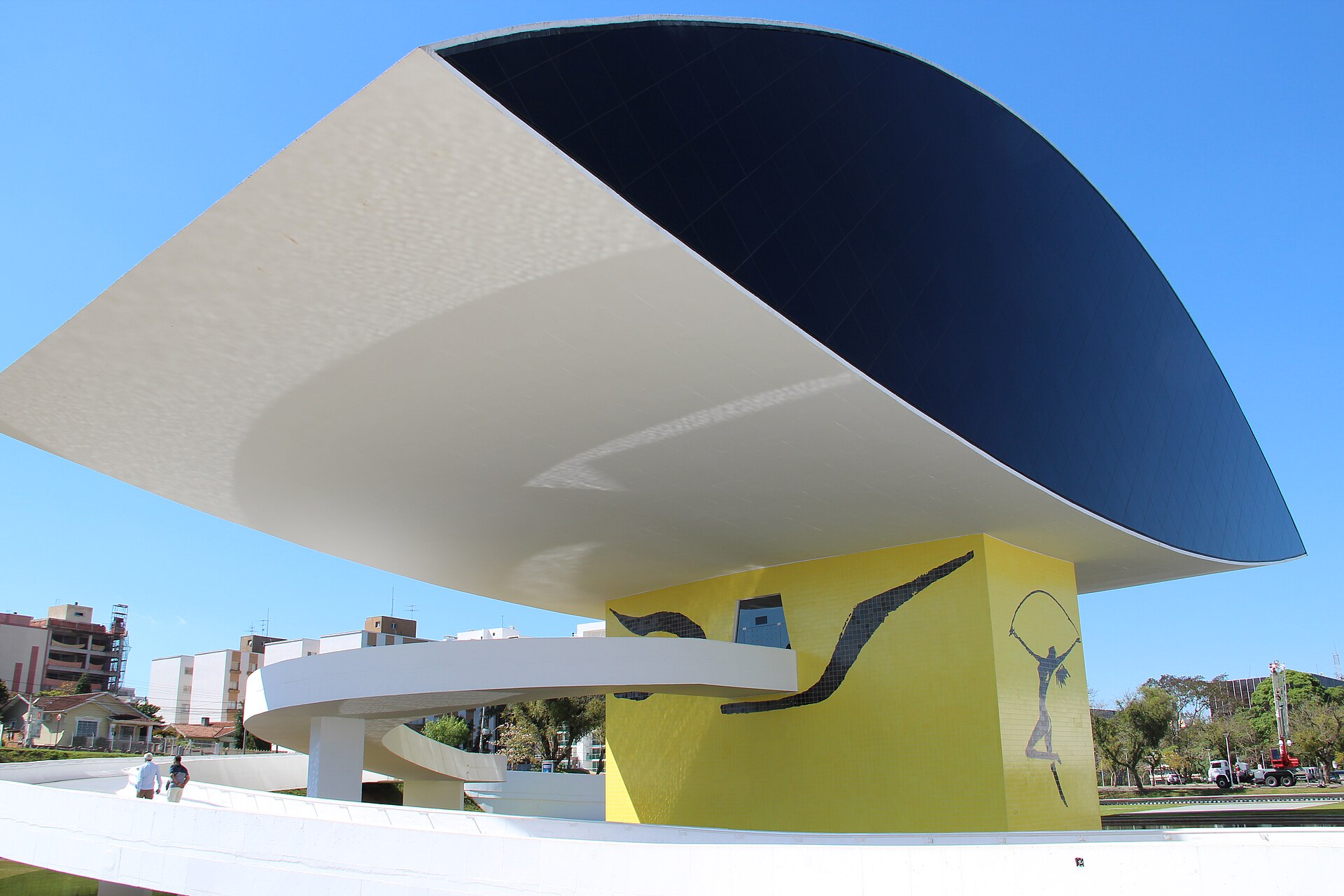
The Oscar Niemeyer Museum in Curitiba is a place where architecture doesn’t just house art—it becomes art itself. From the moment you see it, the building feels more like a monumental sculpture than a traditional museum. Its most striking feature is the enormous dome balanced on a slender stalk, a shape that earned it the nickname *The Eye*. This was one of the final major works by Oscar Niemeyer, the visionary modernist architect who helped define Brazil’s visual identity. The museum opened in 2002, but its story began much earlier, as part of Curitiba’s long-term ambition to establish itself as the cultural heart of southern Brazil.
Niemeyer didn’t design the museum to be a neutral container for art. Every curve, every angle, every play of light was intentional, turning the building itself into the main exhibit. Inside, there are no rigid corners—walls flow into ceilings, windows dissolve into open space, and natural light shifts across surfaces, creating the illusion of movement. The domed exhibition hall is particularly striking, a vast, sunlit volume that feels weightless, as if suspended above the city. It’s easy to forget you’re indoors; the boundaries between architecture and environment blur.
Niemeyer, born in Rio de Janeiro in 1907, was a defining figure in 20th-century Brazilian architecture. His work shaped the country’s modern identity, from the futuristic government buildings of Brasília to the sinuous curves of the Niterói Contemporary Art Museum. By the time he designed the museum in Curitiba, he was in his nineties, and his style had evolved into something even more fluid and expressive. Originally conceived as an educational institute, the building later found its true purpose as a space for art—a gift to a city that had always embraced innovation.
The museum’s collection focuses on contemporary art but isn’t limited to it. Visitors can see works by Brazilian and international artists, from paintings and sculptures to photography and immersive installations. Temporary exhibitions rotate regularly, ensuring that each visit offers something new. A special section is dedicated to Niemeyer himself, featuring sketches, models, and photographs of his projects. These displays peel back the layers of his creative process, revealing how his bold ideas took shape on paper before becoming concrete and steel.
Curitiba has a reputation for forward-thinking urban design, and the museum fits seamlessly into that legacy. The city is known for its efficient public transport, repurposed green spaces, and architecture that often feels like an experiment. The Oscar Niemeyer Museum isn’t just an attraction—it’s a statement, reinforcing Curitiba’s identity as a place where culture and creativity thrive. The surrounding park, with its open lawns and walking paths, offers a quiet counterpoint to the building’s dramatic forms, a place where locals and visitors alike can pause and take in the view.
A visit here isn’t just about observing art; it’s about experiencing a space that encourages curiosity and conversation. There’s no rigid formality, no pressure to move quickly from one exhibit to the next. You can linger in front of a painting, sit in the foyer watching light dance across the walls, or simply wander, letting the architecture guide you. The museum feels alive, shaped not only by its exhibitions but by the people who pass through it. Occasionally, it hosts lectures, workshops, or performances, transforming the building into a hub for ideas and exchange.
For architecture enthusiasts, the museum is a masterclass in Niemeyer’s philosophy. He believed that buildings should be both beautiful and functional, and here, the two ideals merge effortlessly. The dome shields visitors from the elements while creating a sense of openness, and the curved walls aren’t just visually striking—they also optimize the flow of space. Even the structural details, like the slender columns supporting the dome, serve a dual purpose, blending engineering with aesthetics. It’s a reminder that great architecture doesn’t just stand still; it interacts with the world around it.
Curitiba has a way of surprising those who visit, and the Oscar Niemeyer Museum is one of its most unexpected treasures. There’s nothing quite like it anywhere else. Instead of the hushed reverence of a traditional museum, this space hums with energy, inviting you to engage rather than just observe. Whether you come for the art, the architecture, or simply to spend an afternoon in an extraordinary place, the museum leaves an impression that lingers. It’s the kind of place that makes you see the world a little differently, as if the act of walking through its doors has subtly shifted your perspective.