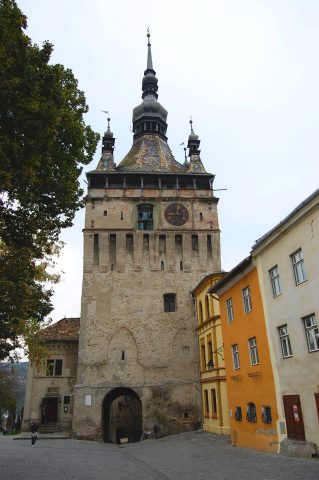
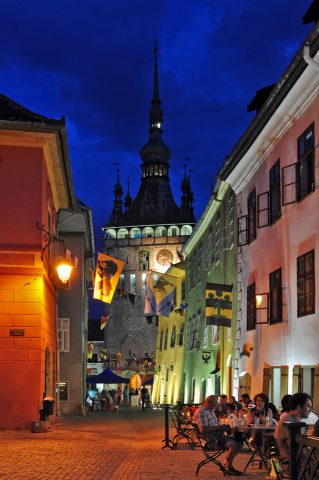
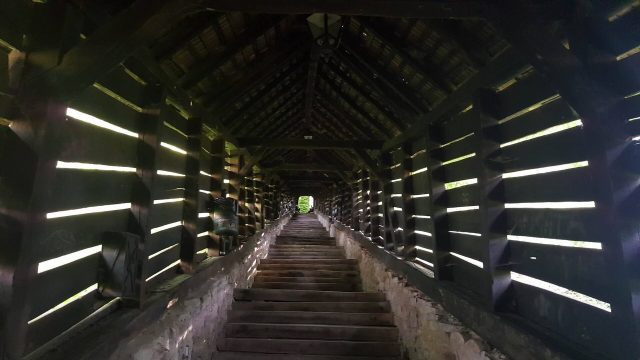
Sighișoara is a town where time seems to have paused somewhere between the Middle Ages and the present. The cobbled streets wind between houses with steep, tiled roofs, their walls pressed close to the old fortifications. It’s easy to imagine that the past isn’t just preserved here—it’s still alive, lingering in the shadows of the alleyways. But beyond the well-trodden paths of the citadel, there are places that tell a different kind of story, one without embellishment. The Arms Museum is one of them.
Housed in an unassuming building on a square where craftsmen once traded, the museum doesn’t stand out from its neighbors. The same thick walls, the same small windows—nothing about the exterior hints at what lies inside. Yet within these walls, the collection feels deeply personal. Each piece was once held by someone, used in battle, in a duel, or in the quiet moments of daily life. A sword that clashed in combat. A pistol fired in anger or defense. Armor that shielded its wearer from a fatal blow. These aren’t just relics; they’re fragments of real lives.
The exhibits span centuries, from medieval blades and halberds to the firearms of the 18th and 19th centuries. There are suits of armor, some surprisingly light, almost delicate. That makes sense in a region like Transylvania, where battles were fought in forests and mountains, not open fields. Heavy plate would have been a liability here, where mobility mattered more than sheer protection. The collection also includes hunting knives, axes for splitting wood, and ornately engraved pistols—objects that weren’t just tools of war but part of everyday existence.
Some of the most striking pieces are the ones that reveal how deeply weaponry was woven into the fabric of life. Miniature swords and tiny bows suggest that children here were trained early in the skills of combat. A finely crafted dagger might have been as much a status symbol as a practical tool. Even the simplest items, like a well-worn hunting knife, carry the weight of countless stories—of survival, of trade, of the quiet moments between conflicts.
The building itself has its own history. It once belonged to a family of gunsmiths, and in the 16th century, a master craftsman worked here whose creations were prized across Transylvania. His name is lost to time, but some of his work may still be on display. It’s not hard to imagine that the weapons he forged could have been wielded by the region’s military leaders, their blades and barrels shaping the course of local history.
The museum is small—you could walk through it in an hour—but it doesn’t feel like a place where objects go to gather dust. Each piece seems to carry the echo of its past owner, as if the walls themselves remember the hands that once held them. That sense of connection is part of what makes Sighișoara special. The town doesn’t just preserve history; it lives alongside it.
After leaving the museum, it’s worth climbing the old fortress walls. From there, the view stretches over the red-tiled roofs of the town, down to the forested hills beyond. This is the same landscape where battles were fought, where the clash of steel and the crack of gunfire once filled the air. The museum doesn’t glorify war. It doesn’t need to. Instead, it shows how conflict was simply one thread in the lives of the people who called this place home—how it shaped them, how they adapted to it, and how, in the end, they carried on.