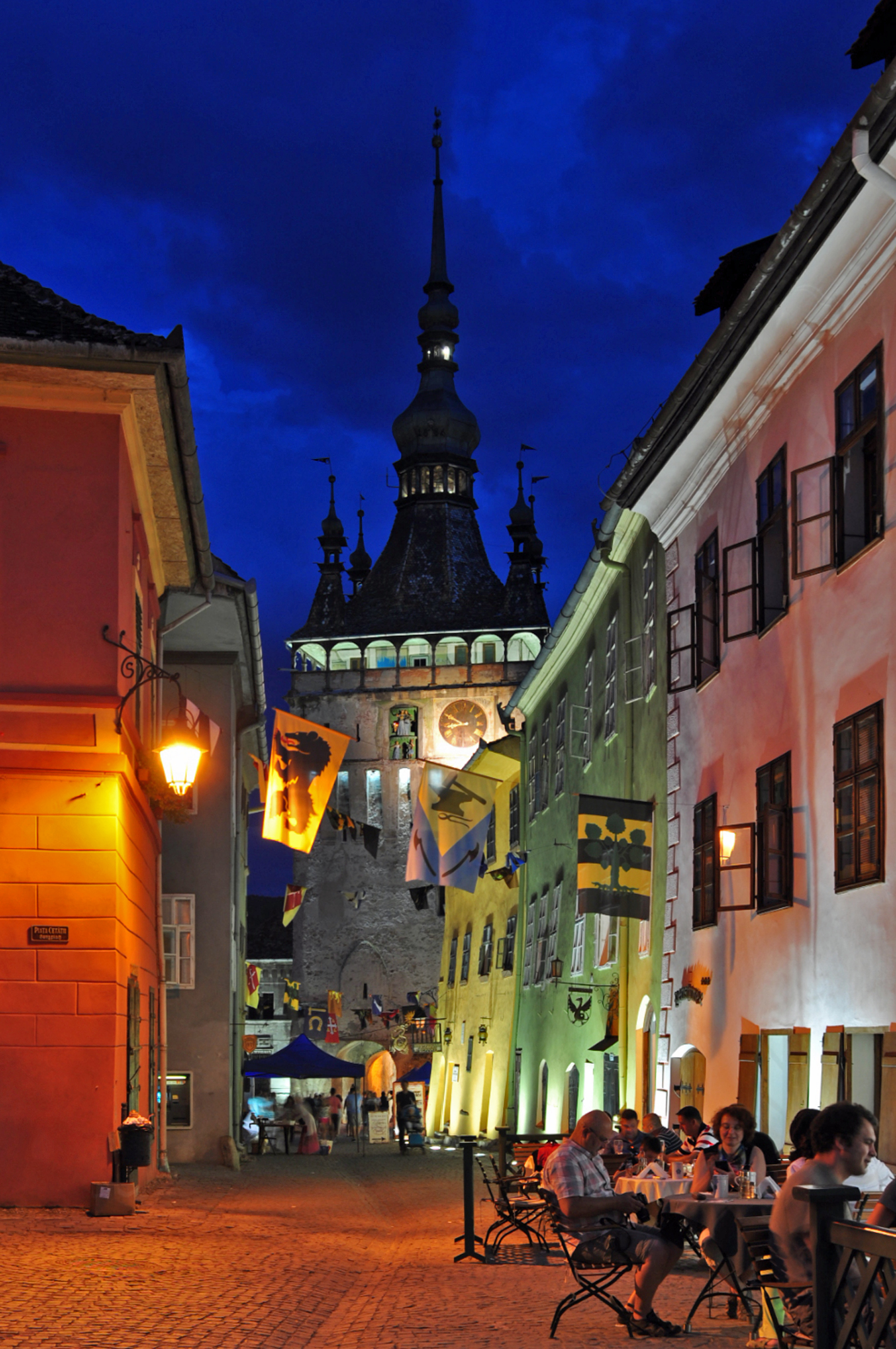
Sighișoara’s old town feels like a place where time has paused, not out of neglect, but as if it simply chose to linger. The cobbled streets wind between houses with steep, tiled roofs, their colors softened by centuries of sun and rain. The towers that rise above them were once part of a fortress, their spires still sharp against the sky, as if the Middle Ages never quite ended here. There’s no rush, no modern clamor—just the quiet weight of history in every stone and archway, a reminder of the days when this was one of Transylvania’s most important trading and craft centers.
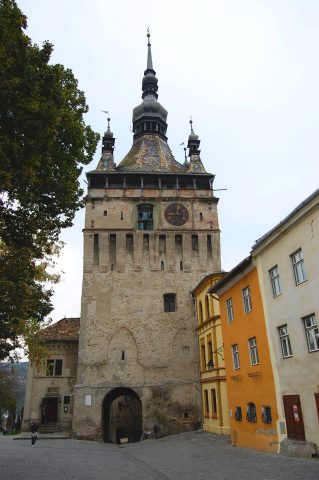
At the heart of the old town lies the Citadel, encircled by walls first built in the 12th century. Back then, Sighișoara was a fortified settlement established by Saxon colonists, invited by Hungarian kings to defend the region’s borders and help it thrive. Over time, the fortress expanded, and by the 14th century, it had around fifteen defensive towers, each belonging to a different guild of craftsmen. Nine of these towers still stand today, each with its own name and story. The most famous is the Clock Tower, which wasn’t just a lookout but a symbol of the city’s self-governance. Its facade features a clock with wooden figures representing the days of the week, a detail that still draws the eye as it has for centuries.
Walking through the Citadel is like moving through different layers of time. The buildings here span architectural styles—Gothic, Renaissance, Baroque—yet they fit together naturally, as if each era simply added its own brushstroke to the same painting. Many houses have intricately carved wooden balconies, and some facades still bear traces of faded murals, a common decoration in the past. One of the most striking is the so-called House of the Hungarian King, where legend says Matthias Corvinus once stayed, though no records confirm it. More certain is the house on the main square where Vlad Țepeș, the historical figure behind the Dracula myth, was born. Today, it’s a restaurant, but the place still carries a faint air of mystery, as if the past hasn’t quite let go.
The town square isn’t just the geographical center of Sighișoara—it’s where the city’s life has always unfolded. In summer, it fills with the sounds of medieval festivals and open-air concerts, while the rest of the year, it’s quiet, almost sleepy. The square is home to an old Lutheran church, built in the 14th century on the site of an even older one. Inside, you’ll find faded frescoes, a grand organ, and the tombstones of wealthy burghers, some still legible after hundreds of years. Beneath the floor lies a crypt, its presence a quiet reminder of the generations that have come and gone. The church is surrounded by a low stone wall, and just beyond it, a small park offers shade and a place to sit, where locals and visitors alike can watch the day pass slowly.
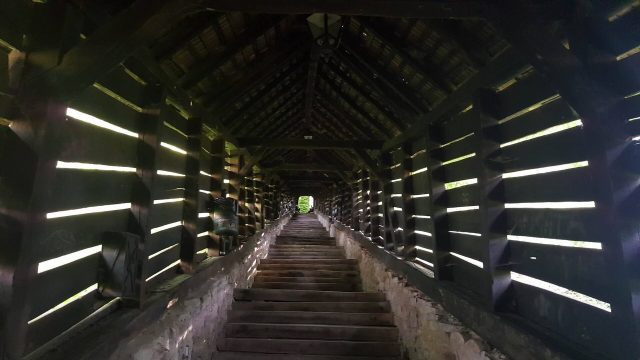
One of the most memorable spots in Sighișoara is the Scholars’ Staircase, a covered wooden stairway leading up to the church on the hill. Built in the 17th century, it was meant to protect students and churchgoers from rain and snow as they made their way uphill. Today, tourists climb its steps, the wood worn smooth by centuries of footsteps. At the top, the view over the town and the rolling hills beyond is worth the climb, but the real reward is the Church of St. Nicholas itself. Inside, the walls are covered in vivid frescoes, and the carved altar is a masterpiece of craftsmanship, a quiet testament to the skill of the artists who created it.
Sighișoara isn’t a museum—it’s a living town where the past and present coexist. Craftsmen still work here, keeping traditions alive: potters shaping clay, blacksmiths forging iron, weavers at their looms. Small shops sell handmade goods, from embroidered textiles to wooden toys, while cafes and restaurants serve food that blends Hungarian, German, and Romanian influences. The dishes are simple but hearty—goulash, polenta with sheep’s cheese, savory pies filled with cabbage or meat. As evening falls and the street lamps flicker to life, the town takes on a different mood, soft and mysterious, as if it’s sharing a secret with those who take the time to listen.
Despite its popularity with visitors, Sighișoara hasn’t lost its authenticity. There are no crowds like in more famous European cities, no sense of being rushed from one attraction to the next. The locals are friendly but unobtrusive, and if you strike up a conversation, they might share stories about the town’s history or their own family’s connection to it. Time moves differently here—slower, more deliberately. You feel it in the quiet courtyards, in the way the light lingers on the old walls, in the unhurried pace of life that seems to have been preserved along with the buildings.
What makes Sighișoara special is how effortlessly it blends the old and the new. You can spend the morning exploring the fortress walls, then stop for coffee in a modern café with a view of the Citadel. Or you can wander beyond the historic center, where green hills stretch toward the distant Carpathians, offering a different kind of quiet. This isn’t a place that demands attention—it invites you to slow down, to look closer, to let its stories unfold at their own pace. It doesn’t shout about its beauty; it simply lets you discover it, one quiet corner at a time.