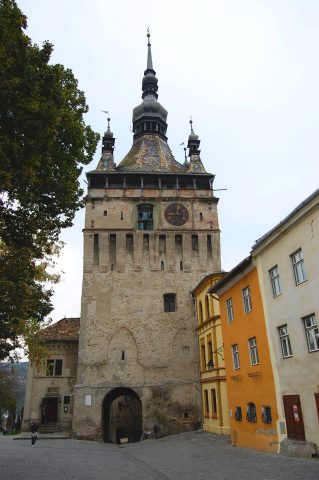
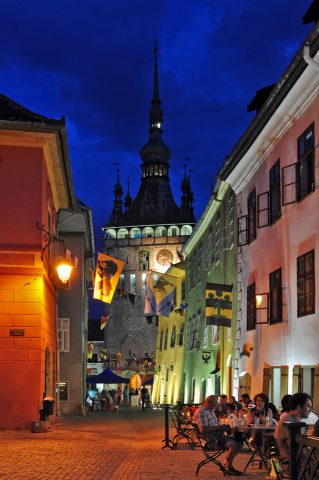
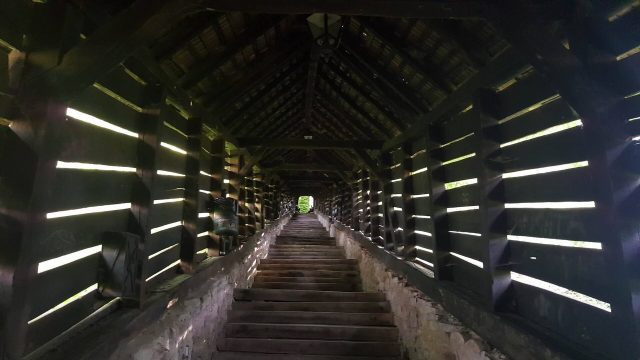
Perched above the red-tiled rooftops of Sighișoara, the Church on the Hill watches over the city. Its stone walls and tower stand where they have for centuries, part of the old town’s daily life. From here, you see the citadel’s narrow streets and fortified walls, much as they were long ago. The church isn’t separate from the landscape—it belongs to it.
The church dates to the 14th century. It started as a Catholic place of worship, then became Protestant during the Reformation. Many Transylvanian churches followed the same path. Its architecture shows this history: Gothic pointed arches and buttresses meet later Renaissance details. The building feels solid yet refined, a mix of two styles.
Inside, the space is open, with high vaulted ceilings and slender columns. The walls carry 16th-century frescoes—biblical scenes painted when most people couldn’t read. The figures are lively, almost moving, as if the artist wanted the stories to feel real. The altar, added later, has ornate carvings. It fits with the older work, adding another layer to what you see.
The church wasn’t only for prayer. During sieges, it sheltered townspeople. Its thick walls kept invaders out. Below the church, underground passages still exist. Some say they once connected to other parts of the city, letting people move unseen. Today, parts of the tunnels are open. Walking them, you sense how people survived in those times.
The church is surrounded by an old cemetery. Moss-covered gravestones mark the resting places of Sighișoara’s past residents. Many inscriptions are in Latin or German, a sign of the Saxon settlers who founded the city. The stones carry names, coats of arms, and dates—traces of merchants, craftsmen, and nobles.
The cemetery is quiet now. History feels close here.
The Church on the Hill has stood through wars, political changes, and religious shifts. It remains a place where people gather, not just for services but to remember. Tourists come to see the frescoes, explore the tunnels, or climb the hill for the view. Even those who wander in by accident often stay, as if the place pulls them in. The past isn’t distant—it’s in the sound of footsteps, the smell of old wood, the way light falls through the windows.
Today, the church still holds Protestant services. For visitors, it’s also a museum, though it doesn’t feel like one. Inside, you might hear the echo of a prayer or the faint sound of a bell. These are leftovers from when the church was the center of daily life. History isn’t just kept here—it’s still part of the place.
Sighișoara is called the jewel of Transylvania. The Church on the Hill is one of its quiet treasures. It doesn’t stand out with grandeur. Instead, it lets you look closer, to see the layers of time that make this place what it is. Here, the past isn’t something you read about—it’s something you walk through.