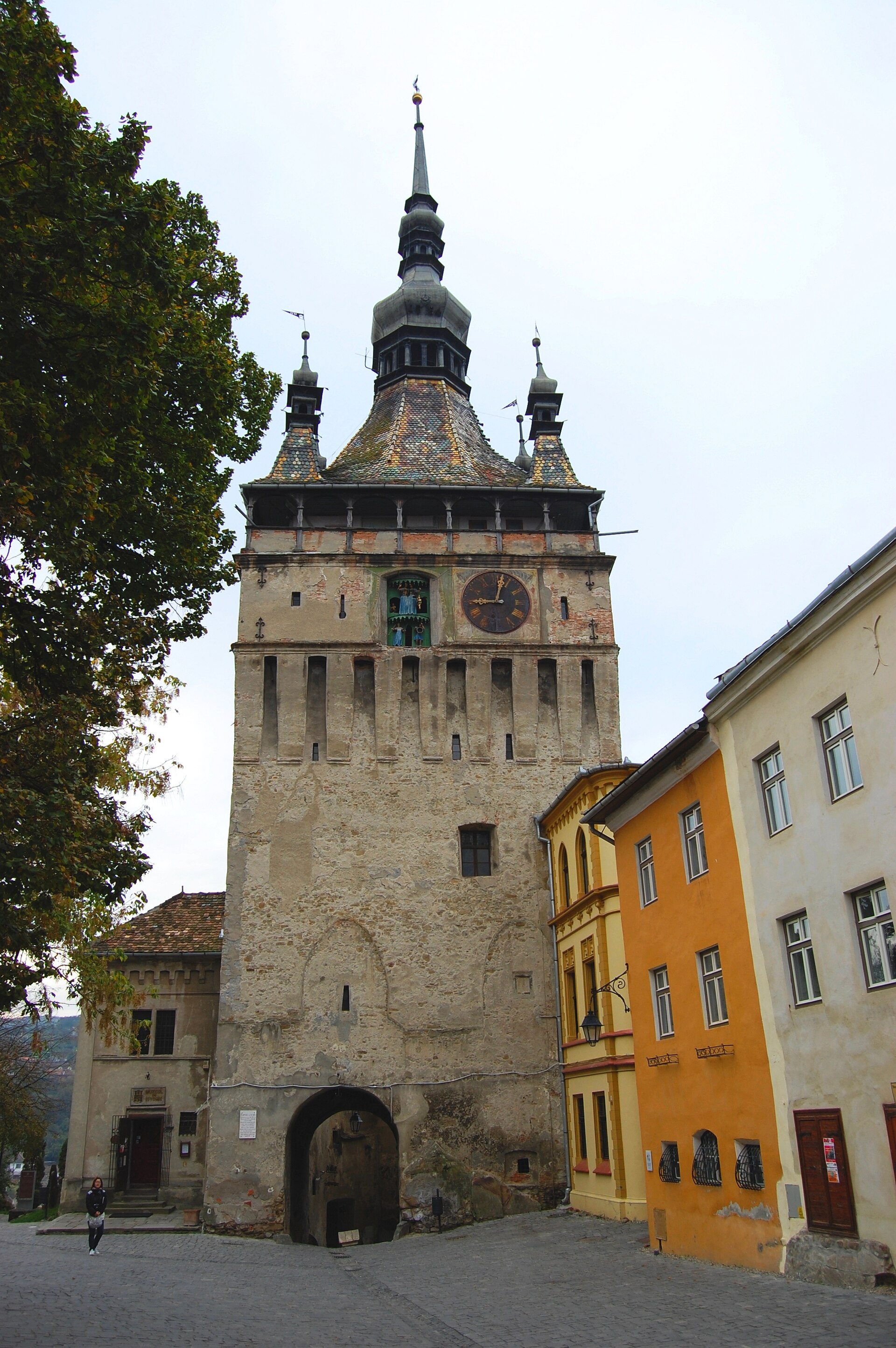
Sighișoara’s Clock Tower stands as a quiet guardian over a town that seems untouched by time. Built in the 14th century, it was more than just a timekeeper—it was the main gate to the fortified city, a symbol of authority, and a key part of its defenses. From its height, the tower overlooks the rooftops of the old town, its silhouette visible from the central square. In medieval times, its upper levels served as a lookout post, watching for approaching threats. Today, it remains one of the most recognizable landmarks in Transylvania, a structure that has witnessed centuries of history without losing its place in the present.
The tower’s architecture is a blend of strength and subtle elegance. Thick stone and brick walls, narrow slit windows, and a solid foundation reflect its military purpose, yet the wooden galleries at the top soften its imposing presence. The clock, installed in the 17th century, still keeps time, its faces visible from both inside the city and beyond its walls. The mechanism, though old, functions with a reliability that feels almost deliberate, as if the tower itself refuses to let the past fade.
Inside, the tower houses a museum that traces Sighișoara’s history through the ages. A narrow spiral staircase leads visitors upward, past exhibits that tell the story of the town’s craftsmen, its time under Austrian rule, and its role in Romania’s cultural revival. Tools, weapons, and everyday objects from different eras fill the rooms, but the most compelling displays belong to the guilds that once thrived here. Sighișoara was known for its skilled artisans, and the tower once safeguarded their records and treasures. Walking through the museum feels like stepping into a living archive, where the past is preserved not just in artifacts, but in the very air of the place.
The viewing platform at the top offers a perspective that explains why Sighișoara is often called the jewel of Transylvania. From here, the town unfolds in layers—red-tiled roofs, winding cobblestone streets, and the gentle rise of the surrounding hills. The view is unhurried, much like the town itself, and it’s easy to imagine how the tower’s watchmen once surveyed the same landscape, scanning for danger or simply taking in the quiet rhythm of daily life.
Legends cling to the tower, as they do to many old places. One story ties it to Vlad the Impaler, whose father, Vlad Dracul, lived in Sighișoara. Though there’s no proof that the younger Vlad was executed here, the tale has woven itself into the town’s folklore, adding another layer to the tower’s mystique. The past here isn’t just remembered—it lingers, half-hidden in the shadows of the stone walls.
Beneath the tower, the cellars once served as a prison, later repurposed as storage for grain and weapons. These spaces, now empty, still carry the weight of history. They’ve seen processions, sieges, and the ordinary days of a medieval town, each moment leaving its mark on the walls. Today, the tower is a stage for modern celebrations—concerts of early music in the summer, festive lights at Christmas, and the annual Medieval Festival in July, when the town transforms. Musicians, artisans in period costumes, and knights in mock battles bring the past to life, with the tower as their backdrop.
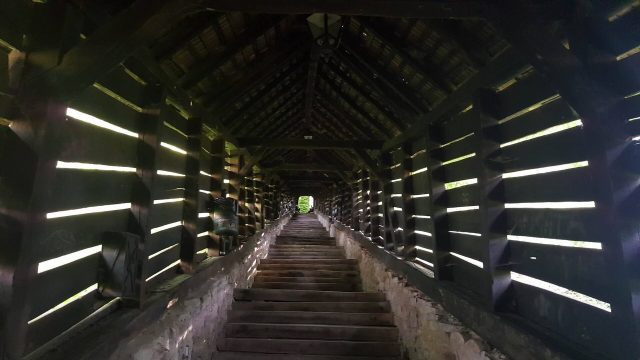
Climbing the tower is worth it for the atmosphere alone. The worn stone steps creak underfoot, the thick walls keep the interior cool, and the steady chime of the clock echoes through the space. From the top, the view stretches over the town’s terracotta roofs, narrow alleys, and the rolling hills beyond. Sighișoara moves at its own pace, and the tower has stood watch over it for centuries, unchanged in its purpose.
For visitors, the Clock Tower is a natural starting point. From here, it’s easy to explore the UNESCO-listed Old Town, with its colorful houses, the hilltop church adorned with 15th-century frescoes, and the network of streets leading to other defensive towers. Each has its own story, but the Clock Tower is the most prominent—a silent witness to the town’s evolution.
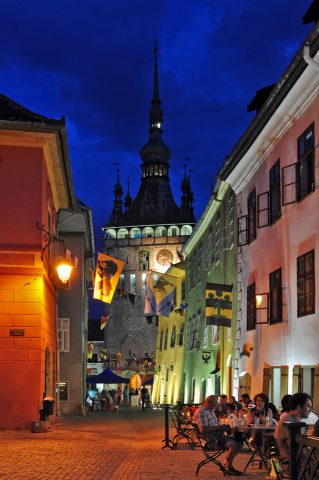
As dusk falls, the tower takes on a different character. Lanterns cast long shadows across the cobblestones, and the clock faces glow softly in the fading light. The crowds thin, and the town grows quieter. It’s not hard to imagine a watchman making his rounds, the clatter of his boots echoing off the stone. Sighișoara doesn’t rush, and neither does its tower. It doesn’t demand attention, but without it, the town would lose something essential—a sense of continuity, of time standing still.