The Museum of Egyptian Civilization is one of those rare places where history doesn’t just sit behind glass—it breathes. While its main home lies on the outskirts of Cairo, parts of its collection extend into Giza, quietly bridging the two cities as if time itself had stitched them together. Unlike the crowded tourist trails that wind past the pyramids, this museum offers something different: a chance to see Egypt not just through the lens of pharaohs and monuments, but through the everyday lives, beliefs, and ingenuity that shaped one of humanity’s greatest civilizations.
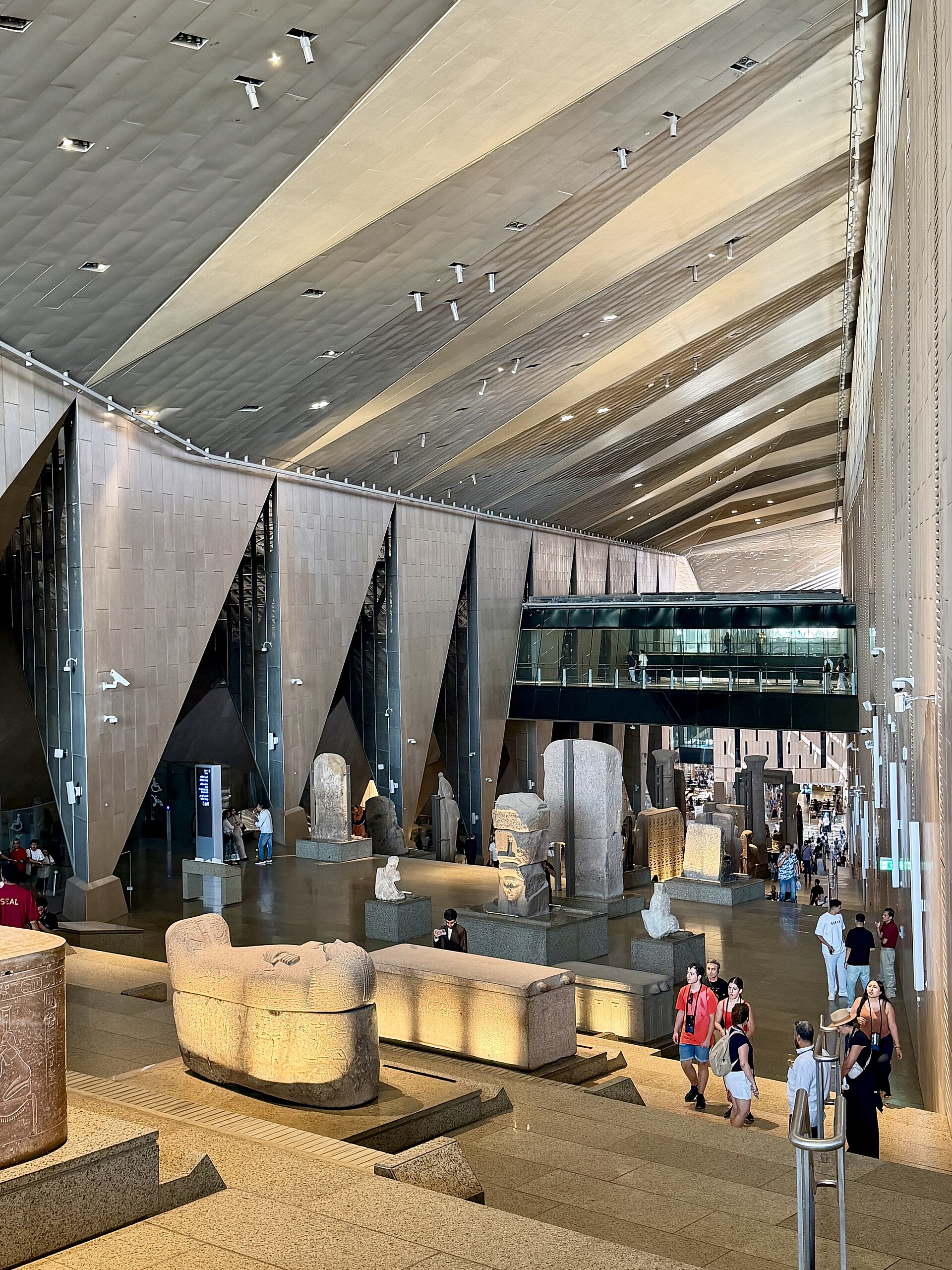
The building itself tells a story. Its architecture blends modern lines with subtle nods to ancient temples and tombs, creating spaces that feel grand without being overwhelming. High ceilings and vast halls allow light to spill in through large windows, shifting from the bright glare of the desert sun to the dim glow of torchlight, as if the very atmosphere is part of the exhibit. There’s no jostling for space here—visitors can linger over a display without feeling rushed, or simply sit on a bench to take it all in.
The journey through the museum doesn’t begin with gold or mummies, but with the quiet beginnings of human settlement along the Nile. The first exhibits focus on the tools and artifacts that marked early life: clay shards, stone implements, and the gradual evolution of agriculture and metalwork. It’s a reminder that before the pyramids, there were people learning to shape their world, one pot, one plow, one written symbol at a time. Everyday objects—sandals woven from papyrus, wooden combs, ceramic jars for oil and wine—reveal the rhythms of life that existed beyond the grandeur of temples and palaces.
A dedicated hall explores the spiritual world of ancient Egypt, where death was not an end but a transition. Sarcophagi, amulets, and ritual objects line the walls, each piece a fragment of a belief system that sought to guide the dead into the afterlife. The canopic jars, with their carved heads of Horus’s sons, stand out—not just as containers for preserved organs, but as silent guardians of a journey no living person could fully understand. Nearby, papyrus scrolls from the Book of the Dead lay out the trials a soul would face, their ink still dark after millennia, as if the words might still hold power.
Power, too, has its place in the museum, though not in the way one might expect. The halls dedicated to pharaohs display statues, weapons, and jewelry, but the focus isn’t on opulence. Instead, the exhibits highlight the symbolism of rule—the idea of the pharaoh as a divine intermediary, a figure whose authority was as much about ritual as it was about governance. Even here, the mundane creeps in: clay tablets recording grain shipments, simple tools used in palace workshops, and the personal adornments of courtiers. These objects suggest that life at the center of power was as messy and human as anywhere else.
What makes this museum unique is its insistence on showing how the past isn’t just preserved—it’s still alive. In one section, artisans demonstrate ancient crafts: potters shaping clay as they have for centuries, weavers operating handlooms, jewelers working with gold and lapis lazuli. Occasionally, workshops invite visitors to try their hand at these skills, turning the museum into a living classroom. This isn’t a performance for tourists; it’s part of a broader effort to keep traditions from fading into history.
The museum’s collection of mummies is handled with a quiet reverence. They’re not displayed as macabre curiosities, but as individuals—people who once lived, loved, and dreamed. The exhibits explain the meticulous process of mummification, the rituals that accompanied it, and the lives these individuals led before death. For many visitors, this is the most moving part of the museum, a reminder that behind every artifact is a human story.
Unlike the Louvre or the British Museum, which house Egypt’s most famous treasures, the Museum of Egyptian Civilization doesn’t aim to dazzle with sheer scale or rarity. Its ambition is different: to present a civilization in all its complexity, not just as a land of gold and pyramids, but as a living, evolving culture. There are no crowds here, no rush to see the "must-see" pieces. Instead, visitors can take their time—studying the intricate patterns on a piece of pottery, deciphering the faded inscriptions on a stele, or simply sitting in a quiet corner, listening to the echoes of the past.
Stepping outside, it’s impossible not to see Egypt differently. The pyramids and the Nile are still there, of course, but now they exist alongside something deeper: the knowledge that this land has been shaped by countless hands over thousands of years. The Museum of Egyptian Civilization doesn’t just preserve history—it makes it feel present, a thread that still runs through the country today. And perhaps that’s why it lingers in the memory not as a collection of objects, but as a place where the past feels strangely, beautifully alive.