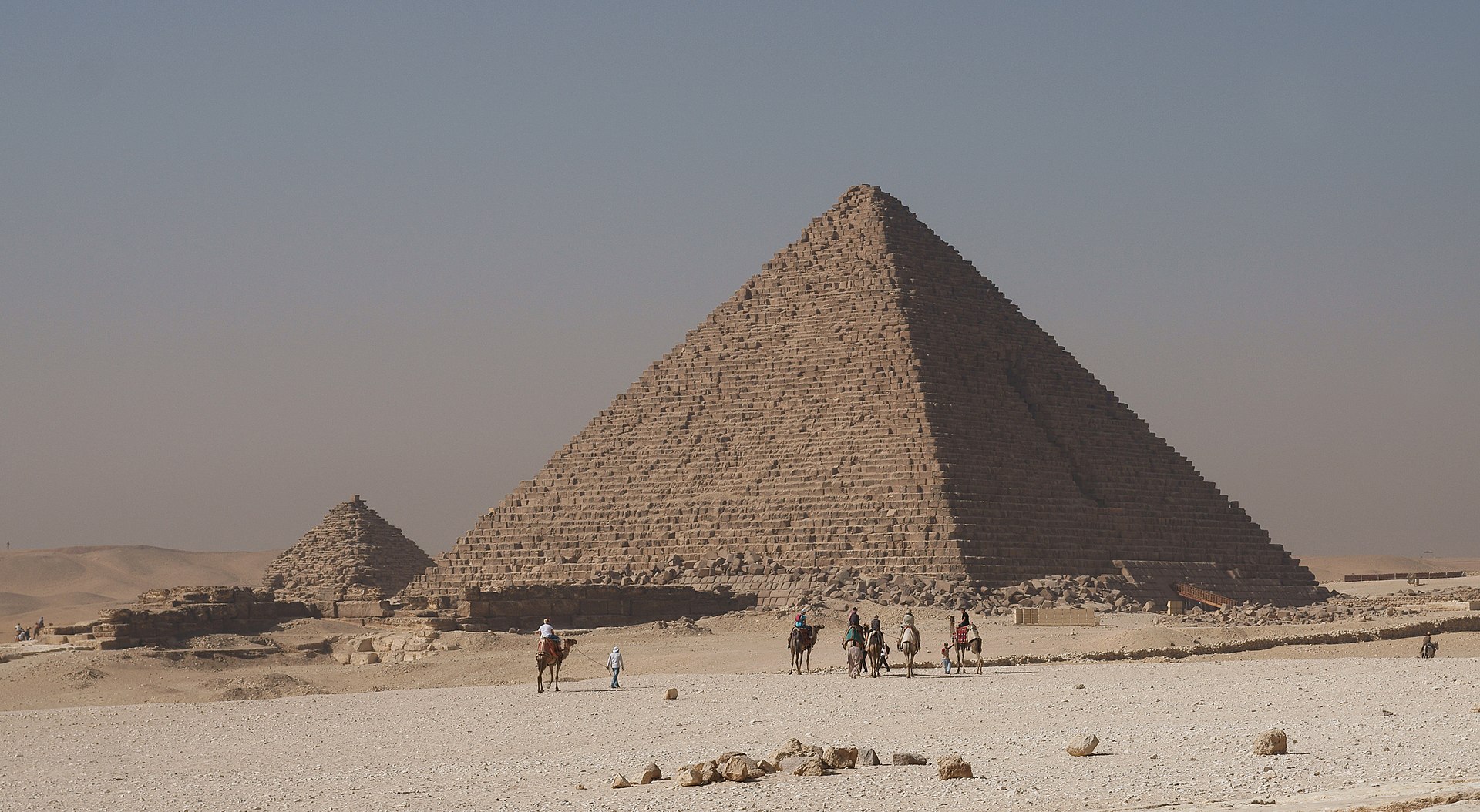
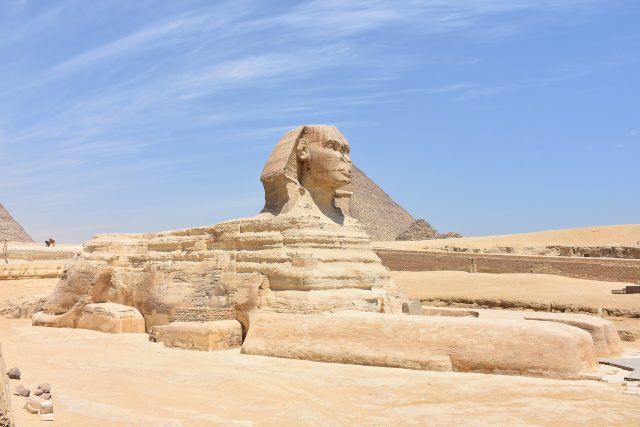
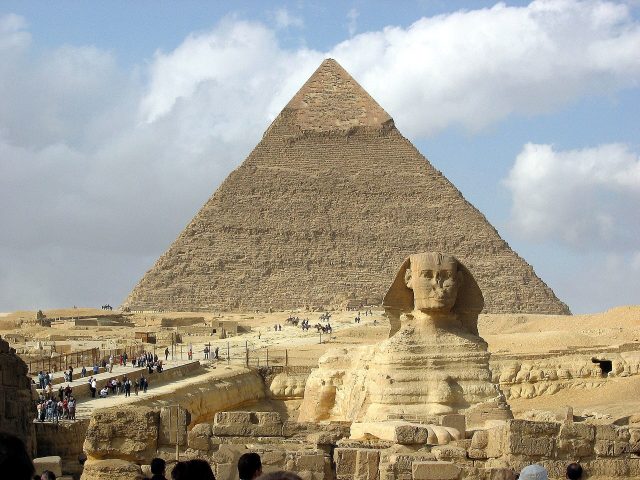
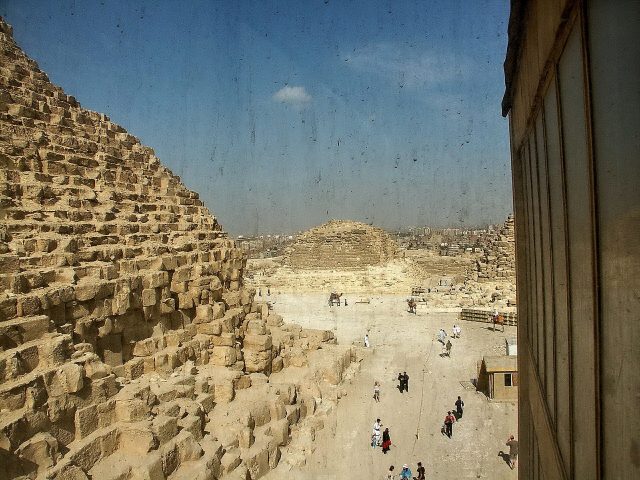
The Pyramid of Menkaure stands apart from the more famous monuments of Giza, not in grandeur, but in quiet intrigue. While the Great Pyramid of Khufu and the Pyramid of Khafre dominate the plateau with their towering presence, Menkaure’s tomb is smaller, almost intimate by comparison. At just over sixty meters tall, it lacks the overwhelming scale of its neighbors, yet this very modesty gives it a distinct character. Fewer crowds gather here, allowing visitors to take in the details without the usual rush—each weathered stone and uneven edge tells a story of time and craftsmanship that often goes unnoticed elsewhere.
Built in the 26th century BCE for Pharaoh Menkaure, the pyramid marked the end of an era. Unlike his predecessors, who sought to outdo one another in size and splendor, Menkaure’s reign coincided with a shift in priorities. Some suggest economic strain after the construction of earlier pyramids played a role, while others believe the pharaoh simply chose a different path. Whatever the reason, the result was a structure that balanced elegance with restraint. The lower courses were once clad in red granite from Aswan, a striking contrast to the white Tura limestone that covered the upper sections. Though much of this outer layer has long since vanished, traces remain, hinting at how the pyramid must have gleamed under the Egyptian sun.
The design of Menkaure’s pyramid reflects a period of transition in ancient Egyptian architecture. Unlike earlier tombs, its entrance faces east rather than north, aligning with the mortuary temples that once stood nearby. The burial chamber itself is carved deep into the bedrock beneath the pyramid, a departure from the internal chambers of older structures. Inside, fragments of a basalt sarcophagus survive, adorned with intricate carvings, though no trace of the pharaoh’s mummy has ever been found. Grave robbers, active since antiquity, left their mark on the interior, stripping away treasures and leaving behind only echoes of what once was.
The pyramid was once part of a larger funerary complex, though little remains of it today. Three smaller satellite pyramids stand nearby, likely intended for the pharaoh’s queens or family members. One was left unfinished, a reminder that even in an age of monumental ambition, not every plan came to fruition. The mortuary temple, partially reconstructed by archaeologists, offers glimpses of its former glory—scattered columns and fragments of reliefs depict Menkaure in the company of gods, receiving offerings and asserting his divine authority. These carvings are among the few surviving records of the pharaoh himself, showing him as a youthful figure in the traditional crown of Upper and Lower Egypt.
Today, the Pyramid of Menkaure appears somewhat neglected next to its more celebrated counterparts. The granite casing has crumbled in places, exposing the rough limestone blocks beneath, while debris from past excavations litters the surrounding area. Yet this sense of incompleteness lends the site a certain authenticity. There are no crowds here, no vendors hawking trinkets—just the wind sweeping across the sand and the occasional murmur of visitors. Unlike the Great Pyramid, which restricts entry to a limited number of people, Menkaure’s pyramid is usually accessible, offering a rare chance to descend into its depths. The narrow passageways and stifling air make the journey feel like stepping back in time, each step resonating in the silence of centuries.
The pyramid has drawn attention for millennia, not just from modern archaeologists but from medieval travelers as well. Arab historians described it as the "third pyramid," noting its distinctive red stone, which locals later repurposed for their own buildings. European explorers in the 19th century attempted to unravel its mysteries, though many questions remain unanswered. Why, for instance, did Menkaure choose this slightly isolated location, away from the main necropolis? Some speculate it was a deliberate choice, perhaps tied to religious beliefs or a desire to distinguish his legacy from those who came before him.
What makes the Pyramid of Menkaure special is not just its history, but the atmosphere it preserves. There are no souvenir stands or guided tours here—just the quiet weight of the past. At sunset, when the desert light softens and the stones take on a golden hue, the pyramid feels almost alive, as if holding secrets just beyond reach. It’s a place for those who seek more than a photograph, who want to stand where ancient hands once placed each block and wonder about the people who built it. The silence here is different from the hush of a museum; it’s the silence of time itself, patient and unyielding.