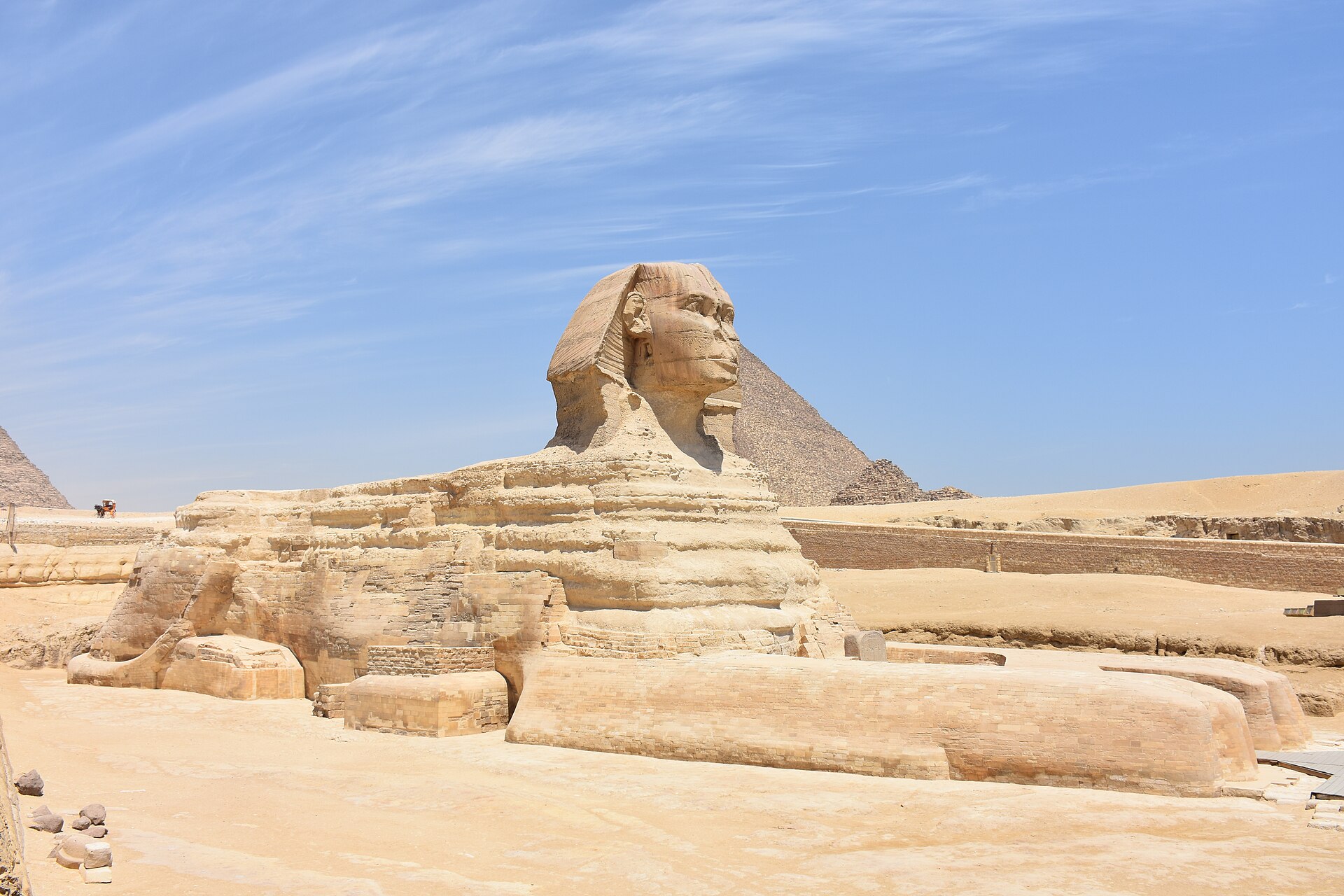
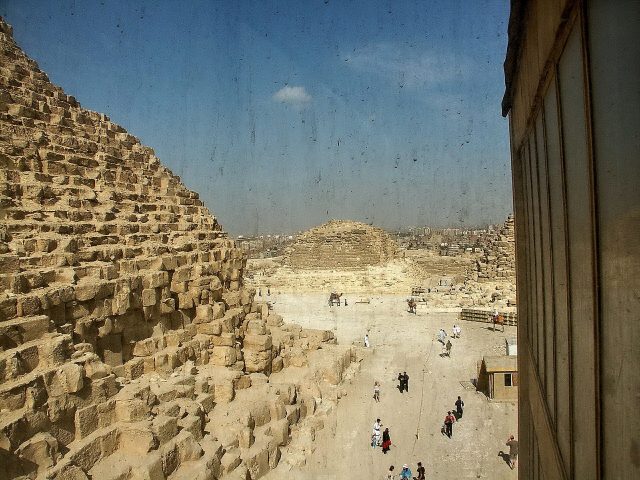
Standing before the Great Sphinx of Giza is an experience that no photograph, film, or history book can truly prepare you for. This colossal figure, half-buried in the desert sand, has watched over the plateau for nearly five thousand years, its presence both imposing and strangely intimate. It’s not just a relic of the past—it’s a silent witness to the birth of a civilization, a time when pharaohs first sought to immortalize their power in stone and myth. The Sphinx doesn’t just belong to history; it feels like it’s still holding onto secrets, waiting for the right moment to reveal them.
Carved from a single limestone outcrop that once served as a quarry for the nearby pyramids, the Sphinx is a creature of contradictions: a lion’s body with the head of a human, crowned with the royal nemes headdress that marked divine kingship. Its face, though worn by time, still carries traces of its original grandeur—high cheekbones, a strong jawline, and the faintest hint of a smile that gives it an air of quiet mystery. In its prime, the statue would have been a dazzling sight, its features painted in vivid colors, its eyes inlaid with precious stones. Today, the damage tells its own story: the missing nose, lost centuries ago, whether to erosion or deliberate defacement; the cracks and pockmarks from wind, sand, and human hands. Each mark is a reminder of how much has changed—and how much has stayed the same.
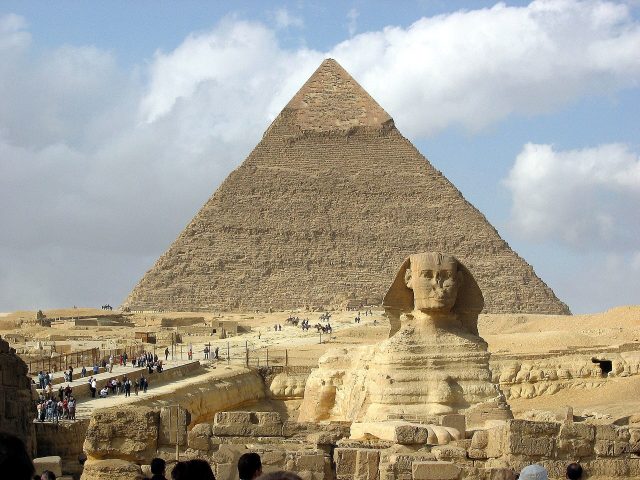
Who commissioned the Sphinx remains one of Egyptology’s most enduring debates. The most widely accepted theory links it to Pharaoh Khafre, whose pyramid stands nearby, aligned with the Sphinx’s gaze. The resemblance between the statue’s face and Khafre’s surviving portraits, as well as its position near his valley temple, lends weight to this idea. Yet other scholars argue it could be older, perhaps built during the reign of Djedefre, Khafre’s brother, or even earlier, under Khufu’s rule. What’s certain is that the Sphinx wasn’t merely decorative. It was a symbol of the pharaoh’s dual nature—as both a mortal ruler and a divine being—embodying the union of earthly and heavenly power.
In ancient times, the Sphinx was the centerpiece of a vast religious complex. Temples, altars, and sacred processional ways once surrounded it, forming a bridge between the living and the dead. The Egyptians knew it as Hor-em-akhet—Horus on the Horizon—a name that tied it to the falcon god Horus, protector of the pharaohs. They believed it guarded the entrance to the afterlife, ensuring the safety of the kings entombed in the pyramids. The Greeks later renamed it the Sphinx, borrowing from their own mythology, where such creatures were keepers of riddles and enigmas. The name stuck, and with it, the idea of the Sphinx as a guardian of unsolved mysteries.
Over the millennia, the desert has repeatedly claimed the Sphinx, burying it up to its shoulders before revealing it again. Each time, someone—whether a pharaoh, an archaeologist, or a curious traveler—has tried to free it from the sand. One of the earliest recorded attempts was by Thutmose IV, who, according to legend, was inspired by a dream in which the Sphinx promised him the throne in exchange for its liberation. Centuries later, European excavators took up the task, but it wasn’t until the mid-20th century that the statue was fully uncovered. Today, its base is reinforced to prevent further erosion, though sand remains its most persistent enemy, creeping back with every windstorm.
The Sphinx has always been more than just stone and history—it’s a magnet for myths. One of the most persistent is the legend of the Hall of Records, a hidden chamber said to lie beneath its paws, containing lost knowledge meant only for the worthy. Despite countless searches, no evidence of such a chamber has ever been found. Yet the story endures, fueled by books, documentaries, and the human fascination with the unknown. For many, the Sphinx isn’t just a monument; it’s a puzzle, a challenge, a tantalizing hint that the past still has secrets to share.
Visiting the Sphinx today means navigating crowds of tourists, cameras, and guides, but even amid the noise, it retains a sense of timelessness. The best moments come when the light is soft—early morning, when the first rays of sun touch its face, or late afternoon, when the stone glows golden and the shadows stretch long across the sand. In those quiet hours, it’s easy to imagine the rituals that once took place here: priests chanting, offerings laid at its feet, pharaohs processing along the sacred way. The modern world feels far away, replaced by the weight of history pressing in from all sides.
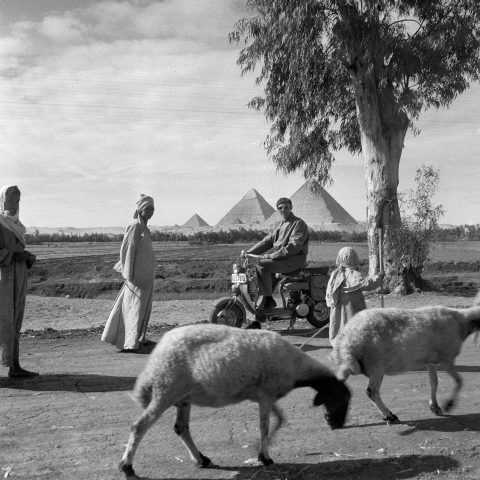
The Sphinx isn’t just a relic to be observed—it’s a living part of a landscape that continues to evolve. Around it, the pyramids stand as they have for millennia, but beyond them, the sprawl of Cairo hums with life, a reminder of how much has changed. New theories about its origins emerge every few years, restoration efforts come and go, and yet the Sphinx remains, as enigmatic as ever. Perhaps that’s the key to its enduring power. It doesn’t offer answers; it invites questions. And in a world where so much has been explained, that might be the most compelling mystery of all.