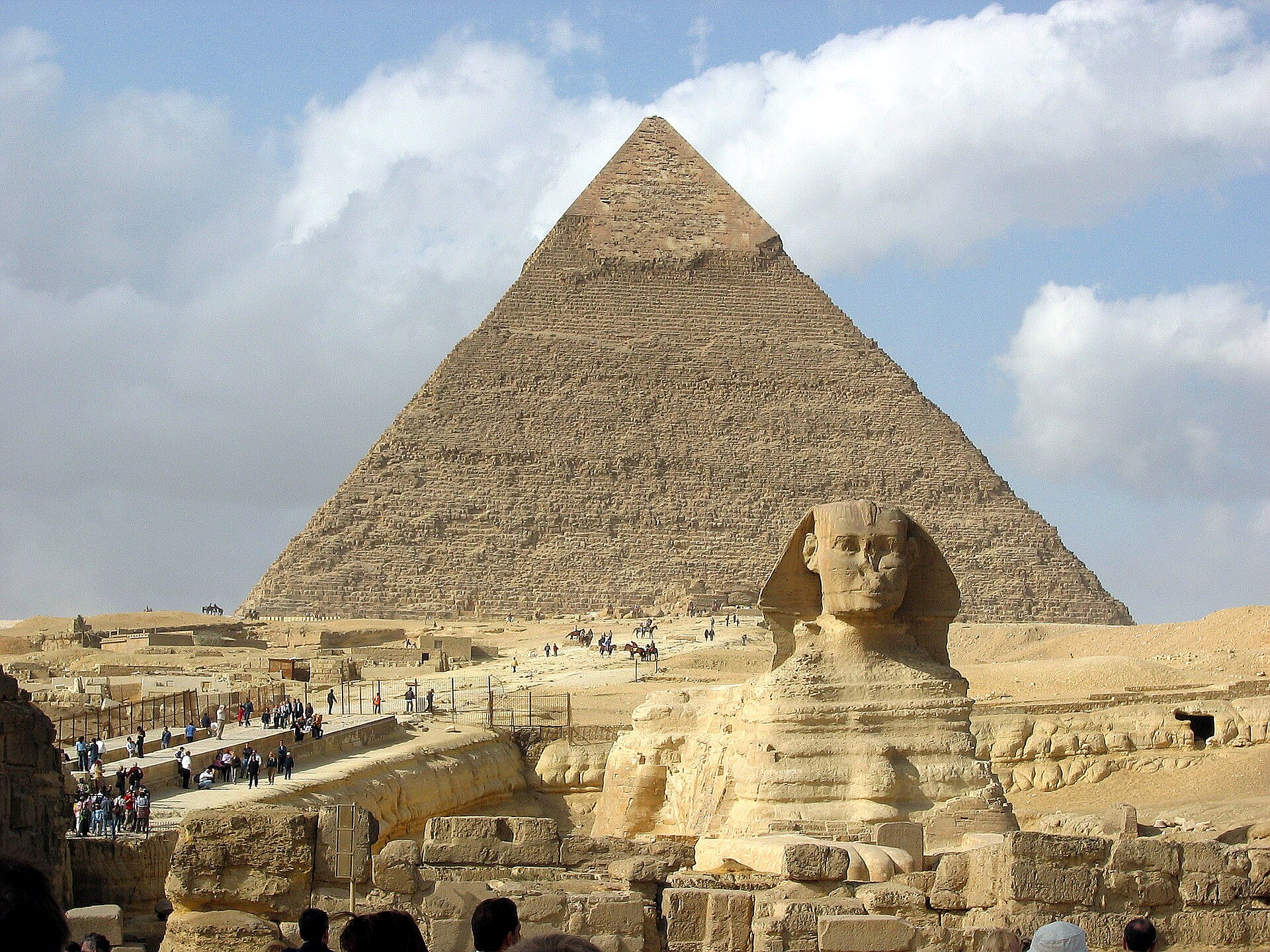
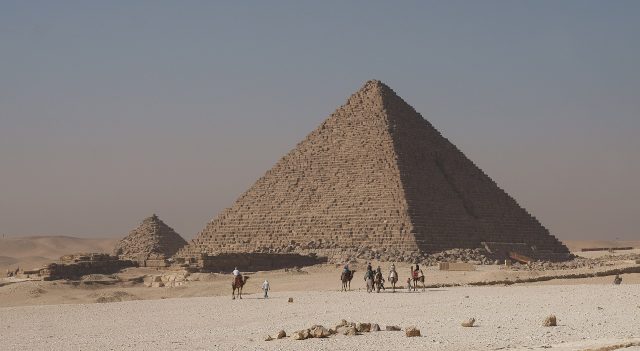
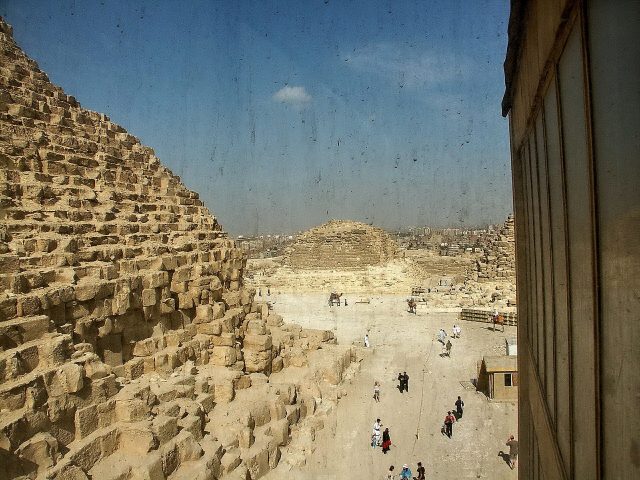
The Pyramid of Khafre stands as one of those rare structures that make you pause and wonder how ancient civilizations achieved what still feels impossible today. Rising from the Giza plateau, it shares the landscape with its more famous neighbors, the Great Pyramid of Khufu and the smaller Pyramid of Menkaure, yet it holds its own distinct presence. What sets Khafre’s pyramid apart is the patch of gleaming white Tura limestone still clinging to its summit—a remnant of the casing that once covered the entire structure. In the harsh desert sun, this polished stone would have made the pyramid shimmer like a beacon, a deliberate display of power and permanence meant to endure for eternity.
Khafre, who ruled Egypt in the 26th century BCE, commissioned the second-largest pyramid at Giza, though it appears taller than Khufu’s due to its elevated position on the plateau. The illusion of height may not have been accidental; the pharaohs understood the language of symbolism, and even a few meters could convey authority. Inside, the pyramid is simpler than its predecessor, with just two narrow passages leading to the burial chamber. The granite sarcophagus that once held Khafre’s remains now lies in fragments, but the chamber itself retains its imposing scale, a quiet testament to the precision of its builders.
The architecture of Khafre’s pyramid reveals the Egyptians’ mastery of both engineering and ritual. Unlike most pyramids, its entrance isn’t aligned with the northern face but sits slightly above ground level, a practical choice that may have protected the interior from flooding. The corridors inside are tight, their walls fitted together with such exactness that no mortar was needed—the stones rely solely on their own weight and the skill of the craftsmen. Even now, the seamless joints defy modern expectations of ancient construction, a reminder that some techniques have been lost to time.
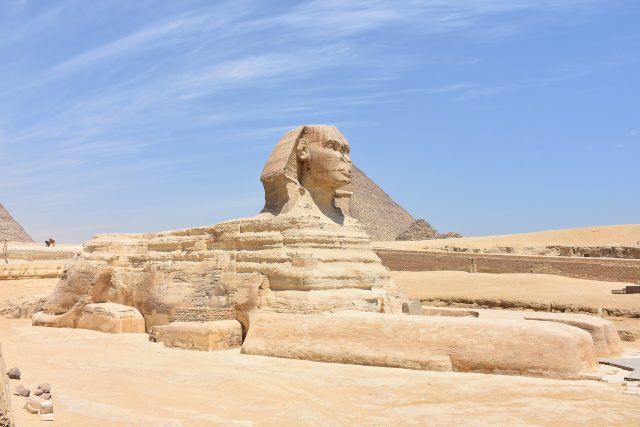
Adjacent to the pyramid, the Great Sphinx crouches in the sand, its weathered features often linked to Khafre’s reign. Whether the Sphinx truly bears the pharaoh’s likeness remains debated, but its purpose is clear: it guards the approach to the pyramid, forming a unified complex with the tomb. In antiquity, a processional causeway connected the pyramid to a valley temple where rituals were performed before the pharaoh’s final journey. Together, the pyramid and Sphinx create a dialogue between monument and myth, between the tangible and the eternal.
Standing at the base of Khafre’s pyramid, it’s impossible not to think of the thousands of workers who labored here. For generations, the idea of slave labor dominated the narrative, but evidence now suggests that skilled laborers—farmers, artisans, and paid workers—built these structures during the Nile’s annual floods, when agricultural work paused. Their villages, complete with bakeries, hospitals, and even breweries, have been uncovered nearby, humanizing the colossal stones. The pyramid wasn’t just a tomb; it was a project that shaped lives, a collective effort to defy mortality.
Inside the pyramid, the air is cool and still, a stark contrast to the scorching desert outside. Light filters through the narrow passages, casting long shadows that seem to stretch back millennia. The burial chamber is empty now, its treasures looted long ago, yet the silence feels heavy with history. It’s easy to imagine the chamber as it once was: the sarcophagus gleaming with gold, the walls inscribed with spells to guide the pharaoh’s soul. The absence of those artifacts doesn’t diminish the sense of awe; if anything, it deepens the mystery of what was lost.
Today, the Pyramid of Khafre draws crowds from around the world, each visitor climbing its steps or posing for photos against the limestone cap. Yet even amid the noise, moments of solitude can be found—especially at dawn or dusk, when the sun paints the stones in warm hues. In that light, the Giza plateau feels suspended in time, as if the ancient world hasn’t entirely faded. The pyramid’s enduring presence invites questions: How was it built? Why does it still captivate us? The answers may lie not in the stones themselves, but in what they represent—a civilization’s obsession with legacy, with outlasting the inevitable.
More than just an architectural marvel, Khafre’s pyramid is a challenge to the notion of impermanence. It has survived the rise and fall of empires, the shifting sands of the desert, and the relentless march of time. There’s something almost defiant in its simplicity, a refusal to be forgotten. That’s why it continues to draw people, generation after generation. It’s not just a relic; it’s a reminder that some things are built to last, not for the moment, but for forever.