Giza
Egypt · 7 places
Photo: Tanya Dedyukhina, CC BY 4.0
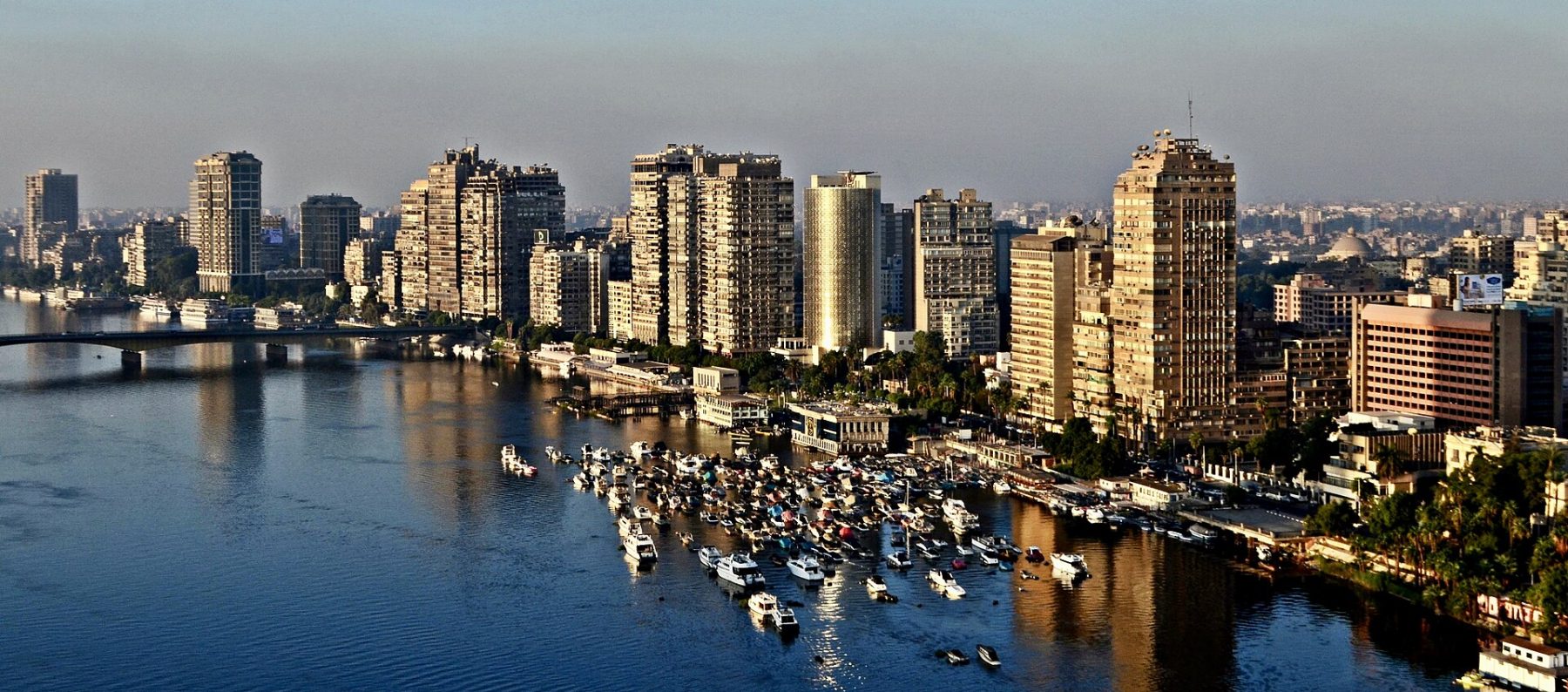
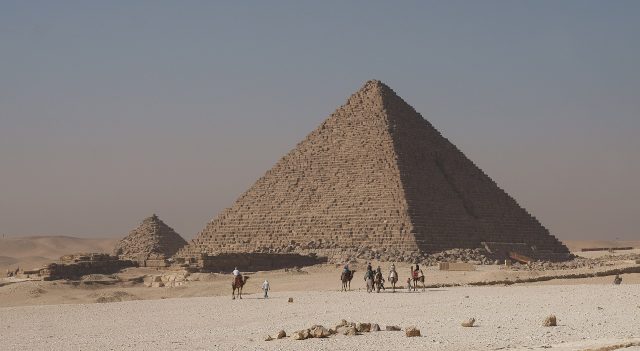
Giza sits on the edge of two worlds, where the Nile’s fertile banks meet the desert and Cairo’s modern sprawl yields to something far older. Twenty kilometers from the capital, the city feels like a quiet threshold. The pyramids rise from the sand as if they’ve always been there, not just as monuments but as proof of what humans built without cranes or computers.
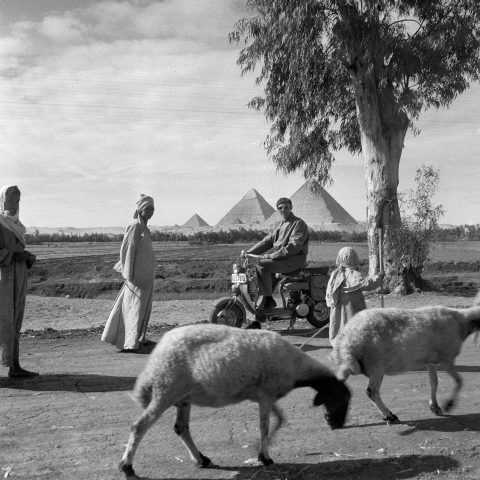
Giza isn’t the tourist trap it’s often made out to be. Stalls sell papyrus scrolls and tiny statues of gods. Cafés serve mint tea in glasses so small they’re gone in two sips. Beyond that, life moves at its own pace: children kick balls against stone walls, old men argue over backgammon, and donkeys pull carts of vegetables through narrow streets. There are no luxury hotels or neon signs—just the rhythm of a place that exists for itself.
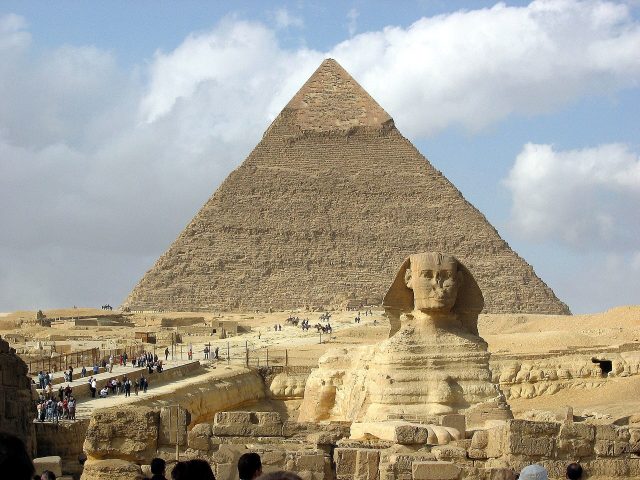
The pyramids of Khufu, Khafre, and Menkaure dominate the landscape. Nearly five thousand years later, their scale still defies belief. Inside, the air is thick, the corridors so tight you turn sideways to pass. Some prefer to watch them from the hills at sunset, when the limestone glows gold. That’s when the complex feels most alive—not as a relic, but as something enduring.
The Sphinx, carved from a single outcrop of rock, stares eastward. Its face, worn by wind and time, holds no certain identity. Some say it’s Khafre’s likeness; others believe it’s far older. Whatever the truth, its silence draws you in. The crowds thin at sunrise, when the first light touches the stone and the desert air is cool.
Beyond the pyramids, Giza has quieter treasures. The Solar Boat, a wooden vessel buried near Khufu’s pyramid, was meant to carry the pharaoh into the afterlife. Discovered in 1954, it’s now reassembled in a museum, its planks still smelling of cedar. The Giza Plateau holds tombs of nobles and priests, covered in murals and hieroglyphs. Fewer tourists visit these places, but here the past feels closest—less like a museum, more like a place where people once lived.
When the heat eases in the evening, locals stroll along the corniche. Vendors sell sticky dates and hibiscus tea. Shisha smoke drifts from open-air cafés, and oud music plays softly. The city moves at the same unhurried pace it has for centuries. If you’re lucky, you’ll see the first stars appear above the pyramids—a reminder that some things endure.
See & Do
All of them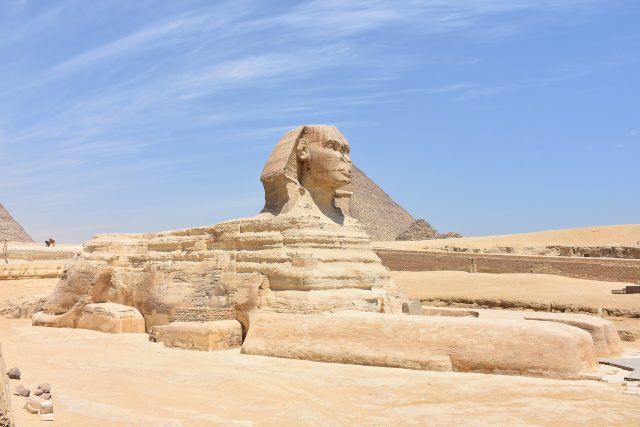
Places on the map
Marker colour follows the categoryClimate and weather
Detailed weather: Giza- Average temperature
- 23 °C
- Precipitation per year
- 32 mm
- Sunshine hours per day
- 9.4 h
Average air temperature
°C
15
16
18
22
26
28
29
30
28
25
21
16
Jan
Feb
Mar
Apr
May
Jun
Jul
Aug
Sep
Oct
Nov
Dec