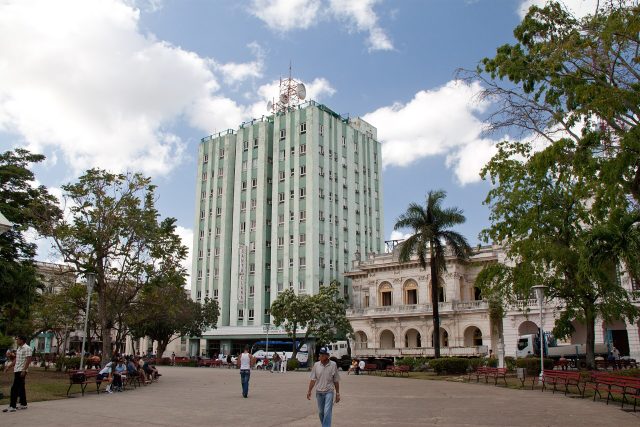
Santa Clara is a city where Cuban history feels alive in its streets, and tucked away among its colonial buildings is a quiet treasure that tells another kind of story—one of elegance, craftsmanship, and the everyday beauty of the past. The Museum of Decorative Arts occupies a stately mansion that once belonged to a wealthy local family, a place where the grandeur of early 20th-century Cuba is preserved not in grand political gestures or revolutionary slogans, but in the delicate details of porcelain, furniture, and silverware. Walking through its rooms feels less like visiting a museum and more like stepping into someone’s carefully curated home, where each object carries the weight of personal taste and the passage of time.
The building itself is a fine example of neoclassical architecture, with high ceilings, tall windows, and a sense of symmetry that was fashionable among Cuba’s elite in the 1920s. The original owners, the Iznaga family, filled it with pieces that reflected their status and the cosmopolitan influences of the era. European antiques sit alongside Cuban-made furnishings, creating a dialogue between imported luxury and local craftsmanship. The house was designed to impress, with a grand staircase leading to the upper floors and a courtyard that once hosted lavish gatherings. Today, that same courtyard is a peaceful spot where visitors can pause, surrounded by the same walls that once heard the murmur of Havana’s high society.
Inside, the museum’s collection spans several centuries, though the focus is firmly on the 18th and 19th centuries, when Cuba’s sugar boom brought wealth and a taste for European refinement. One of the most striking displays is the collection of French and English porcelain, including delicate Sèvres and Wedgwood pieces that were prized possessions in their time. There are also intricately carved wooden screens, gilded mirrors, and a remarkable assortment of silver—from ornate tea sets to simple, functional items that hint at the daily rituals of the household. The furniture ranges from heavy, dark mahogany pieces to lighter, more delicate designs, showing how tastes evolved over the decades.
What makes the museum particularly engaging is the way it balances the opulence of its displays with the human stories behind them. A set of fine china isn’t just an example of craftsmanship; it’s a reminder of the meals shared around a table, the conversations held over tea, the quiet moments of domesticity that often go unrecorded in history books. The museum doesn’t just showcase objects—it invites visitors to imagine the lives of the people who owned them. In one room, a child’s rocking horse stands next to a delicate writing desk, suggesting the presence of a family that once lived here. In another, a collection of fans and gloves speaks to the social customs of the time, when even the smallest accessory was a statement.
The museum also offers a subtle contrast to the more famous revolutionary sites in Santa Clara. While Che Guevara’s mausoleum and the Tren Blindado draw crowds eager to connect with Cuba’s 20th-century struggles, the Museum of Decorative Arts provides a different perspective—one that looks at the island’s history through the lens of culture, aesthetics, and the quiet rhythms of daily life. It’s a reminder that Cuba’s story isn’t just one of politics and conflict, but also of artistry, tradition, and the small, beautiful things that endure.
For those who appreciate design, the museum is a fascinating study in how styles traveled and adapted in the Caribbean. The influence of Spanish colonialism is evident in the heavy, ornate furniture, while French and English pieces reflect the island’s trade connections with Europe. There are also hints of Cuban ingenuity, like the locally made rocking chairs that became a staple of island life, blending comfort with a touch of elegance. The way these different influences coexist in the same space is a testament to Cuba’s role as a cultural crossroads, where ideas and aesthetics from across the Atlantic were absorbed and reinterpreted.
The museum isn’t large, and it doesn’t take long to explore, but that’s part of its charm. There’s no rush here, no need to race from one exhibit to the next. Instead, it encourages a slower, more contemplative kind of tourism—one where the details matter. A visitor might spend several minutes examining the delicate brushstrokes on a porcelain plate or the intricate inlay on a wooden cabinet, noticing things that would be easy to overlook in a busier setting. The lighting is soft, the rooms are cool, and the overall atmosphere is one of quiet appreciation.
Santa Clara itself is a city that rewards those who take the time to look beyond its most famous landmarks. While it’s best known as the site of Che Guevara’s final battle and his subsequent memorial, the city has a rich cultural life that often goes unnoticed by visitors in a hurry. The Museum of Decorative Arts is one of those places that reveals itself to those who linger, offering a glimpse into a side of Cuban history that’s just as important as the revolutionary narrative. It’s a place where the past feels tangible, not through grand monuments or dramatic events, but through the everyday objects that shaped the lives of the people who came before.
For anyone with an interest in history, design, or simply the quiet beauty of well-made things, the museum is a worthwhile stop. It doesn’t demand attention the way some of Cuba’s more famous attractions do, but that’s precisely what makes it special. Here, the focus is on the small, the personal, and the enduring—qualities that often get lost in the grand sweep of history. In a country where so much is defined by its revolutionary past, the Museum of Decorative Arts offers a different kind of time travel, one that connects visitors not to battles or manifestos, but to the quieter, more intimate moments that make up a life.